Ancient City · Roman · Spain
Baelo Claudia
Baelo Claudia is a Roman town on the beach at Bolonia, 22 km west of Tarifa, looking across the Strait of Gibraltar to Morocco. Founded in the late 2nd century BC and rich on tuna and fish sauce, it keeps its forum, basilica, temples, theatre and salting factories, the most complete Roman townscape in Spain.
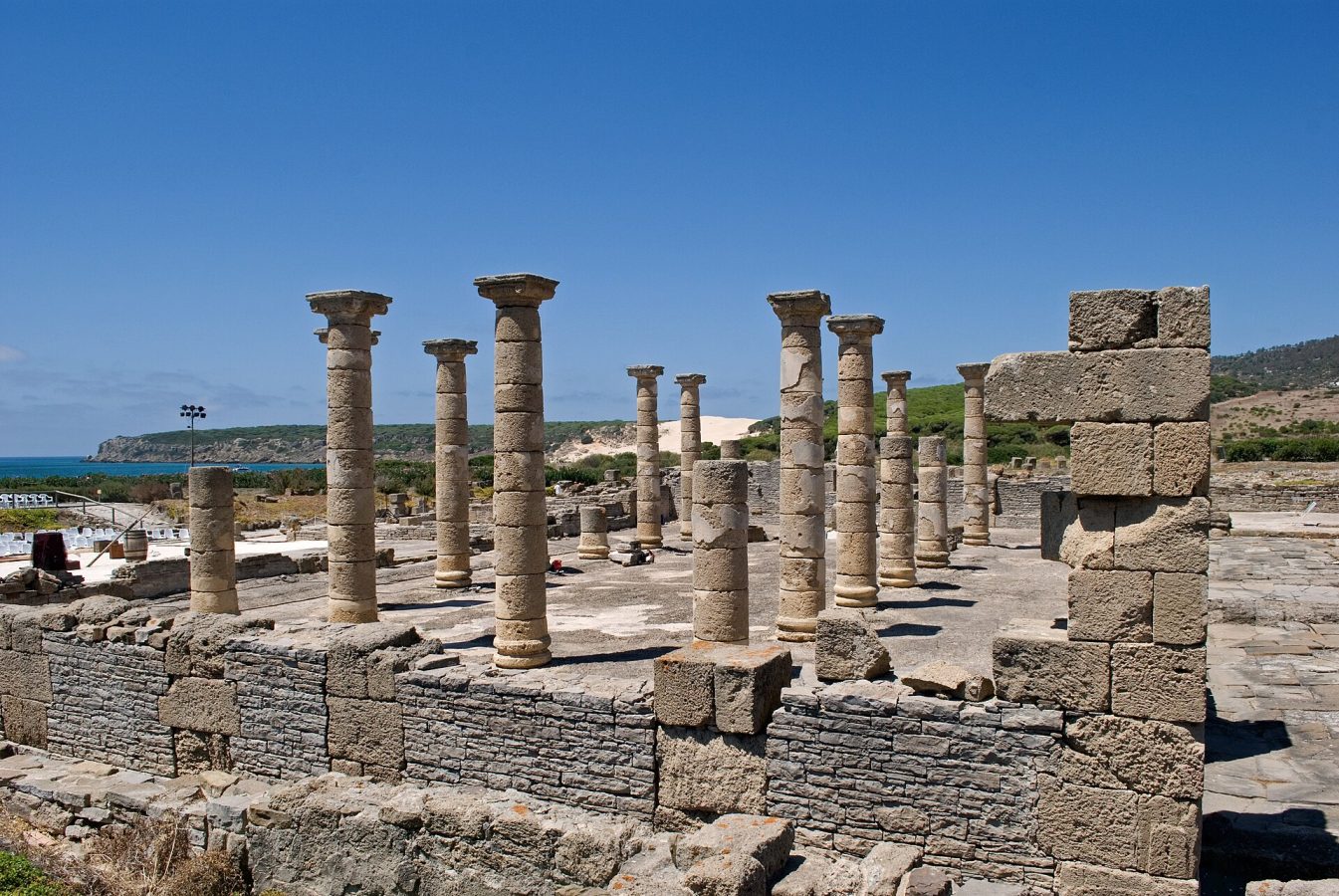
Photo: Anual, CC BY 3.0
Baelo Claudia tickets: which one for you
Our pick for each kind of visit, with live dates and prices from GetYourGuide. Free cancellation on most.
Best for: First visit, with an archaeologist's eye
A guided walk through the town that explains the forum, temples and fish-salting works, which the site panels only sketch. Meet at the visitor centre.
- A day out from Tarifa without a car: Excursion to tarifa baelo claudia bolonia and vejer de la frontera with a tour guide Transport and a guide for the ruins, Bolonia beach and the white hill town of Vejer de la Frontera in one day, a combination that is hard by bus.
- Food lovers and curious couples: Cadiz baelo claudia guided tour roman dinning experience A guided visit followed by a meal inspired by Roman recipes, for those who want the town's fish-sauce trade explained at the table as well as on site.
Tickets and tours: all the options
Entry is sold only at the visitor centre at the top of the site. Citizens of the European Union and the wider European Economic Area get in free with an ID card or passport, and other visitors pay a very small fee. There is no timed ticket and no need to book, and the visitor centre gives a clear introduction before you walk down to the ruins.
A handful of tours are sold online, all starting from Tarifa. The simplest is a guided archaeological walk of about two hours, useful because the panels on site are brief and the guide can explain how the fish-salting industry worked. Another option adds a meal with dishes based on Roman recipes. A longer excursion with a guide and transport covers the ruins, the beach and dune at Bolonia and the hill town of Vejer de la Frontera, which suits visitors without a car.
For most people, the sensible plan is to drive from Tarifa, visit on your own in the morning and spend the afternoon on Bolonia beach. Book the guided walk if you want the background, or the full-day excursion if you have no car.
What to see at Baelo Claudia
Visitor centre and museum
Start in the modern visitor centre above the site, a long concrete building with large windows over the ruins and the sea. Its rooms show statues, inscriptions, amphorae and a model of the town, and explain the trade in salted tuna. From its terrace you see the whole street grid, which helps you plan the walk downhill.
Forum, basilica and Trajan
Walk down the main street to the forum, still paved with its original stone slabs. At its southern side stands the basilica, the law court, where the restored columns and a cast of the large statue of Emperor Trajan give a sense of scale. Shops lined one side of the square, and the council house and archive opened off another.
3 tickets and tours for Baelo Claudia
Live dates and prices from GetYourGuide. Free cancellation on most tickets.
Capitoline temples and Isis
Just above the forum, three temples side by side honoured Jupiter, Juno and Minerva, a layout found elsewhere only at Sbeitla in Tunisia. Climb their steps for the classic photograph over the forum and the strait. Next to them, a walled precinct was a temple of the Egyptian goddess Isis, a reminder of trade with Africa.
Theatre
East of the temples, the theatre is the largest building in town and held about two thousand spectators. Its seating was built against the slope, and the restored stage area is used for summer performances. Sit in the upper rows for a view of the town, the beach and, on clear days, the mountains of Morocco.
Fish-salting factories
Finish at the bottom of the site, close to the beach, where the industrial quarter kept rows of deep rectangular vats. Here tuna and smaller fish were cut, salted and left to ferment into garum, the sauce exported across the empire. Nearby are stretches of the town wall, the market and the remains of the baths.
A short history
Baelo grew up at the end of the 2nd century BC as a fishing and trading port facing Tangier on the African coast. Its wealth came from tuna fishing, salting and fish sauce, and under Emperor Claudius it became a municipium, which gave it the name Baelo Claudia. The town flourished from the 1st century BC to the 2nd century AD, when an earthquake destroyed much of it. Pirate raids followed in the 3rd century, and despite a partial recovery the town was empty by the 6th century. Jorge Bonsor and French archaeologists began digging in the early 20th century, and work has continued since. The site is protected as a monument of cultural interest.
Getting there
Baelo Claudia is 22 km west of Tarifa, on the coast at the hamlet of Bolonia. Drive west on the N-340 towards Cadiz and turn off on the signed minor road to Bolonia, which winds over the hills for about 7 km; the trip takes about 25 minutes. The free car park is beside the visitor centre, and the entrance is a short walk away. There is no regular bus to Bolonia for most of the year, so without a car you need a taxi from Tarifa or a tour. Gibraltar airport is about 50 minutes away, Jerez around 1 hour 30 minutes and Malaga about 2 hours. Ferries from Tangier arrive in Tarifa.
Rules and what to bring
Keep to the paths and boardwalks and do not climb on walls, columns or the salting vats. Drones are not allowed without permission. The site is open to the sea wind and to strong sun, so bring a hat, sunscreen, a windproof layer and water. The visitor centre has toilets and a small shop. Bolonia has several beach restaurants and bars a few minutes away for lunch afterwards.
When to go
The morning is best: the light is soft on the white stone, the wind along the strait is often calmer and the heat is still bearable. Tour groups and beachgoers arrive from late morning, especially at weekends and in July and August, when the car park can fill.
Spring and autumn are the ideal seasons, with mild temperatures and fewer crowds; April, May, September and October are all good. High summer is hot on the open slopes and closing hours change through the year, while Sundays end at 3 pm, so check before you plan a late visit. Strong levante winds can blow sand across the site and make the beach unpleasant, so on such days keep the visit short. In summer the theatre sometimes hosts evening performances. Allow about two hours for the visitor centre and the ruins, more if you also climb the dune.
Combine it with
Bolonia beach and its great sand dune, around 30 metres high, are a short walk west of the ruins and make a natural pairing. Tarifa, 25 minutes away, has a walled old town and ferries to Tangier. The hill town of Vejer de la Frontera is about 40 minutes by car towards Cadiz.
At a glance
| Hours | From 9 am Tue–Sat, closing between 6 pm and 9 pm by season; Sundays and holidays to 3 pm |
|---|---|
| Closed | Mondays; also some public holidays |
| Entry fee | from EUR 1.50; free for EU citizens with ID |
| Time needed | 1.5 to 2 hours |
| Best time | Morning, before the wind rises; April to June and September to October |
| Booking | Pay at the visitor centre; no need to book |
| Access | Visitor centre is step-free; the site has gravel paths and gentle slopes, very little shade |
| Getting there | By car from Tarifa on the N-340 and the Bolonia road, about 25 minutes |
| Founded | 100 BC (end of 2nd century BC) |
| Abandoned | AD 550 |
| Excavated | 1917 |
| Civilisation | Roman |
| Website | spain.info/en/conoce/monumentos/cadiz/ciudad_romana_baelo_claudia.html |
| Checked | October 2026 |
Frequently asked questions
When is Baelo Claudia open?
From 9 am Tue–Sat, closing between 6 pm and 9 pm by season; Sundays and holidays to 3 pm. Closed: Mondays; also some public holidays.
How much is the entry fee for Baelo Claudia?
Entry fee: from EUR 1.50; free for EU citizens with ID.
How long do you need at Baelo Claudia?
Allow 1.5 to 2 hours for Baelo Claudia.
Do I need to book Baelo Claudia in advance?
Pay at the visitor centre; no need to book.
Can I book a ticket or tour for Baelo Claudia online?
Yes. GetYourGuide lists 3 tickets and tours for Baelo Claudia, with live dates and prices and free cancellation on most of them.
When is the best time to visit Baelo Claudia?
Morning, before the wind rises; April to June and September to October.
How do I get to Baelo Claudia?
By car from Tarifa on the N-340 and the Bolonia road, about 25 minutes.
Is Baelo Claudia accessible, and what is the terrain like?
Visitor centre is step-free; the site has gravel paths and gentle slopes, very little shade.
Is Baelo Claudia worth visiting?
Worth it for a complete small Roman town by the sea, with a good visitor centre and free entry for EU citizens. Skip or shorten it on a windy midsummer afternoon, or if you have just seen Merida or Italica and want something different.
How old is Baelo Claudia?
Baelo Claudia dates from 100 BC (end of 2nd century BC). It was abandoned in AD 550. Excavations began in 1917.