Fortress & Citadel · Asian · Vietnam
Co Loa Citadel
Co Loa Citadel, about 17 km north of central Hanoi, is the spiral earthwork capital that tradition credits to King An Duong Vuong in the 3rd century BC. Its outer rampart runs for 8 km and still rises up to 12 metres in places, and village temples to the king and his daughter stand inside the walls.
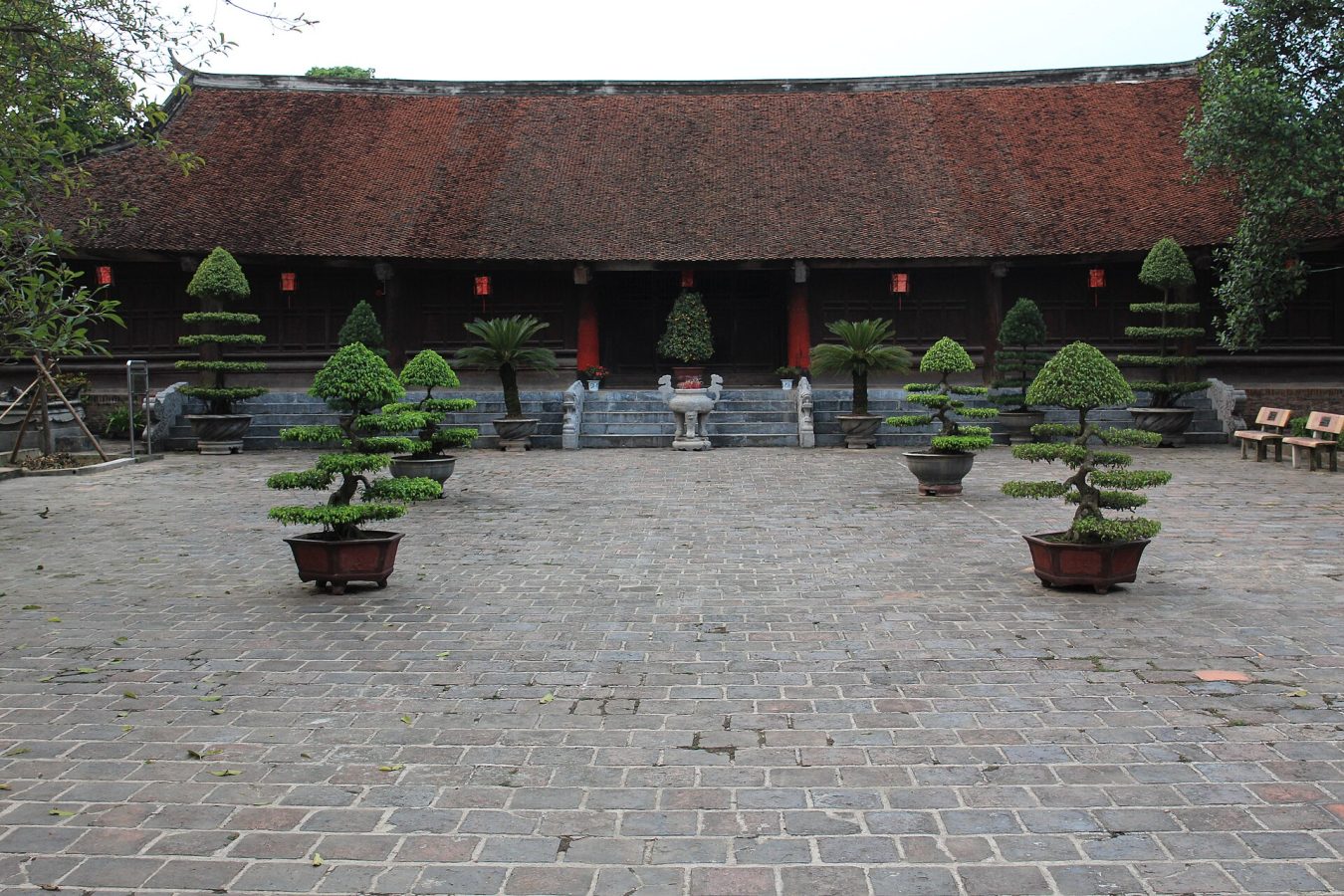
Photo: ZiYouXunLu, CC BY-SA 3.0
Co Loa Citadel tickets: which one for you
Our pick for each kind of visit, with live dates and prices from GetYourGuide. Free cancellation on most.
Best for: First visit, half a day from Hanoi
A guide explains the legends at each temple and a driver handles the traffic, so you see the ramparts, the well and the shrines in a morning and are back for lunch.
- A private day at your own pace: Hanoi private countryside discovery of co loa citadel Your own guide and transport, with time to walk a stretch of the outer rampart and stop in the surrounding villages without keeping to a group schedule.
- Active travellers who like cycling: Hanoi full day bicycle bat trang and co loa led by women A full day on two wheels through the flat countryside north of the Red River, pairing the citadel with the pottery village of Bat Trang and lunch on the way.
Tickets and tours: all the options
There is no advance ticket for Co Loa. You pay a small fee at the gate of the temple complex in the centre of the village, and the ramparts, moats and lanes around it can be walked freely. Signs are mostly in Vietnamese, so on your own you will see the buildings but miss most of the story.
What is sold online is almost entirely transport plus a guide from Hanoi. The commonest formats are half-day rides on the back of a vintage scooter or a motorbike, half-day or full-day trips in an open jeep, and guided cycling days for fit riders. Many full-day versions add the ceramics village of Bat Trang on the other side of the river, and some include lunch in a local home; a few add a rice-paper village or a second temple. Private tours with a car and guide are also offered and suit families or anyone with limited mobility. Entry fees are usually included, but check the details, as drinks and tips are not.
The sensible choice for most visitors is a half-day guided trip, which gives you the legends and the layout in three or four hours. Travellers already familiar with the history, or with a rented scooter, can manage on their own with a taxi there and back.
What to see at Co Loa Citadel
Temple of An Duong Vuong
Start at the main shrine, known locally as Den Thuong, in the heart of the inner enclosure. It honours the king who is said to have built the citadel, and a bronze statue of him sits in the sanctuary behind carved and lacquered doors. Look for the stone dragons on the steps and the old banyan trees in the forecourt.
Jade Well and Shrine of My Chau
A few minutes away, the round Jade Well lies in a pond in front of the temple. Legend says the prince Trong Thuy drowned himself here after his betrayal of the king. Close by, the small shrine of Princess My Chau holds a headless stone figure that local tradition identifies as the daughter who gave away the secret of the magic crossbow.
15 tickets and tours for Co Loa Citadel
Live dates and prices from GetYourGuide. Free cancellation on most tickets.
Co Loa Communal House
Next to the temple stands the village communal house, a broad wooden hall on columns where the king was once believed to have held court. The roof timbers and carved beams are a good example of northern Vietnamese village architecture. During the spring festival the courtyard fills with processions, wrestling bouts and offerings carried in from neighbouring hamlets.
Inner and middle ramparts
Walk out from the temples to the earth banks of the inner and middle walls, which still stand several metres high and are planted with trees and vegetable plots. Gaps mark the old gates. From the top you can make out the moats, now chains of ponds and streams, that once protected the city and let boats reach it.
Outer rampart and exhibition hall
The outer rampart, about 8 km round, is best followed by bicycle or scooter along the lanes at its foot; in places it rises to about 12 metres. Near the entrance to the site a small exhibition shows bronze arrowheads, pottery and a copy of the great bronze drum found here in the 1980s, which helps put the earthworks in context.
A short history
Vietnamese chronicles say that An Duong Vuong, king of Au Lac, built Co Loa after defeating the last Hung king, and that a golden turtle helped him finish the walls and gave him the claw for a magic crossbow. The city fell to Nam Viet, according to the story, after his daughter revealed the secret to her husband. Excavations from 1970 onwards found Dong Son pottery under the walls, dated parts of the inner rampart to around 400 to 350 BC, and in the 1980s uncovered a 72 kg bronze drum filled with some two hundred bronze tools and weapons. In AD 939 Ngo Quyen made Co Loa his capital again, until it was sacked in 965.
Getting there
Co Loa is in Dong Anh district, across the Red River about 17 km north of the Old Quarter. The simplest way is a taxi or a ride-hailing car, which takes 30 to 50 minutes depending on the traffic on the bridges; ask the driver to wait or book the return in the app. City buses from central Hanoi also serve Co Loa, but they are slow and the route numbers change, so check the current timetable. By rented scooter it is an easy run on flat roads once you are clear of the city. Noi Bai airport is less than half an hour away by road, so the site can be fitted in on an arrival or departure day. Parking is available by the temple gate.
Rules and what to bring
These are active places of worship. Cover shoulders and knees, take off your shoes where a mat or sign asks you to, and do not step over the raised thresholds of the sanctuaries carelessly or point your feet at the altars. Ask before photographing people praying. Do not climb on the ramparts where crops are growing, as the banks are farmed. Bring water, sun protection and insect repellent; small cafes and stalls in the village sell drinks and snacks, and toilets are near the temple.
When to go
Hanoi has a hot, wet summer from May to September, with heavy afternoon showers that turn the earth banks to mud, and a cool, often grey winter from December to February. The most comfortable months for walking the ramparts are October to early December and March to April. Go in the morning: the light is softer, it is cooler, and you will share the temples mainly with local worshippers.
The busiest time of the year is the Co Loa festival, held for several days from the sixth day of the first lunar month, usually in February. It brings processions, music and large crowds from all over the region, which is interesting to see but makes the lanes slow going. Weekends are busier than weekdays with Hanoi families. Allow two to three hours for the temples and a short walk on the walls, or half a day if you want to cycle a longer stretch of the outer rampart.
Combine it with
Most guided days pair Co Loa with Bat Trang, the ceramics village south-east of Hanoi, about an hour away by road. The Soc temple at Soc Son, dedicated to the legendary hero Thanh Giong, lies about 30 minutes to the north. Back in Hanoi, the National Museum of Vietnamese History displays Dong Son bronze drums and other finds that explain the period.
At a glance
| Hours | Temples and grounds about 8 am to 5 pm; check locally on festival days |
|---|---|
| Closed | Open daily |
| Entry fee | A small fee for the temple area; village lanes are free |
| Time needed | 2 to 3 hours |
| Best time | Morning; October to December and March to April for dry, mild weather |
| Booking | No booking needed; book a guided ride from Hanoi a day or two ahead |
| Access | Flat village lanes and temple courtyards; earth ramparts are uneven and muddy after rain |
| Getting there | Taxi or ride-hailing car from central Hanoi, about 40 minutes in normal traffic |
| Founded | 250 BC (3rd century BC (midpoint)) |
| Civilisation | Asian |
| Area | 6 km² |
| Checked | October 2026 |
Frequently asked questions
When is Co Loa Citadel open?
Temples and grounds about 8 am to 5 pm; check locally on festival days. Open daily.
How much is the entry fee for Co Loa Citadel?
Entry fee: A small fee for the temple area; village lanes are free.
How long do you need at Co Loa Citadel?
Allow 2 to 3 hours for Co Loa Citadel.
Do I need to book Co Loa Citadel in advance?
No booking needed; book a guided ride from Hanoi a day or two ahead.
Can I book a ticket or tour for Co Loa Citadel online?
Yes. GetYourGuide lists 15 tickets and tours for Co Loa Citadel, with live dates and prices and free cancellation on most of them.
When is the best time to visit Co Loa Citadel?
Morning; October to December and March to April for dry, mild weather.
How do I get to Co Loa Citadel?
Taxi or ride-hailing car from central Hanoi, about 40 minutes in normal traffic.
Is Co Loa Citadel accessible, and what is the terrain like?
Flat village lanes and temple courtyards; earth ramparts are uneven and muddy after rain.
Is Co Loa Citadel worth visiting?
Worth it for anyone curious about Vietnam's founding legends and its earliest walled capital, easily reached from Hanoi. Skip or shorten it if you expect stone ruins: the walls are grassy banks and the temples are later rebuilds.
How old is Co Loa Citadel?
Co Loa Citadel dates from 250 BC (3rd century BC (midpoint)).