
Al Zubarah
55 km away
Al Zubarah, on the north-west coast of Qatar about 105 km from Doha, is the excavated ruin of a walled pearling and…
11 tickets & tours
Tomb & Necropolis · Near Eastern · Bahrain
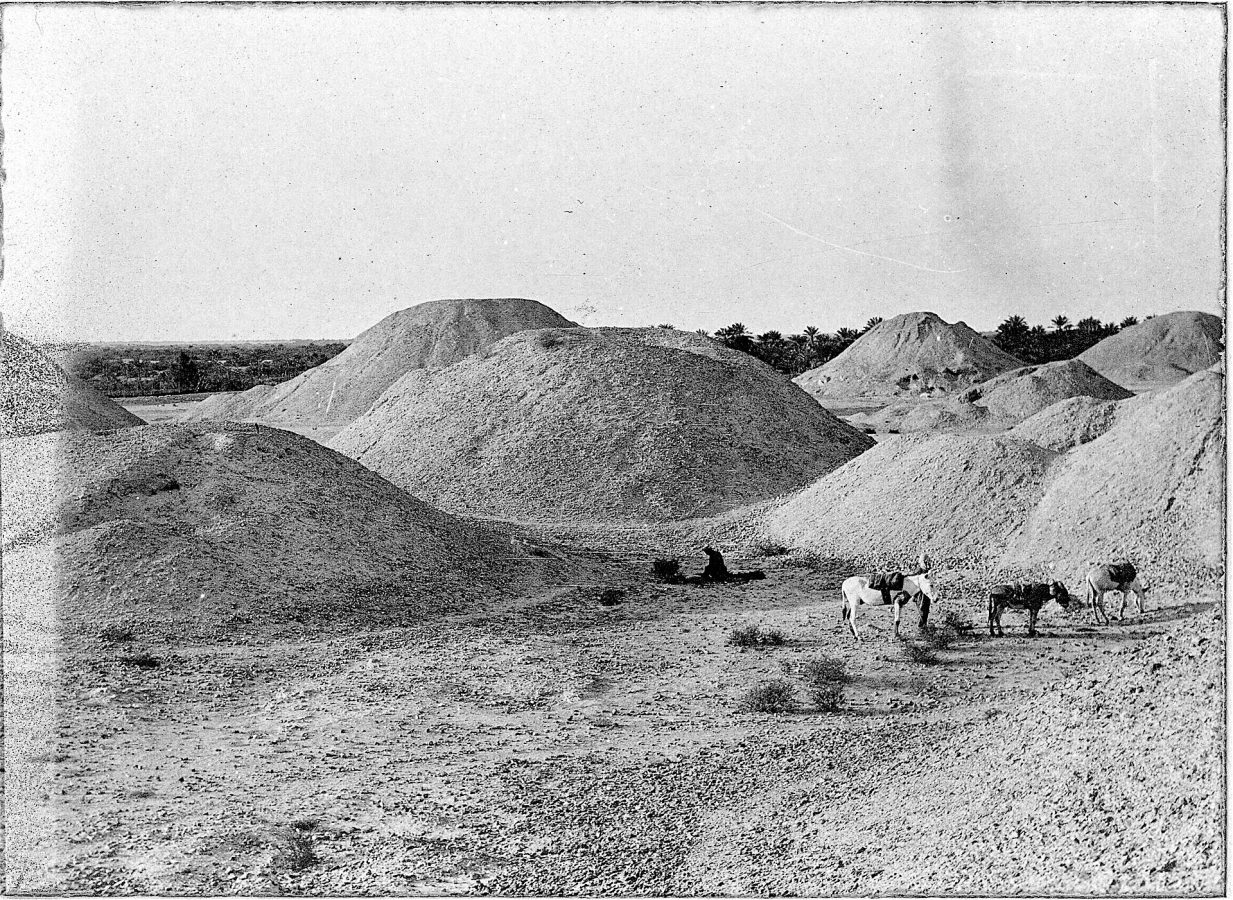
The Dilmun Burial Mounds are the remains of one of the largest ancient cemeteries in the world, spread across the north of Bahrain's main island. Most were raised between about 2200 and 1750 BC, when Dilmun was a trading hub between Mesopotamia and the Indus. The great royal mounds of A'ali and the honeycomb cemetery at Saar are the places to see them.
Nothing for the Dilmun Burial Mounds alone is sold online. The mound fields are open landscapes, many of them fenced, and there is no ticket: you see the royal mounds of A'ali from the surrounding streets, and the excavated cemetery at Saar from paths and a viewing area inside its enclosure. Information boards in Arabic and English explain the main groups.
Most visitors explore by hired car or taxi, since the sites are spread out across the north of the island and public buses are slow. Taxis and app-based cars can be hired by the hour, and drivers usually know A'ali.
Local agencies in Manama run half-day and full-day tours of Bahrain that often include a stop at the A'ali mounds and the potters' workshops beside them, together with Qal'at al-Bahrain and the Tree of Life. These usually include transport and a guide, sometimes lunch, and are also offered to cruise passengers. Private guides can arrange a deeper tour of the mound fields with the Saar settlement and temple.
The sensible plan is to visit the Bahrain National Museum first to see the reconstructed burial chamber and grave goods, then drive to A'ali and Saar in the late afternoon.
Start in the village of A'ali, where a group of very large mounds rises between the houses and roads. These royal tombs, some more than 10 metres high, were built for the rulers of early Dilmun, with stone chambers inside and an outer ring wall. Walk around the largest ones and notice how the modern village has grown up against them.
A short drive west, the cemetery at Saar has been fully excavated, revealing hundreds of small tombs joined wall to wall in a pattern that looks like honeycomb from above. Raised walkways and a viewing area let you look down into the cells. Nearby lie the foundations of the Dilmun settlement and its small temple.
Live prices from GetYourGuide for tickets and tours that include this site. Free cancellation on most of them.
Back in A'ali, the traditional pottery kilns are built into the side of old mounds near the royal tombs. Craftsmen still throw jars, incense burners and lamps here, and small shops sell their work. It is an unusual sight: a living craft practised in a Bronze Age cemetery, a few metres from tombs four thousand years old.
Drive south to see the wide fields of smaller mounds that once covered much of the north of the island, now preserved in protected strips beside the roads. The best views are around Janabiyah and the northern edges of Hamad Town, where hundreds of low mounds stand close together. They are fenced and best seen from the roadside.
Finish in Manama at the Bahrain National Museum, about 20 minutes from A'ali. Its Hall of Graves contains a full-size reconstruction of a burial mound cut open, with the stone chamber, the skeleton laid on its side and the pottery, seals and copper objects found with the dead. The hall makes sense of everything you saw outside.
Bahrain's mounds were built over several thousand years, but the great majority date from the early Dilmun period, roughly 2200 to 1750 BC, when the island controlled trade in copper and other goods between Mesopotamia, Oman and the Indus valley. Each tomb has a stone chamber inside a low ring wall, covered with earth and gravel; most held a single body with a few pots, seals or weapons. Up to 350,000 mounds once existed. Theodore and Mabel Bent dug some in 1889, and a Danish team excavated more in the 1950s. Housing has destroyed many, which led to debate in parliament. The surviving fields were listed by UNESCO in 2019.
Bahrain International Airport is on Muharraq, about 25 minutes by road from A'ali, and central Manama is about 20 minutes away. The easiest way to visit is by rental car or taxi; ride-hailing apps work well. From Manama, take the Sheikh Khalifa bin Salman Highway south-west towards A'ali, where the royal mounds are signposted in the village. Saar is about 10 minutes further west, off the Janabiyah Highway, with parking at the enclosure. Public buses connect Manama with A'ali and Saar, but they are infrequent and leave long walks in the heat. Distances are short, so two or three sites fit easily into half a day.
Climbing the mounds is forbidden, and they are protected by law; do not dig, take stones or pottery or drive off-road among them. Drones need permission from the civil aviation authority. Dress modestly in the villages. Bring water, a hat and sunscreen, as there is no shade at Saar. Toilets and cafés are not found at the mound fields, but A'ali and nearby malls have both. Respect the residents' privacy in A'ali when photographing.
Bahrain is hot for much of the year, so plan your visit around the heat. From November to March, days are warm and pleasant and you can walk the mound fields at any hour. From May to September, temperatures often exceed 40 degrees with high humidity, and outdoor sightseeing is only comfortable in the first hour after sunrise or in the last hour before dark.
The low light of late afternoon is best for photographs, as it throws the round shapes of the mounds into relief. Friday is the weekend day when traffic is lightest in the morning, but some workshops in A'ali open later then. During Ramadan, opening hours of shops and museums shorten.
The sites are rarely busy; even in winter you will meet only small groups. Allow two to three hours for A'ali, the potters and Saar, plus at least an hour for the museum.
Qal'at al-Bahrain, the ancient capital of Dilmun and a UNESCO site with a fort and museum, is about 25 minutes north. The Barbar temple, a Dilmun sanctuary with a sacred well, is 15 minutes from Saar. The Bahrain National Museum in Manama is 20 minutes from A'ali.
55 km away
Al Zubarah, on the north-west coast of Qatar about 105 km from Doha, is the excavated ruin of a walled pearling and…
11 tickets & tours
| Hours | Mound fields visible from the roads at any time; fenced areas such as Saar in daytime |
|---|---|
| Closed | Open daily; fenced areas may close on public holidays |
| Entry fee | Free |
| Time needed | 2 to 3 hours for A'ali and Saar |
| Best time | Early morning or late afternoon; November to March |
| Booking | No booking; drive or take a taxi between the mound fields |
| Access | Gravel and sand around the mounds, no shade; roadside viewing is easy, climbing is not allowed |
| Getting there | A'ali is about 20 minutes by car or taxi from central Manama or the airport |
| Founded | 2050 BC (mounds built c. 2050-1750 BC) |
| Civilisation | Near Eastern |
| UNESCO | Dilmun Burial Mounds |
| Checked | October 2026 |
Mound fields visible from the roads at any time; fenced areas such as Saar in daytime. Open daily; fenced areas may close on public holidays.
Entry fee: Free.
Allow 2 to 3 hours for A'ali and Saar for Dilmun Burial Mounds.
No booking; drive or take a taxi between the mound fields.
Yes. GetYourGuide sells tickets and guided tours whose route includes Dilmun Burial Mounds; live prices are shown on this page.
Early morning or late afternoon; November to March.
A'ali is about 20 minutes by car or taxi from central Manama or the airport.
Gravel and sand around the mounds, no shade; roadside viewing is easy, climbing is not allowed.
Worth it for travellers in Bahrain who want to stand among the giant royal tombs of a Bronze Age trading kingdom. Skip or shorten it if you expect painted chambers or finds on display: those are in the Bahrain National Museum.
Dilmun Burial Mounds dates from 2050 BC (mounds built c. 2050-1750 BC).
Yes. Dilmun Burial Mounds is part of the UNESCO World Heritage Site Dilmun Burial Mounds.