Baia Archaeological Park (Baiae)
5 km away
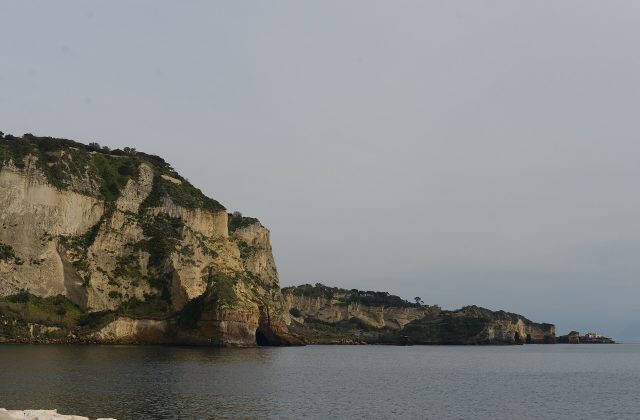
Baia was the most fashionable seaside resort of the Roman elite, where emperors and senators built villas and spa halls…
2 tickets & tours
Theatre & Amphitheatre · Roman · Italy
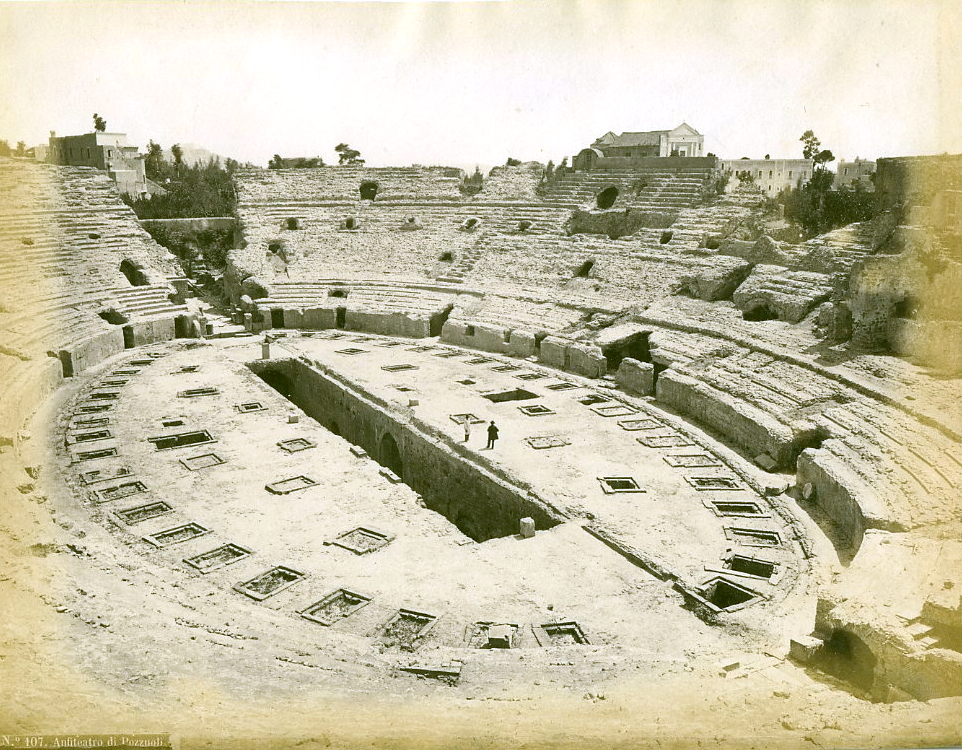
The Flavian Amphitheatre of Pozzuoli is the third-largest Roman arena in Italy, after the Colosseum and Capua, built under Vespasian and Titus in the late 1st century AD. Its outer ring is ruined, but the underground passages beneath the arena survive almost intact. Few places show so clearly how cages and scenery were raised for the games.
Nothing for the amphitheatre alone is sold online. It belongs to the Campi Flegrei archaeological park, and you pay at the ticket office at the entrance on Via Terracciano. A combined ticket, valid for a few days, also covers other park sites such as the ancient city of Cumae, the baths of Baia and the archaeological museum in the castle of Baia, and is good value if you plan to see more than one. Under-18s enter free, and entry is free on the first Sunday of the month.
Most people come independently by train from Naples. There is no audio guide, but information boards explain the underground and the main features.
Tours that include the amphitheatre are usually private day tours of the Campi Flegrei area from Naples, with a driver and a guide, covering several sites such as the Solfatara crater, the Rione Terra and Baia; entry tickets are often extra. Group tours of the Phlegraean Fields are less common than those to Pompeii and Herculaneum, but some agencies in Naples run them, and they can be useful if you have no car.
The sensible plan is to take the train to Pozzuoli, visit the amphitheatre, then walk down to the Macellum and the harbour, and add Cumae or Baia with the combined ticket.
From the entrance, walk around the elliptical arena, which measures about 72 by 42 metres inside an outer ring of 147 by 117 metres. Most of the stone seating has been lost, but the lowest rows and the massive supporting vaults of the cavea remain. Look at the long central opening in the arena floor, which led to the basements below.
Take the ramps down into the basement, the highlight of the visit. Here a network of corridors and rooms ran beneath the arena floor, with square openings in the ceiling through which cages and animals were hoisted up by ropes and pulleys. Look for the holes and grooves that held the lifting gear, and the drains that kept the passages dry.
Live prices from GetYourGuide for tickets and tours that include this site. Free cancellation on most of them.
In the basement corridors and around the outer ring lie hundreds of carved fragments: column capitals, cornices, inscriptions and statues recovered from the amphitheatre and from other buildings in Pozzuoli. They show how richly decorated the building once was, before its marble facing was stripped in the Middle Ages.
On the edge of the arena, a small chapel marks the place where tradition says Saint Januarius, the patron of Naples, and Saint Proculus were exposed to wild beasts in AD 305. According to the story the animals refused to attack them, and they were beheaded at the Solfatara nearby. The chapel is still a place of devotion.
Leave the amphitheatre and walk about ten minutes downhill to the Macellum, the Roman market wrongly called the Temple of Serapis, whose columns bear marks of sea creatures left as the ground rose and sank over the centuries. Beyond it the old town on the Rione Terra promontory has Roman streets beneath it, open on guided visits.
Pozzuoli, Roman Puteoli, was the main port of Rome before Ostia grew, and it needed a larger arena than its older amphitheatre, whose few surviving arches now stand by the railway. The new amphitheatre was begun under Vespasian, probably by the architects of the Colosseum, and finished under Titus. It stood at the crossing of the roads to Naples, Capua and Cumae and held tens of thousands of spectators. Tradition says Saint Januarius was condemned here in AD 305. Later the building was partly buried by volcanic deposits from the Solfatara, and its marble was stripped in the Middle Ages. Excavations took place in 1839 to 1845, 1880 to 1882 and 1947.
From Naples, take metro line 2, run by Trenitalia, from Napoli Centrale, Piazza Garibaldi or Montesanto towards Pozzuoli; the journey takes about 30 minutes to the last stop. From Pozzuoli station, walk about five minutes uphill to the amphitheatre on Via Terracciano. The Cumana railway from Montesanto also stops at Pozzuoli, closer to the harbour, from where the amphitheatre is about 15 minutes on foot. Naples airport is about 30 to 40 minutes away by taxi. By car, take the Tangenziale ring road and exit at Pozzuoli Arco Felice or Via Campana; parking is in nearby streets and paid car parks. Ferries from Pozzuoli harbour serve Ischia and Procida.
Do not climb on the walls or the stored fragments, and stay in the open sections of the basement. Drones need park permission. Wear shoes with a good grip, as the stone paving and ramps can be slippery. Bring water in summer; there is no café on site, but bars and restaurants are a few minutes away around the station and the harbour. Toilets are near the ticket office.
The amphitheatre is rarely busy, even in high season, because most tours from Naples go to Pompeii instead. School groups sometimes visit on weekday mornings. The basement is cool and shaded, which makes it a good stop in the middle of a hot day, while the open arena is exposed to the sun and best seen in the morning or late afternoon.
April, May, September and October are the best months, warm but not too hot for walking around Pozzuoli and the other Campi Flegrei sites. In July and August, plan to visit the amphitheatre early and the coast later. Winter is quiet, with shorter opening hours. The first Sunday of the month is free and slightly busier.
Allow about an hour for the amphitheatre. With the Macellum and a walk along the harbour, make it half a day, or a full day with Cumae or Baia.
The Macellum and the harbour are a ten-minute walk downhill. The Rione Terra underground Roman town opens on guided visits. Baia, with its baths and castle museum, is 15 minutes by Cumana train, and Cumae, with the cave of the Sibyl, is about 20 minutes by car.
5 km away
Baia was the most fashionable seaside resort of the Roman elite, where emperors and senators built villas and spa halls…
2 tickets & tours
6 km away
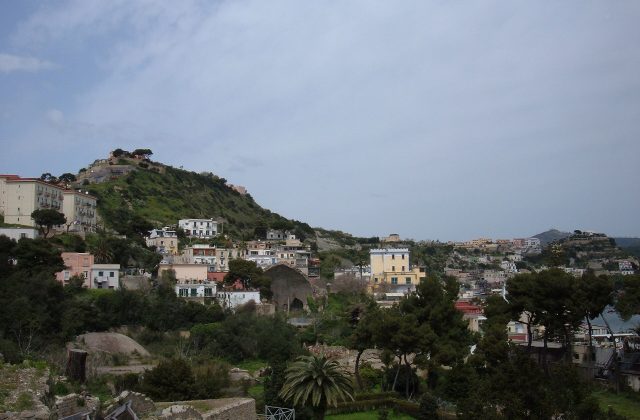
Pausilypon is the Roman seaside villa of Publius Vedius Pollio on the Posillipo headland of Naples, reached through the…
1 ticket or tour
19 km away
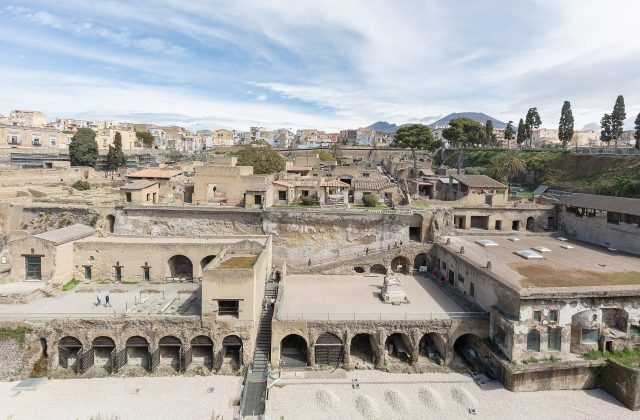
Herculaneum is the seaside Roman town that the eruption of Vesuvius buried under some 20 metres of volcanic flow in AD…
138 tickets & tours
| Hours | Roughly 9 am to an hour before sunset; check the Campi Flegrei park website |
|---|---|
| Closed | Usually closed on Tuesdays; check before travelling |
| Entry fee | A small fee; combined Campi Flegrei ticket; under-18s free |
| Time needed | about an hour |
| Best time | Morning or late afternoon; April, May, September and October |
| Booking | Pay at the gate; no booking needed |
| Access | Stone paving and steps into the basement; mostly level around the arena; partial wheelchair access |
| Getting there | Metro line 2 from Naples to Pozzuoli, about 30 minutes, then a five-minute walk |
| Founded | AD 70 (c. AD 70, begun under Vespasian) |
| Excavated | 1839 |
| Civilisation | Roman |
| Website | pafleg.cultura.gov.it/it/4388/localit/66/anfiteatro-flavio |
| Checked | October 2026 |
Roughly 9 am to an hour before sunset; check the Campi Flegrei park website. Closed: Usually closed on Tuesdays; check before travelling.
Entry fee: A small fee; combined Campi Flegrei ticket; under-18s free.
Allow about an hour for Flavian Amphitheatre, Pozzuoli.
Pay at the gate; no booking needed.
Yes. GetYourGuide sells tickets and guided tours whose route includes Flavian Amphitheatre, Pozzuoli; live prices are shown on this page.
Morning or late afternoon; April, May, September and October.
Metro line 2 from Naples to Pozzuoli, about 30 minutes, then a five-minute walk.
Stone paving and steps into the basement; mostly level around the arena; partial wheelchair access.
Worth it for walking through the best-preserved arena basements in Italy, without the crowds and queues of the Colosseum. Skip or shorten it if you want a complete outer facade, or if your time in the Naples area is very short.
Flavian Amphitheatre, Pozzuoli dates from AD 70 (c. AD 70, begun under Vespasian). Excavations began in 1839.