Megalithic Site · Prehistoric · Indonesia
Gunung Padang
Gunung Padang is a megalithic sanctuary on a hilltop in West Java, about 50 km south-west of Cianjur, built from thousands of natural hexagonal columns of volcanic rock. Five stone-walled terraces rise along the ridge, reached by 370 steep steps, and the site is sacred to the Sundanese and the largest megalithic complex in South-East Asia.
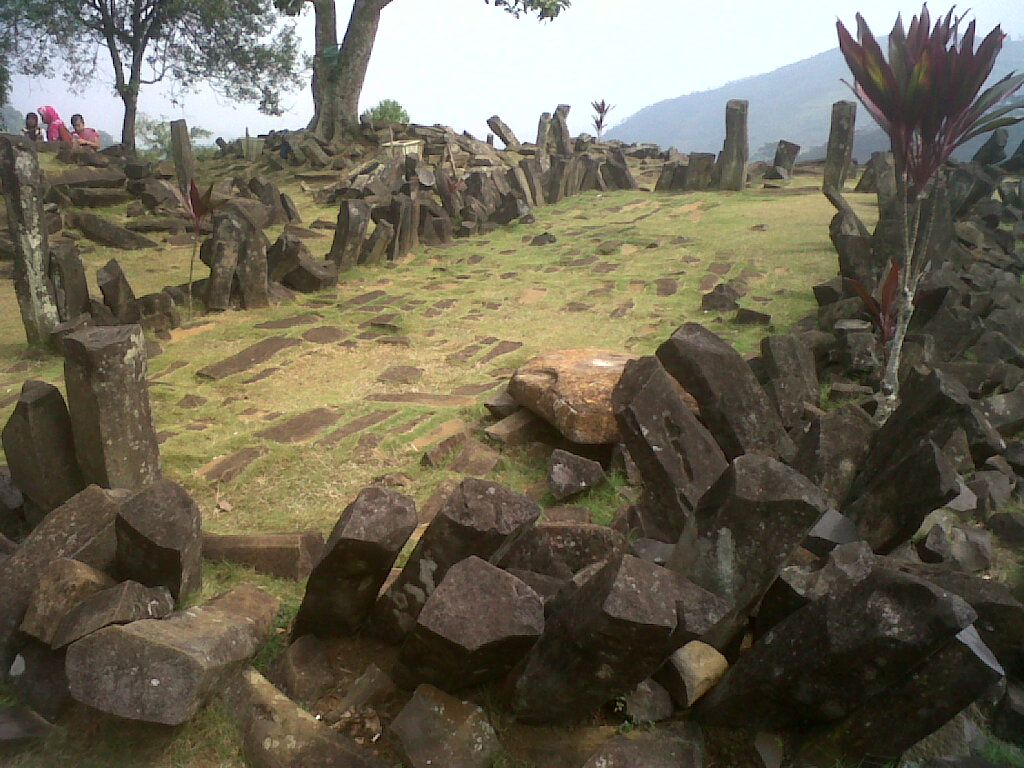
Photo: Mohammad Fadli, CC BY-SA 3.0
Gunung Padang tickets: which one for you
Our pick for each kind of visit, with live dates and prices from GetYourGuide. Free cancellation on most.
Best for: First visit, from Jakarta
A private car and driver for the long road into the hills, so you set the start time and reach the terraces before the afternoon rain.
- Based in Bandung, active travellers: Bandung full day guided trek to gunung padang with lunch A guided day with a walk through the countryside to the site and lunch included, a fuller experience than a short stop at the top.
- Ruins and waterfalls: Gunung padang heritage site cikondang waterfall tour Pairs the terraces with the Cikondang waterfall nearby, filling a day trip in the highlands with a swim or a picnic stop.
Tickets and tours: all the options
Entry is paid at the gate, and local guides from the surrounding villages wait at the foot of the steps to explain the terraces; they are worth hiring, as there are few signs. Nothing needs to be booked ahead for the site itself.
The challenge is transport. GetYourGuide sells private day tours from Jakarta, with a car, driver and sometimes a guide, which take three to four hours each way depending on traffic. From Bandung there are guided days that include a walk and lunch. Tours from Cianjur and West Java combine the site with nearby waterfalls such as Curug Cikondang, and one option adds a historical tour of the region. Private tours dominate, which is useful for families and small groups, as public transport to the hill is poor. Check what is included: some prices cover only the car and driver, with the entry fee, the site guide and meals paid separately on the day, and start times before dawn are normal from Jakarta.
If you have a car or driver, an early start, the gate ticket and a local guide is the sensible option. Without one, a private tour from Jakarta or Bandung is the easiest choice, and adding a waterfall makes the long drive worthwhile.
What to see at Gunung Padang
Kahuripan spring and the stairs
At the foot of the hill, the small Kahuripan spring is where pilgrims wash before climbing. From here the original stairway of 370 andesite steps climbs about 95 metres at a steep angle; a newer path winds up more gently for those who prefer it. Take the steps slowly and use the handrails, as they are steep and slippery when wet.
First terrace
The lowest and largest terrace is entered through a stone gateway and is covered with fallen columns and arrangements of stones. Some stones ring like a gamelan when tapped, and local guides demonstrate them. Look at the retaining walls built from columns laid horizontally, and the upright columns marking rooms or enclosures; their purpose is still debated.
5 tickets and tours for Gunung Padang
Live dates and prices from GetYourGuide. Free cancellation on most tickets.
Second and third terraces
Up a short flight of steps, the next terraces are smaller and quieter, with stone circles and mounds of columns. On one of them a stone with a mark is said by locals to bear a tiger's footprint. The view opens across tea plantations and the forested hills of the old volcanic basin around the site.
Fourth and fifth terraces
The highest terraces, the smallest and most sacred, have stone arrangements that local tradition calls a throne or meditation seat. Pilgrims still come here to pray, so keep your voice down and avoid standing on the stones. On a clear morning the view takes in the ring of mountains around the old volcanic basin.
A short history
The terraces were built on the summit of a long-extinct volcano, using natural columns of andesite that had formed in the rock. Archaeologists from the Bandung bureau date the construction to between the 2nd and 5th centuries AD, while others suggest the 6th to 8th centuries; pottery found on site dates to around the turn of the era. Dutch reports described it in 1890 and 1914, then it was forgotten until local farmers rediscovered it in 1979. Restoration followed in the 1980s, and in 2014 the government declared it a national site of 29 hectares. A 2023 paper claiming an age of over 20,000 years was retracted by its publisher in 2024.
Getting there
The site lies in the hills of Cianjur regency, about 50 km south-west of Cianjur town. From Jakarta, the drive via the toll road to Bogor and Sukabumi or over the Puncak pass takes three to four hours, depending on traffic; from Bandung, about three hours. The nearest airport is in Jakarta.
The local train between Sukabumi and Cianjur stops at Lampegan, about 8 km from the site, where ojek motorbike taxis wait. By car, the last stretch is narrow and winding through tea plantations, and there is a car park at the foot of the hill near the ticket office. A driver from Jakarta or Bandung for the day is the most practical option.
Rules and what to bring
This is a sacred site: dress modestly, do not climb on stone arrangements or move stones, and respect pilgrims at prayer. Drones need permission from the site managers. Bring water, a hat and a light raincoat, and wear shoes with good grip for the steps. Warungs at the foot of the hill sell drinks, snacks and simple meals, and there are basic toilets near the entrance.
When to go
Go early in the morning. Mist and cloud often roll in by midday in the highlands, and afternoon rain is common for much of the year, making the steps slippery. Weekends and public holidays bring large numbers of Indonesian visitors and school groups, so weekdays are much quieter.
May to September is the driest period, with clearer mornings and firmer paths. From November to March the rainy season brings heavy afternoon downpours, but mornings can still be clear. The temperature at 885 metres is pleasant all year, cooler than Jakarta. During Ramadan and the holiday after it, visitor numbers and traffic change greatly. Allow about an hour and a half for the climb and the terraces, two hours with a guide, plus at least six hours of driving from Jakarta.
Combine it with
Lampegan railway tunnel, built in the 1880s and among the oldest in Java, is about 8 km away. The Cikondang waterfall makes an easy stop on the way back. Cianjur town, known for its rice, is about two hours away, and the Puncak pass with its tea gardens lies on the road back to Jakarta.
At a glance
| Hours | Daytime, roughly 8 am to late afternoon; check locally |
|---|---|
| Closed | Usually open daily; may close for ceremonies or maintenance |
| Entry fee | Small fee in IDR, higher for foreign visitors |
| Time needed | 1.5 to 2 hours |
| Best time | Early morning, before mist and rain; May to September, the drier months |
| Booking | Pay at the gate; book a tour or driver from Jakarta or Bandung ahead |
| Access | 370 steep stone steps or a longer gentler path; uneven terraces; not suitable for wheelchairs |
| Getting there | About 50 km south-west of Cianjur, 1.5 to 2 hours by car on narrow roads |
| Civilisation | Prehistoric |
| Area | 29 ha |
| Elevation | 885 m above sea level |
| Checked | October 2026 |
Frequently asked questions
When is Gunung Padang open?
Daytime, roughly 8 am to late afternoon; check locally. Closed: Usually open daily; may close for ceremonies or maintenance.
How much is the entry fee for Gunung Padang?
Entry fee: Small fee in IDR, higher for foreign visitors.
How long do you need at Gunung Padang?
Allow 1.5 to 2 hours for Gunung Padang.
Do I need to book Gunung Padang in advance?
Pay at the gate; book a tour or driver from Jakarta or Bandung ahead.
Can I book a ticket or tour for Gunung Padang online?
Yes. GetYourGuide lists 5 tickets and tours for Gunung Padang, with live dates and prices and free cancellation on most of them.
When is the best time to visit Gunung Padang?
Early morning, before mist and rain; May to September, the drier months.
How do I get to Gunung Padang?
About 50 km south-west of Cianjur, 1.5 to 2 hours by car on narrow roads.
Is Gunung Padang accessible, and what is the terrain like?
370 steep stone steps or a longer gentler path; uneven terraces; not suitable for wheelchairs.
Is Gunung Padang worth visiting?
Worth it for the columnar stone terraces and the misty highland setting, a rare megalithic site in Java. Skip or shorten it if a long drive on mountain roads for a hilltop of fallen stones does not appeal, or if you expect the lost pyramid of fringe claims.