Huaca Pucllana
2 km away
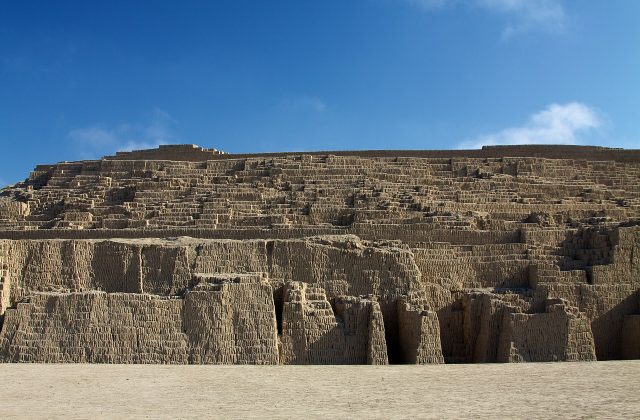
Huaca Pucllana is a great stepped pyramid of adobe in the middle of Miraflores, built by the Lima culture between about…
21 tickets & tours
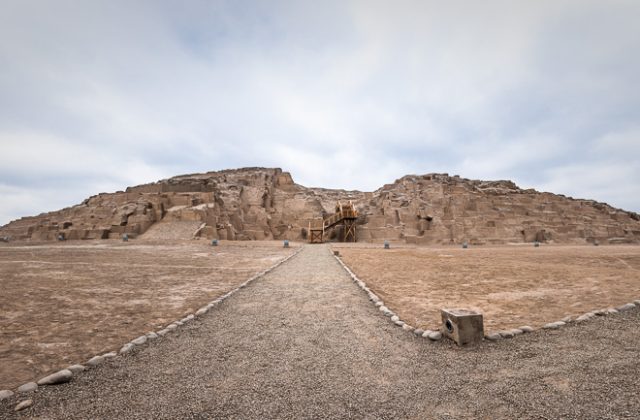
Huaca Huallamarca is a stepped adobe pyramid about 19 metres high in the San Isidro district of Lima, begun around 200 BC and later used as a cemetery and by the Incas. Heavily rebuilt in the late 1950s, it now stands among apartment blocks with a small site museum of mummies, textiles and pottery.

Photo: Håkan Svensson (Xauxa), CC BY 2.5
Nothing for Huaca Huallamarca alone is sold on GetYourGuide. The site is run by the Ministry of Culture as a site museum, and the only ticket is a small entry fee paid at the gate. It covers the museum rooms and the walk up the ramp to the top of the pyramid. There is no booking or timed entry, and visits are relaxed.
Guided visits in Spanish are sometimes offered by the site staff, and the museum panels give a clear account of the three phases of use. An English-speaking guide can be arranged through agencies in Lima, but for a site of this size most visitors manage on their own.
City tours of Lima sold by agencies in Miraflores usually focus on the historic centre, the cathedral and the catacombs of San Francisco, sometimes adding Huaca Pucllana rather than Huallamarca. Private guides offering a pre-Hispanic Lima itinerary can add Huallamarca to a day that also covers Pucllana and the Larco Museum. Hop-on bus routes and cycling tours through San Isidro occasionally pass it without stopping. The sensible plan is to walk or take a taxi here on your own, combine it with a stroll through the olive grove of El Olivar and pay at the gate.
Start in the museum beside the entrance. It shows what was found in the pyramid: funerary bundles and mummies from the cemetery phase, woven textiles, pottery jars and tools. Look at the small cone-shaped adobes that the first builders used, unlike the rectangular bricks of other huacas in Lima, and at the models of the three phases.
Outside, the truncated pyramid rises in three stepped levels to about 19 metres. Much of what you see is the reconstruction of 1958 to 1960, but the profile follows the original. Walk round the base first to see the stepped platforms and the modern ramp, built to fill a hollow left when the mound was quarried for building material.
Live prices from GetYourGuide for tickets and tours that include this site. Free cancellation on most of them.
The ramp climbs the front of the pyramid to the upper levels, where low walls of small adobes outline rooms and corridors. In the Inca period only the local chief was allowed to reach the top, while priests lived in houses on the middle level and ordinary people stayed below. Panels show the tombs found on the summit.
From the flat top you look over the rooftops of San Isidro and see how completely the city has grown around the site. When excavated, its boundaries were two ancient irrigation canals, and the area was farmland. On clear days in summer you can make out the hills behind the city.
On the way down, stop at the marked areas on the platforms where cemetery tombs were excavated. Between about AD 900 and 1300 the abandoned pyramid was used for burials by people of the Lima, Ychsma and Chancay traditions, who placed the dead in bundles with textiles and pots. Some of these are the bundles displayed in the museum.
The Huallas began the pyramid between about 200 BC and AD 200, building platforms one above another as a ceremonial centre. It was later abandoned and reused as a cemetery from about AD 900 to 1300, and the Incas used it as a public building in the 15th and early 16th centuries. Travellers dug for burials in the 19th century, and in the early 20th the mound was quarried and cut for a road. Julio C. Tello excavated it in 1942, and plans to demolish it were stopped. Under the mayor Carlos Neuhaus the pyramid was rebuilt between 1958 and 1960, and the site museum opened, with further excavations in the 1990s.
Huaca Huallamarca stands on a residential street in San Isidro, one of Lima's business and residential districts, a short walk from the El Olivar park. From Miraflores a taxi takes about 15 minutes, depending on traffic; use an app or an official taxi. The Metropolitano bus line along the Via Expresa has stations in San Isidro, from where the walk is about 20 minutes. Walking from central Miraflores takes about 40 minutes through quiet streets. Jorge Chavez International Airport is about 40 minutes to an hour away by car. There is street parking nearby, although spaces are limited on weekdays.
Stay on the ramp and marked paths, and do not climb on the walls or the adobes, which crumble easily. Photography is usually allowed outside; ask about flash in the museum. Drones are not allowed in Lima's urban areas without a permit. Bring sun cream in summer, as the summit has no shade. There are toilets at the entrance, and cafes in San Isidro a few minutes away. As anywhere in Lima, keep valuables out of sight.
Lima has a mild desert climate. From December to April the summer brings sunshine and warm days, which give the best views from the top. From June to October the city lies under a grey sea mist, the garua, and the air is cool and damp, but it is still fine for a visit. Rain is almost unknown.
The site is quiet on most days. School groups visit on weekday mornings in term time, and local families come on Sundays, but crowds are rare. The museum is closed on Mondays, like many in Peru, and public holidays may bring changed hours. Come in the morning, when traffic in San Isidro is lighter and the light is clear, and pair it with a walk in El Olivar. Allow about an hour for the museum and the pyramid, or 40 minutes if you skip the summit.
The El Olivar park, an old olive grove planted in colonial times, is a 10-minute walk away. Huaca Pucllana, a larger adobe pyramid of the Lima culture with a restaurant, is about 15 minutes by taxi in Miraflores. The Larco Museum in Pueblo Libre, with its famous collection of pottery, is 20 minutes away.
2 km away
Huaca Pucllana is a great stepped pyramid of adobe in the middle of Miraflores, built by the Lima culture between about…
21 tickets & tours
4 km away
Huaca Mateo Salado is a group of five stepped pyramids of mud and rammed earth in the middle of Lima, between Cercado…
2 tickets & tours
23 km away
Pachacamac is the great desert sanctuary south of Lima, where pilgrims came for more than a thousand years to consult…
28 tickets & tours
| Hours | Roughly 9 am to 5 pm; check locally |
|---|---|
| Closed | Mondays |
| Entry fee | Small fee in PEN at the entrance |
| Time needed | About an hour |
| Best time | Weekday mornings; December to April for blue skies |
| Booking | Pay at the entrance; no booking needed |
| Access | Ramp and steps to the summit, some uneven surfaces; the museum is at ground level |
| Getting there | A 10-minute walk from the El Olivar park in San Isidro; 15 minutes by taxi from Miraflores |
| Founded | 200 BC (c. 200 BC; first phase 200 BC-AD 200) |
| Excavated | 1942 |
| Civilisation | Andean |
| Height | 19 m (stepped pyramid, approximate) |
| Checked | October 2026 |
Roughly 9 am to 5 pm; check locally. Closed: Mondays.
Entry fee: Small fee in PEN at the entrance.
Allow About an hour for Huaca Huallamarca.
Pay at the entrance; no booking needed.
Yes. GetYourGuide sells tickets and guided tours whose route includes Huaca Huallamarca; live prices are shown on this page.
Weekday mornings; December to April for blue skies.
A 10-minute walk from the El Olivar park in San Isidro; 15 minutes by taxi from Miraflores.
Ramp and steps to the summit, some uneven surfaces; the museum is at ground level.
Worth it for a quick, easy look at a pre-Hispanic pyramid in the middle of modern Lima, with a good small museum. Skip or shorten it if you have time for only one huaca: Huaca Pucllana in Miraflores is larger and more original.
Huaca Huallamarca dates from 200 BC (c. 200 BC; first phase 200 BC-AD 200). Excavations began in 1942.
Lima, Peru
Pachacamac is the great desert sanctuary south of Lima, where pilgrims came for more than a thousand years to consult…
28 tickets & tours
Lima, Peru
Huaca Pucllana is a great stepped pyramid of adobe in the middle of Miraflores, built by the Lima culture between about…
21 tickets & tours
Lima, Peru
Huaca Mateo Salado is a group of five stepped pyramids of mud and rammed earth in the middle of Lima, between Cercado…
2 tickets & tours