Ancient City · Andean · Ecuador
Ingapirca
Ingapirca, at about 3,100 metres in the Andes of Canar province, is the largest Inca site in Ecuador. Its centre is the Temple of the Sun, an oval platform of finely fitted stone built around a rock outcrop, beside the older burial grounds of the Canari people whom the Inca absorbed in the 15th century.
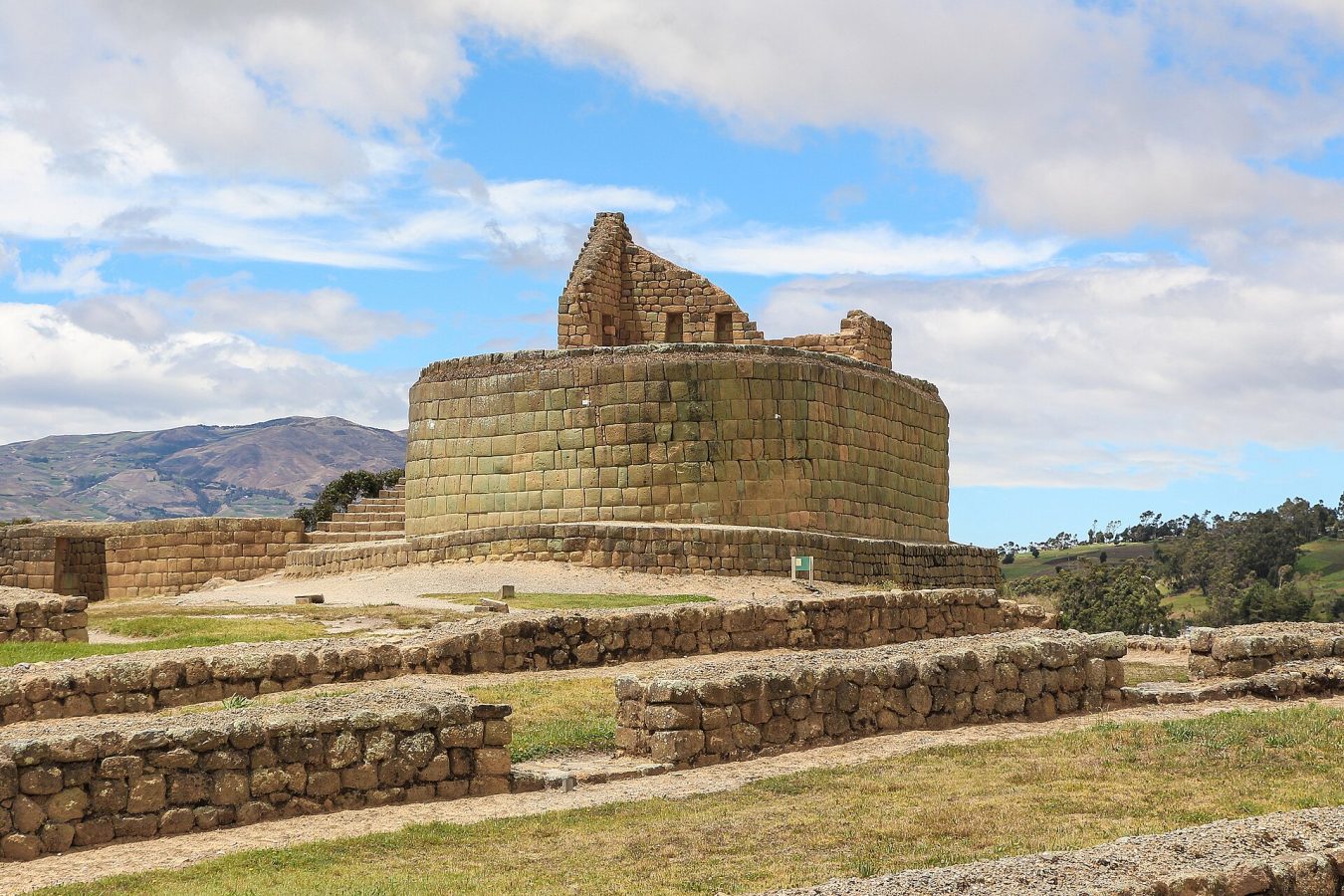
Photo: Bernard Gagnon, CC BY-SA 3.0
Ingapirca tickets: which one for you
Our pick for each kind of visit, with live dates and prices from GetYourGuide. Free cancellation on most.
Best for: First visit, a day from Cuenca
Small group transport on the long mountain road and a guide on site, plus the walk to the rock face shaped like a head; back in Cuenca by evening.
- Ruins plus craft villages: Full day ingapirca gualaceo chordeleg from cuenca Adds the market town of Gualaceo and the silver workshops of Chordeleg to the ruins, making one long day of the Cuenca countryside rather than a single site.
- Travelling the Andes from Quito: Quito 5 day andes tour with quilotoa ingapirca and cuenca Several days overland with Quilotoa and other highlights on the way south, so Ingapirca becomes a stop on the route to Cuenca instead of a separate trip.
Tickets and tours: all the options
Entry is paid at the gate, and local guides take groups round the central area of the complex, so even independent visitors get some explanation. There is nothing to book in advance for the site itself, and no online ticket worth paying a premium for.
GetYourGuide sells day trips from Cuenca, two to three hours each way by road. The standard format is a small group tour with transport, a guide and time on site, usually with a short walk to the natural rock face known as the Inca Face. Longer days add Canar villages, the market town of Gualaceo and the silversmiths of Chordeleg, which makes a full day out but cuts time at the ruins. Lunch is sometimes included, often in a local restaurant near the site, and the entry fee may or may not be.
There are also multi-day tours that cross the Andes from Quito to Cuenca with Cotopaxi, Quilotoa or Banos on the way, using Ingapirca as one stop; and two-day packages from Cuenca with the Cajas national park. For most visitors based in Cuenca, the small-group day tour is the sensible choice, as it solves the transport and adds context. Travellers on a budget can take the direct bus and join a site guide at the gate.
What to see at Ingapirca
Temple of the Sun
The oval platform on the rise at the centre of the site is the image of Ingapirca. Built without mortar from carefully shaped blocks, it wraps round a natural rock, with a small chamber on top whose doorway was aligned with the sun at the solstices. Walk round its base to see the curved walls and the precise joints of Inca masonry.
Pilaloma and the Canari tombs
South of the temple, the Pilaloma area belongs to the Canari, who used this hill long before the Inca. Its centre is a burial ground where archaeologists found a woman of high rank buried with companions and offerings. Rough fieldstone walls here contrast with the dressed Inca stone nearby, showing two cultures side by side.
6 tickets and tours for Ingapirca
Live dates and prices from GetYourGuide. Free cancellation on most tickets.
Storehouses and residences
Between the two groups lie the foundations of rooms, courtyards and storehouses, where food and supplies for Inca troops travelling north were kept. Low walls trace the layout of buildings for priests and officials. Look for the trapezoidal niches and doorways, a sign of Inca design, and the channels of the water system that served the complex.
Inca road and Intihuaycu
A path leaves the main area and follows the ravine below, past a stretch of the old Inca road that linked Cuzco with Quito. Along the way are carved rocks, including one with a basin and channels, and the Intihuaycu ravine. The walk takes about half an hour and gives a quieter view of the setting.
The Inca Face
At the end of the trail, a natural cliff resembles a giant human profile, which guides call the Inca Face. Whether it was revered or simply noticed is unknown, but it is a popular photo stop. From here the path climbs back to the site museum, which displays Canari and Inca pottery, metalwork and textiles found during the excavations.
A short history
The Canari people had long held this area, which they called Hatun Canar, when the Inca Tupac Yupanqui pushed into southern Ecuador in the late 15th century. Resistance was fierce, and the Inca combined force with alliances, including marriage into the Canari elite. The Temple of the Sun was built under Huayna Capac, and the complex served as a ceremonial centre and as a fortified store on the road north. After the Spanish conquest, stones were carried off for buildings in the valley. The French scientist Charles Marie de La Condamine described the ruins in 1739. Excavation and restoration in the 20th century uncovered the Canari burials and gave the site its present form.
Getting there
Cuenca is the base, with flights from Quito and Guayaquil to its Mariscal Lamar airport. From Cuenca's main bus terminal, a few direct buses a day run to Ingapirca village in about two hours; check return times on arrival, as the last bus leaves in the afternoon. Alternatively, take a bus to Canar or El Tambo on the Pan-American Highway and a taxi for the last stretch.
By car, follow the highway north from Cuenca through Azogues and turn off towards Ingapirca after El Tambo; allow about two hours. The ticket office and car park are at the entrance, a few minutes' walk from the village square. Taxis from Cuenca can be hired for the day, which is often similar in cost to a tour for two people.
Rules and what to bring
Do not climb on the walls of the Temple of the Sun or enter roped areas, and stay on the paths across the grass. Drones need permission. At this altitude the weather turns in minutes, so bring a warm layer, a waterproof jacket, sunscreen and a hat even on a bright morning. If you have just arrived from the coast, walk slowly. Toilets are at the entrance, and simple restaurants are in the village.
When to go
The best hours are the morning. Cloud often rolls in after midday, bringing wind and rain, and the temple looks best in clear light. Tours from Cuenca usually arrive in the late morning, so if you come by early bus or car you may have the first hour almost alone. Weekends and Ecuadorian holidays bring more domestic visitors.
June to September is the driest and sunniest period in the southern highlands, though the wind can be cold. From October to May showers are more frequent, the hills are green and the paths muddy. The Inca festival of Inti Raymi is celebrated here around the June solstice with music and dancing, drawing large crowds. Allow two to three hours on site, including the Inca Face walk and the museum, plus about four hours of travel from Cuenca.
Combine it with
Cuenca's old centre, a UNESCO site, holds the Pumapungo museum and its Inca terraces, about two hours away. Gualaceo market and the silver workshops of Chordeleg fit on the drive back. Further north, the Devil's Nose railway runs from Alausi, about two hours from Ingapirca, and Cajas National Park lies west of Cuenca.
At a glance
| Hours | Daytime, typically from 8 am to late afternoon; check the official site before travelling |
|---|---|
| Closed | Usually open daily; check around public holidays |
| Entry fee | Modest entry fee in USD; reduced for Ecuadorian residents |
| Time needed | 2 to 3 hours on site |
| Best time | Morning, before cloud and rain build; June to September is drier |
| Booking | Pay at the gate; book a tour from Cuenca a day or two ahead |
| Access | Grassy slopes and stone steps at over 3,000 metres; cold wind and sudden rain; limited wheelchair access |
| Getting there | About 2 hours by road north of Cuenca; direct buses from Cuenca's main bus terminal |
| Founded | 1450 (15th century (midpoint), Inca phase; Canari site earlier) |
| Civilisation | Andean |
| UNESCO | Qhapaq Ñan, Andean Road System |
| Website | complejoingapirca.gob.ec |
| Checked | October 2026 |
Frequently asked questions
When is Ingapirca open?
Daytime, typically from 8 am to late afternoon; check the official site before travelling. Closed: Usually open daily; check around public holidays.
How much is the entry fee for Ingapirca?
Entry fee: Modest entry fee in USD; reduced for Ecuadorian residents.
How long do you need at Ingapirca?
Allow 2 to 3 hours on site for Ingapirca.
Do I need to book Ingapirca in advance?
Pay at the gate; book a tour from Cuenca a day or two ahead.
Can I book a ticket or tour for Ingapirca online?
Yes. GetYourGuide lists 6 tickets and tours for Ingapirca, with live dates and prices and free cancellation on most of them.
When is the best time to visit Ingapirca?
Morning, before cloud and rain build; June to September is drier.
How do I get to Ingapirca?
About 2 hours by road north of Cuenca; direct buses from Cuenca's main bus terminal.
Is Ingapirca accessible, and what is the terrain like?
Grassy slopes and stone steps at over 3,000 metres; cold wind and sudden rain; limited wheelchair access.
Is Ingapirca worth visiting?
Worth it for the finest Inca stonework in Ecuador and the shared Canari and Inca story. Skip or shorten it if you are heading on to Peru for Cusco and Machu Picchu, or if a long return drive from Cuenca for a compact site does not appeal.
How old is Ingapirca?
Ingapirca dates from 1450 (15th century (midpoint), Inca phase; Canari site earlier).
Is Ingapirca a UNESCO World Heritage Site?
Yes. Ingapirca is part of the UNESCO World Heritage Site Qhapaq Ñan, Andean Road System.