Ancient City · Other · Tanzania
Kaole Ruins
Kaole is a ruined Swahili trading town on the Indian Ocean coast just outside Bagamoyo in Tanzania. Its coral-stone remains, two mosques and some 30 tombs, date from the 13th to the 16th century, and one of the mosques is counted among the oldest in East Africa. A small museum shows the Chinese porcelain that proves its trade links.
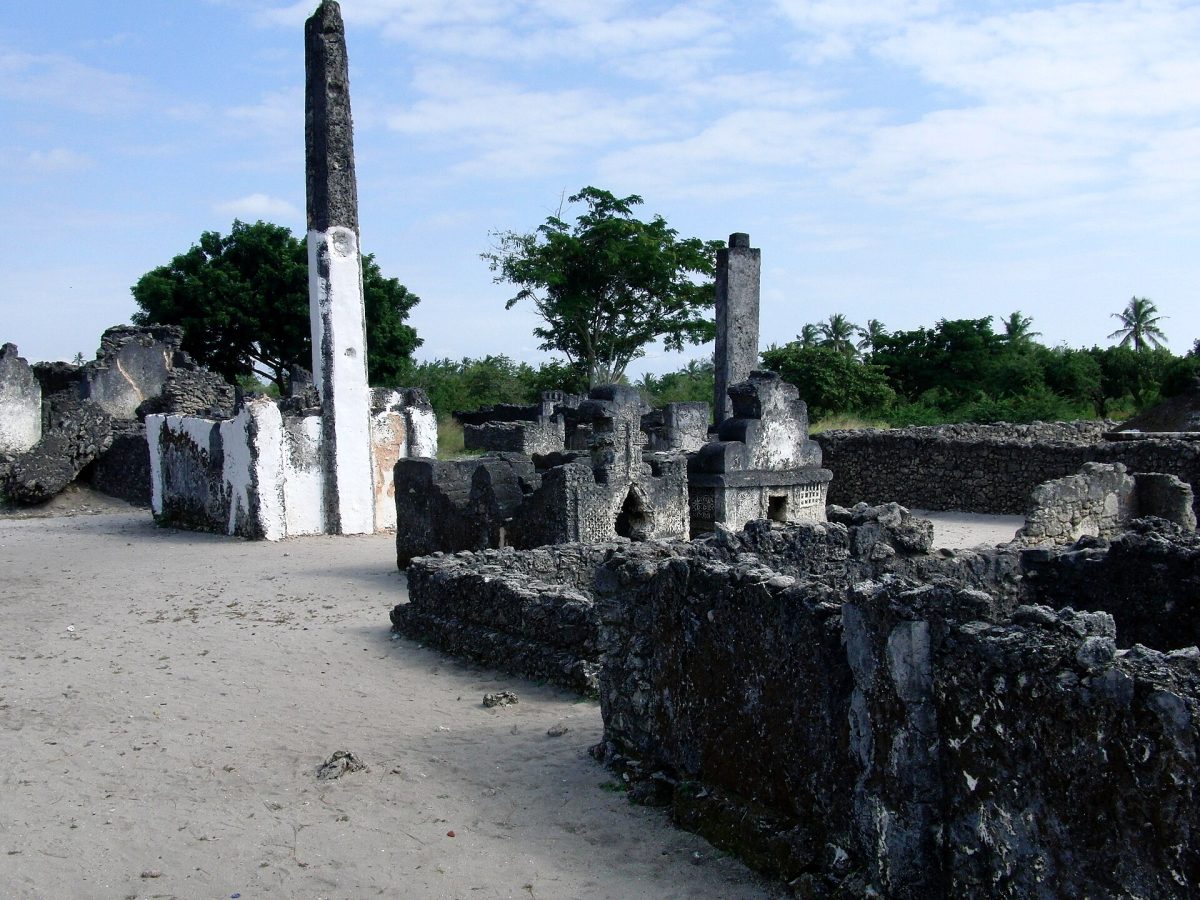
Photo: Jens Klinzing, CC BY-SA 3.0
Kaole Ruins tickets: which one for you
Our pick for each kind of visit, with live dates and prices from GetYourGuide. Free cancellation on most.
Best for: A day out from Dar es Salaam
Private transport there and back with a local guide, so you see Kaole and the old town of Bagamoyo without handling minibuses and the slow coastal road yourself.
- Already staying in Bagamoyo: Bagamoyo explore historic slave trade route kaole ruins A guided walk that links the ruins with the town's history as a caravan and slave-trade port, useful because signs at the sites explain very little.
Tickets and tours: all the options
Entry to Kaole works simply: you pay a small fee at the gate in Tanzanian shillings, and the ticket covers the ruins and the one-room museum by the entrance. There is no online ticket and no need to book. A caretaker or site guide is often around and will walk you round the mosques and tombs for a tip, which is worth accepting because there is almost no written information on the site.
On GetYourGuide the options are few. One is a day trip from Dar es Salaam with a driver and guide, which usually includes hotel pick-up, entry to Kaole and a tour of Bagamoyo's old town, mission museum and former caravan station; lunch is often extra. The other is a guided tour based in Bagamoyo that follows the history of the town as a terminus of the caravan route from the interior and a slave-trade port, with Kaole as one of the stops. Check what is included before you book, since local site fees are sometimes paid on the day.
If you are staying in Bagamoyo, you do not need a tour: a bajaji to the gate and the site guide are enough. From Dar es Salaam, the day trip is the sensible choice, because public minibuses are slow and the last stretch to Kaole still needs a local ride.
What to see at Kaole Ruins
The older mosque
Start at the main mosque near the entrance, a low coral-rag building thought to date from the 13th century, which makes it one of the earliest mosques known on the East African coast. Look for the niche of the qibla wall facing north towards Mecca and the remains of the washing area with its stone cistern. The roof has gone, but some walls stand above head height.
Pillar tombs
A few steps away the cemetery spreads across the open ground, with about 30 tombs built of coral stone. Several are marked by tall stone pillars, a typically Swahili grave monument, and some once held porcelain bowls. Local tradition says the larger tombs belong to the Diwanis, the rulers of the town. People still leave offerings at a few, so treat them as graves.
2 tickets and tours for Kaole Ruins
Live dates and prices from GetYourGuide. Free cancellation on most tickets.
The second mosque
Walk on past the tombs to the second, later mosque, smaller and more ruined than the first, with low walls outlining the prayer hall. Its position close to the older building shows how the town grew and rebuilt over three centuries. From here you can see how close the site sits to the shore, now separated from open water by a belt of mangroves and scrub.
Wells and town ground
Between the mosques are the remains of old wells, one of which local people still consider to have healing water. Most houses at Kaole were built of wood and mud and have left nothing above ground, so the bare area around the stone buildings was once the inhabited town. A guide can point out the lines of former lanes and the trading route towards the shore.
Site museum
End at the small museum by the gate, which displays finds from the excavations: local pottery, beads, glass and fragments of Chinese porcelain that reached the coast through Indian Ocean trade. Panels explain the Swahili towns along the coast and the work of the archaeologist who first studied Kaole. It takes only ten or fifteen minutes, but it gives the stones their context.
A short history
Kaole began around the 8th century as a trading settlement on the shore south of the later town of Bagamoyo, part of the chain of Swahili ports that linked the African interior with Arabia, Persia, India and China. Its merchants traded mangrove poles, ivory and ebony. From the 13th century the town built in coral stone: the two mosques and most of the tombs belong to the period between then and the 16th century, when it declined and its role passed to other ports. The name, said to mean go and see, was given later by the Zaramo people. Neville Chittick first studied the ruins around 1958; it is now a national historic site.
Getting there
Bagamoyo lies about 70 km north of Dar es Salaam, and the drive takes one and a half to two hours depending on traffic leaving the city. Julius Nyerere International Airport is on the far side of Dar, so allow longer from there. Minibuses, known as daladala, run from the Mwenge and Makumbusho stands in Dar to Bagamoyo throughout the day; they are cheap but slow and crowded. From Bagamoyo, a bajaji, the local three-wheeled taxi, or a car taxi covers the 5 km to Kaole in about 10 minutes along a sandy road; agree the fare and a waiting time first, as there is little transport for the return. Drivers can park at the gate. Cycling from town is possible on a hired bike in the cooler hours.
Rules and what to bring
This is a sacred site for local Muslims as well as a monument: dress modestly, cover shoulders and knees, and ask before photographing anyone praying or leaving offerings at the tombs. Do not climb on the tomb pillars or walls, which are fragile coral stone. Bring water, a hat and sunscreen, as there is little shade and nowhere to buy food on site; mosquito repellent helps near the mangroves late in the day. Toilets are basic or absent, so plan for them in Bagamoyo.
When to go
Kaole is quiet almost all the time, and you are more likely to share it with a school group than with coachloads of tourists. The main problem is heat and humidity on this coast, so the best hours are from opening until about 10 am and after 3 pm, when the low sun also brings out the colour of the coral stone.
The driest and most comfortable months are June to October, when the trade winds keep temperatures bearable. The long rains from March to May turn the access road muddy and make the mosquitoes worse, and the short rains in November and December bring heavy showers that usually pass quickly. January and February are hot and steamy. On Fridays around midday, local visitors come to pray at the tombs, which is interesting to see but calls for discretion. Allow about an hour for the ruins and museum, or half a day with Bagamoyo's old town, and a full day if you are coming from Dar es Salaam.
Combine it with
Bagamoyo's old town is ten minutes away: walk past the German-era boma, the Old Fort and the Caravan Serai, the former station for caravans arriving from the interior. The Catholic mission to the north has a museum on the slave trade and the explorers who started from here. Dar es Salaam's National Museum, about two hours south, puts the Swahili coast in a wider setting.
At a glance
| Hours | Daytime, roughly office hours; the museum keeps similar hours |
|---|---|
| Closed | Usually open daily; check locally on public holidays |
| Entry fee | Small fee in Tanzanian shillings at the gate |
| Time needed | about an hour |
| Best time | Early morning or late afternoon; June to October for drier, cooler weather |
| Booking | No booking needed; pay at the gate or join a day tour from Dar es Salaam |
| Access | Flat sandy ground and short grass; no shade among the tombs; low walls and uneven coral paving |
| Getting there | Bajaji or taxi from Bagamoyo town, about 5 km and 10 minutes |
| Founded | 1250 (13th century (midpoint); trading town from 8th century) |
| Excavated | 1958 |
| Civilisation | Other |
| Checked | October 2026 |
Frequently asked questions
When is Kaole Ruins open?
Daytime, roughly office hours; the museum keeps similar hours. Closed: Usually open daily; check locally on public holidays.
How much is the entry fee for Kaole Ruins?
Entry fee: Small fee in Tanzanian shillings at the gate.
How long do you need at Kaole Ruins?
Allow about an hour for Kaole Ruins.
Do I need to book Kaole Ruins in advance?
No booking needed; pay at the gate or join a day tour from Dar es Salaam.
Can I book a ticket or tour for Kaole Ruins online?
Yes. GetYourGuide lists 2 tickets and tours for Kaole Ruins, with live dates and prices and free cancellation on most of them.
When is the best time to visit Kaole Ruins?
Early morning or late afternoon; June to October for drier, cooler weather.
How do I get to Kaole Ruins?
Bajaji or taxi from Bagamoyo town, about 5 km and 10 minutes.
Is Kaole Ruins accessible, and what is the terrain like?
Flat sandy ground and short grass; no shade among the tombs; low walls and uneven coral paving.
Is Kaole Ruins worth visiting?
Worth it for a quiet hour among some of the oldest mosques and pillar tombs on the Swahili coast. Skip or shorten it if you have already seen Kilwa Kisiwani or Gede, or if you cannot pair it with Bagamoyo's old town.
How old is Kaole Ruins?
Kaole Ruins dates from 1250 (13th century (midpoint); trading town from 8th century). Excavations began in 1958.