Palace, Villa & Baths · Other · Spain
Medina Azahara
Medina Azahara is the ruined palace-city that the first caliph of al-Andalus, Abd al-Rahman III, built in the 10th century on a hillside 8 km west of Cordoba. Only about 10 of its 112 hectares have been excavated, but these include terraced palaces, arcades and carved stone that show the splendour of the Cordoba caliphate.
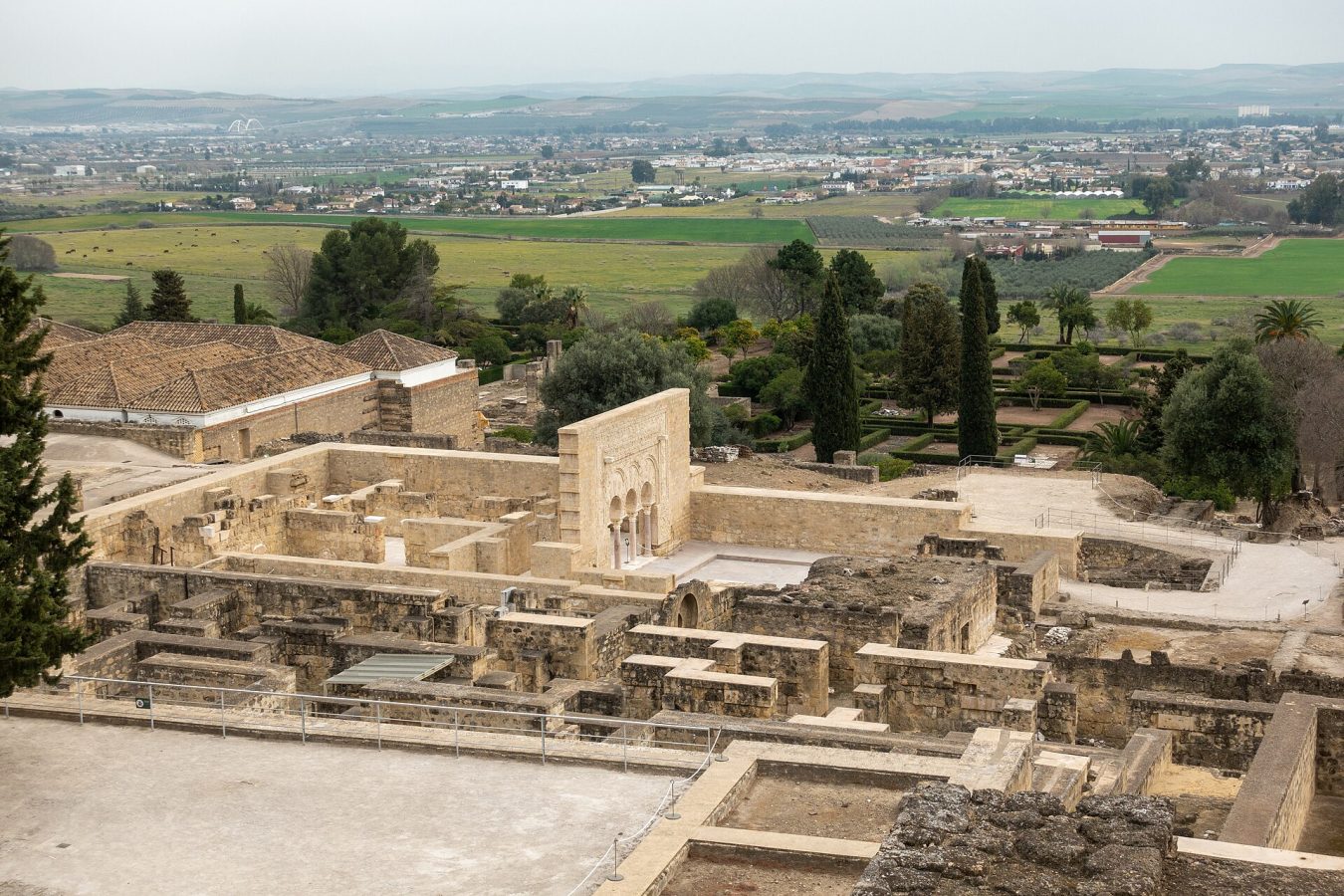
Photo: Kent Wang from Barcelona, Spain, CC BY-SA 2.0
Medina Azahara tickets: which one for you
Our pick for each kind of visit, with live dates and prices from GetYourGuide. Free cancellation on most.
Best for: First visit, with transport
Return transport from the city, the shuttle up to the ruins and a guide who explains the palace terraces, all in one booking of about three hours.
- An evening visit: Medina azahara at night Walks the ruins after dark when the heat has gone, on the nights the site opens late; a good choice in summer, when daytime visits end at 2 pm.
- Private guide and car: Cordoba medina azahara exclusive private tour Your own guide and vehicle from your hotel, so you can spend as long as you like in the museum and avoid the shuttle queues.
Tickets and tours: all the options
The site and museum are run by the regional government, and entry is very cheap: free for EU citizens and a small fee for others. The museum stands about 2 km below the ruins, and from there a shuttle bus with its own ticket takes visitors up the hill; you cannot drive to the ruins. A tourist bus runs from central Cordoba to the museum and back, and the combined bus ticket includes the shuttle. Guided visits in Spanish are sometimes offered by the site.
On GetYourGuide most tours are guided visits of about three hours with a licensed guide, offered with or without transport from Cordoba. There are night visits, dusk tours, private tours and a combined day with the Mosque-Cathedral of Cordoba, and some tours in French or Spanish only. A guide adds a lot, because the ruins are hard to read without explanation and the signs are brief. Check whether the shuttle and entry are included. For most visitors, a guided tour with transport from Cordoba is the easiest choice; independent travellers can take the tourist bus and visit the museum before going up.
What to see at Medina Azahara
Site museum
Start at the museum, built into the ground so as not to block the view of the hillside. It shows carved marble capitals, tiles, pottery, ivory and bronze objects, and a model of the city on its three terraces. A short film explains how the caliph's court worked. From here the shuttle bus climbs about 2 km to the ruins.
Great Portico and Dar al-Jund
The route enters by the north gate and leads down to the great arcade that formed the ceremonial front of the palace, its horseshoe arches rebuilt in part. Behind it, the large hall known as the Dar al-Jund, probably used by the army or for receptions, was the setting for the caliph's audiences with ambassadors.
17 tickets and tours for Medina Azahara
Live dates and prices from GetYourGuide. Free cancellation on most tickets.
House of Jafar
Further down the slope, the residence of the chief minister Jafar is grouped around courtyards. Its main facade has been rebuilt from the original carved stones, with horseshoe arches framed by plant and geometric decoration, giving a good idea of how the palace buildings looked. The rooms beside it show the plan of a palace home.
Hall of Abd al-Rahman III
The main reception hall of the caliph, also called the Salon Rico, stands on the middle terrace overlooking the gardens. Its walls were covered with intricately carved stone panels of the tree of life, now being reassembled from thousands of fragments; restoration has kept it closed for long periods, so check what can be seen.
Gardens and mosque terrace
In front of the hall lie the upper gardens, with paths, water channels and pools laid out in four parts, offering a view over the Guadalquivir valley. On the lowest terrace you can see the foundations of the congregational mosque, aligned towards Mecca at an angle to the rest of the city.
A short history
Abd al-Rahman III proclaimed himself caliph in 929 and began building a new capital to express his power about 936 to 940, on the lower slopes of the Sierra Morena. Building continued under his son al-Hakam II, and the city held palaces, a mosque, ministries, a mint, workshops, barracks and baths, supplied by aqueducts. From about 978 the regent al-Mansur moved government to his own new palace-city, and between 1010 and 1013 Medina Azahara was sacked in civil war and abandoned. Its stone was carried off for centuries. Excavations started in 1911, the museum opened in 2009 and the site was listed by UNESCO in 2018.
Getting there
Medina Azahara lies about 8 km west of central Cordoba, off the A-431 road towards Palma del Rio. The tourist bus leaves from stops in the centre on the Paseo de la Victoria, takes about 20 minutes and runs a few times a day; check the timetable, as there are fewer services on Sundays. A taxi from the city takes about 15 minutes, but you must arrange the return. By car, park at the museum. From there the shuttle bus takes you up the 2 km to the ruins in a few minutes. Cordoba railway station has fast trains to Madrid and Seville.
Rules and what to bring
Stay on the marked paths and do not climb on walls or touch the carved stone. Drones are not allowed. There is little shade in the ruins and summer heat is extreme, so bring water, a hat and sunscreen and wear good shoes for the gravel and ramps. Toilets and a café are at the museum, but there is nowhere to buy food at the ruins themselves.
When to go
Cordoba is one of the hottest cities in Spain, and from June to early September afternoon temperatures often pass 40 degrees. That is why in summer the site closes at 2 pm and reopens from 7 pm to midnight. Visit at opening, when the light is good and the paths are cool.
Spring is the best season, from March to May, when the countryside is green and the city fills with flowers for the patio festival in May. October and November are also pleasant. In winter mornings can be chilly but the site is quiet. Weekends and Spanish holidays bring more local visitors and school groups. Summer evening opening, for the ruins only, is a good way to beat the heat. Allow two to three hours including the museum and the shuttle, or half a day with transport from Cordoba.
Combine it with
The Mosque-Cathedral of Cordoba, which Abd al-Rahman III and al-Hakam II enlarged, is the essential pairing, and the Alcazar of the Christian Monarchs and the Jewish quarter lie beside it. The Archaeological Museum of Cordoba holds more finds. Seville is 45 minutes away by fast train.
At a glance
| Hours | Tue–Sat 9 am to 6 pm, Fri–Sat to 9 pm late Mar–Jun; late Jun–Sep 9 am to 2 pm and 7 pm to midnight; Sun to 3 pm |
|---|---|
| Closed | Mondays unless before a holiday; 1 and 6 Jan, 1 May, 24, 25 and 31 Dec |
| Entry fee | from EUR 1.50; free for EU citizens |
| Time needed | 2 to 3 hours with the museum |
| Best time | First slot of the morning; March to May and October |
| Booking | Book the tourist bus or a tour ahead; entry is bought at the museum |
| Access | Museum fully accessible; the site has gravel paths, steep ramps and steps between terraces, little shade |
| Getting there | Tourist bus from central Cordoba to the museum, about 20 minutes, then a shuttle to the ruins |
| Founded | AD 936 |
| Abandoned | 1010 |
| Excavated | 1911 |
| Civilisation | Other |
| Area | 1.1 km² |
| UNESCO | Caliphate City of Medina Azahara |
| Website | museosdeandalucia.es/web/conjuntoarqueologicomadinatalzahra |
| Checked | October 2026 |
Frequently asked questions
When is Medina Azahara open?
Tue–Sat 9 am to 6 pm, Fri–Sat to 9 pm late Mar–Jun; late Jun–Sep 9 am to 2 pm and 7 pm to midnight; Sun to 3 pm. Closed: Mondays unless before a holiday; 1 and 6 Jan, 1 May, 24, 25 and 31 Dec.
How much is the entry fee for Medina Azahara?
Entry fee: from EUR 1.50; free for EU citizens.
How long do you need at Medina Azahara?
Allow 2 to 3 hours with the museum for Medina Azahara.
Do I need to book Medina Azahara in advance?
Book the tourist bus or a tour ahead; entry is bought at the museum.
Can I book a ticket or tour for Medina Azahara online?
Yes. GetYourGuide lists 17 tickets and tours for Medina Azahara, with live dates and prices and free cancellation on most of them.
When is the best time to visit Medina Azahara?
First slot of the morning; March to May and October.
How do I get to Medina Azahara?
Tourist bus from central Cordoba to the museum, about 20 minutes, then a shuttle to the ruins.
Is Medina Azahara accessible, and what is the terrain like?
Museum fully accessible; the site has gravel paths, steep ramps and steps between terraces, little shade.
Is Medina Azahara worth visiting?
Worth it for the caliph's palace terraces, the finest early Islamic carving in Spain and the excellent site museum. Skip or shorten it if you have only one day in Cordoba, when the Mosque-Cathedral and the old town should come first.
How old is Medina Azahara?
Medina Azahara dates from AD 936. It was abandoned in 1010. Excavations began in 1911.
Is Medina Azahara a UNESCO World Heritage Site?
Yes. Medina Azahara is part of the UNESCO World Heritage Site Caliphate City of Medina Azahara.