Fortress & Citadel · Prehistoric · United Kingdom
Old Sarum
Old Sarum is the great earthwork hill 3 km north of Salisbury where an Iron Age fort of about 400 BC later held a Norman castle, a royal palace and the first Salisbury cathedral. Huge ramparts, the castle ruins on the inner mound and the cathedral's outline on the grass explain how the city began.
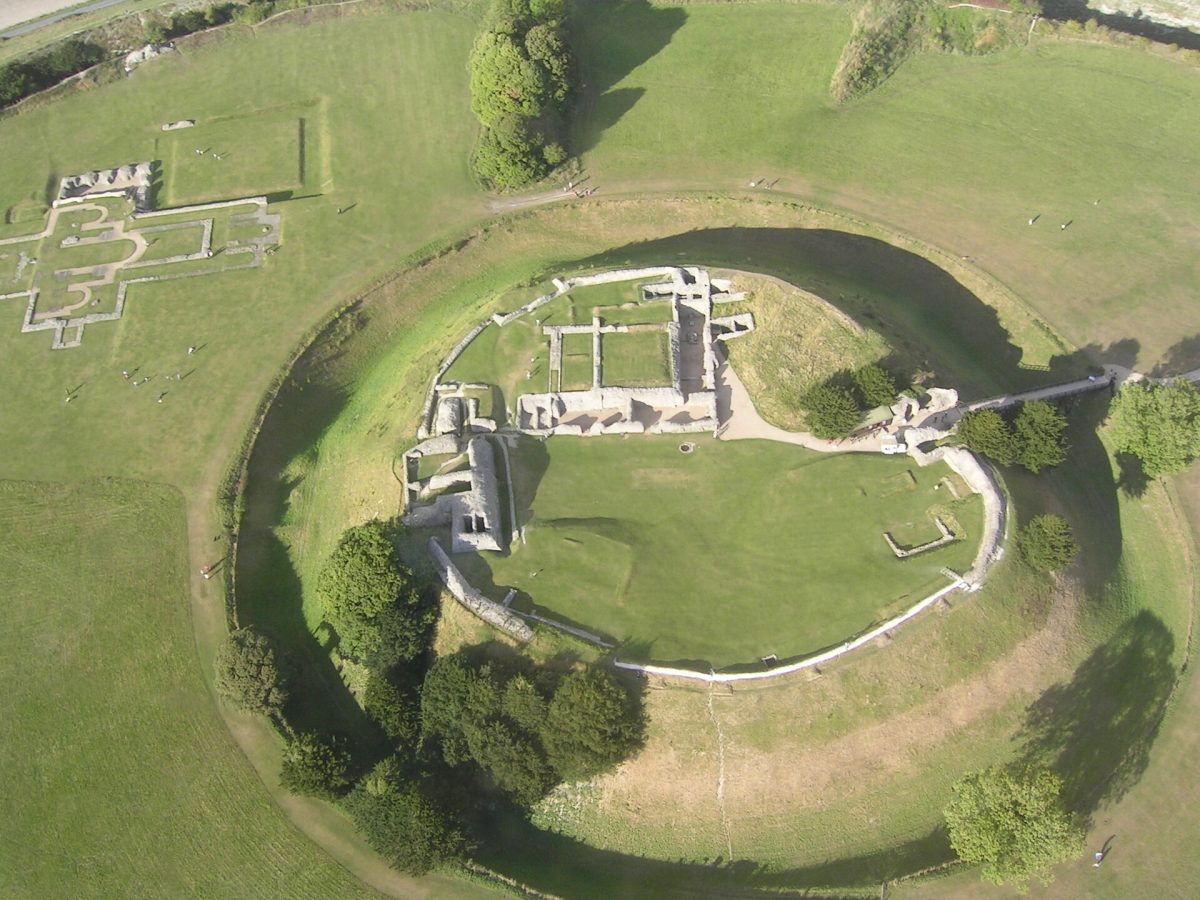
Photo: MARKEDWARDS, CC BY-SA 4.0
Tickets and tours: which to book
Entry works on two levels. The vast outer bailey, with the ramparts and the cathedral foundations, can be walked freely, while the inner bailey with the castle ruins is run by English Heritage and needs a ticket. Members of English Heritage enter free, and children pay less; most people simply pay at the entrance on the day, and booking online in advance is usually slightly cheaper. There are no skip-the-line or timed products, because queues are rare.
The one product listed on GetYourGuide is a guided small-group day from Salisbury that pairs Stonehenge with Old Sarum and a stretch of Wiltshire countryside. It suits visitors without a car who want both monuments in one outing, with transport and commentary included. Check whether the Stonehenge ticket and the Old Sarum castle entry are in the price, and how long is spent at each stop.
Many visitors combine Old Sarum with Salisbury Cathedral on their own, since buses run frequently and the walk from the city is easy. Audio guides are not essential here, but the information panels on the inner mound are good. The sensible plan for most people is to visit independently from Salisbury, and to choose the tour only if you also want Stonehenge without a car.
What to see at Old Sarum
Iron Age ramparts
Start with a walk along the outer ramparts, a double bank and ditch around an oval hill about 400 metres long, raised around 400 BC. The path along the top gives views over the Avon valley and the spire of Salisbury Cathedral to the south. The original entrance was on the eastern side, where the modern road still enters.
Inner bailey and castle
A wooden bridge crosses the deep ditch into the inner bailey, the mound the Normans built up by 1069 for their motte-and-bailey castle. Inside stand flint and rubble walls of the courtyard house, the great tower, a postern gate and service rooms. Panels show how the castle looked when the sheriff of Wiltshire held it for the king.
Tickets and tours for Old Sarum
Live dates and prices from GetYourGuide. Free cancellation on most tickets.
Cathedral foundations
In the north-west quarter of the outer bailey the plan of the first Salisbury cathedral is marked out in the turf. Begun under Bishop Herman and Saint Osmund and consecrated in 1092, it was enlarged by Bishop Roger in the 1110s. Walk the length of the nave to see how big it became before the clergy moved to the new city.
Bishop's palace remains
North of the cathedral outline, low walls show where the bishop's residence and cloister stood. The stone was later carted away to build New Salisbury, which is why so little stands above knee height. Look for reused worked stones and the line of the old wall where the clergy argued with the castle garrison.
Views from the inner mound
Finish on the highest point of the castle mound. From here you can trace the whole oval of the fort, the open ground of the outer bailey where the medieval town stood, and the modern Old Sarum airfield to the north-east. On a clear day the panorama runs south across the water meadows to the cathedral spire.
A short history
People used the hill from as early as 3000 BC, and around 400 BC an Iron Age fort with massive banks and ditches was raised where two routes met the River Avon. The Romans called the place Sorviodunum, and Cynric of Wessex captured it in 552. After the Norman Conquest a royal castle was built by 1069, and the first cathedral was consecrated in 1092; the Domesday Book was probably presented to William the Conqueror here in 1086. Quarrels between the castle and the clergy led to the founding of a new cathedral on the plain in the early 13th century, and the old town was dismantled for stone. Old Sarum stayed a notorious rotten borough until 1832.
Getting there
Salisbury has the nearest railway station, with direct trains from London Waterloo in about an hour and a half. From the city centre, frequent buses towards Amesbury run up the A345 and stop near the turning for Old Sarum, a few minutes' walk from the entrance; the ride takes about ten minutes. Walkers can follow the river path and the lanes north from the city in about 40 minutes. By car, take the A345 north from Salisbury and turn off for Old Sarum; the road crosses the outer ramparts and ends at a car park inside the outer bailey. Southampton and Bristol airports are each about an hour away by road.
Rules and what to bring
Dogs on leads are welcome in the outer bailey, but keep children away from the steep edges of the ditches. Do not climb on the castle walls or remove stone, and fly drones only with English Heritage permission. Wear boots after rain, since the grass and chalk paths become slippery. The site has a small shop and toilets near the castle entrance, and picnics on the ramparts are allowed; for a full meal head back to Salisbury.
When to go
Old Sarum is an open hilltop, so the weather decides the visit. A dry day between May and September gives firm ground, long light and the best views to the cathedral spire. Autumn and spring can be lovely too, but the banks turn muddy after rain and the wind on the ramparts is cold in winter.
The site is rarely crowded. School groups come on weekday mornings in term time, and summer weekends bring local families and dog walkers to the outer bailey. Late afternoon light is best for photographs, when the low sun throws the earthworks into relief. English Heritage sometimes holds family events and medieval re-enactments in the school holidays, which make the inner bailey busier. Allow about an hour and a half for the castle and a lap of the ramparts, and two hours if you also walk across to the cathedral foundations. It combines easily with half a day in Salisbury.
Combine it with
Salisbury Cathedral, with its 13th-century spire and a copy of Magna Carta, is ten minutes away by bus. Stonehenge lies about 15 km to the north, around 20 minutes by car, and Woodhenge and Durrington Walls are close to it. Wilton House is a short drive west of Salisbury.
At a glance
| Hours | Daytime, typically 10 am to 5 pm in summer and to 4 pm in winter; check English Heritage |
|---|---|
| Closed | Open most days; closed over Christmas and 1 Jan |
| Entry fee | Paid entry to the castle; English Heritage members free |
| Time needed | 1.5 to 2 hours |
| Best time | A dry, clear morning or late afternoon; May to September |
| Booking | Pay on arrival; online booking can be a little cheaper |
| Access | Grass ramparts, steep banks and a wooden bridge to the inner bailey; the outer bailey is flat but often muddy |
| Getting there | Bus from Salisbury towards Amesbury, about 10 minutes, or a 40-minute walk |
| Founded | 400 BC (c. 400 BC (Iron Age hillfort)) |
| Abandoned | 1322 |
| Excavated | 1909 |
| Civilisation | Prehistoric |
| Website | english-heritage.org.uk/visit/places/old-sarum |
| Checked | October 2026 |
Frequently asked questions
When is Old Sarum open?
Daytime, typically 10 am to 5 pm in summer and to 4 pm in winter; check English Heritage. Open most days; closed over Christmas and 1 Jan.
How much is the entry fee for Old Sarum?
Entry fee: Paid entry to the castle; English Heritage members free.
How long do you need at Old Sarum?
Allow 1.5 to 2 hours for Old Sarum.
Do I need to book Old Sarum in advance?
Pay on arrival; online booking can be a little cheaper.
Can I book a ticket or tour for Old Sarum online?
Yes. GetYourGuide lists one ticket or tour for Old Sarum, with live dates and prices and free cancellation on most of them.
When is the best time to visit Old Sarum?
A dry, clear morning or late afternoon; May to September.
How do I get to Old Sarum?
Bus from Salisbury towards Amesbury, about 10 minutes, or a 40-minute walk.
Is Old Sarum accessible, and what is the terrain like?
Grass ramparts, steep banks and a wooden bridge to the inner bailey; the outer bailey is flat but often muddy.
Is Old Sarum worth visiting?
Worth it for the ramparts, the Norman castle and the views of Salisbury spire on a clear day. Shorten it if you expect standing buildings, since most of what survives is earthworks, foundations and flint walls.
How old is Old Sarum?
Old Sarum dates from 400 BC (c. 400 BC (Iron Age hillfort)). It was abandoned in 1322. Excavations began in 1909.