Pula Arena
87 km away
Pula Arena is the Roman amphitheatre of Pula, on the southern tip of Istria, built under Augustus and enlarged by…
4 tickets & tours
Theatre & Amphitheatre · Roman · Italy
The Roman Theatre of Trieste sits in the middle of the modern city, a short walk from Piazza Unita d'Italia, at the foot of San Giusto hill. Built in the late 1st century BC and enlarged in the early 2nd century AD, it once stood close to the shore. It lay hidden under houses until demolitions uncovered it in 1938.

There is nothing to buy for the theatre itself, and no tour of it alone is sold online. The ruin is fenced off from the street, and the railings on three sides give a clear view of the seating, the orchestra and the base of the stage. For most of the year the enclosure stays shut, so a visit means walking around the outside, which costs nothing and fits into any walk through the old city.
From time to time the site opens for guided visits run by the state archaeology office or by local associations, and in summer the theatre hosts plays, concerts and dance under the stars. Watch the posters in town or the city's events listings if you want to sit on the Roman steps.
Walking tours of Trieste, offered by local guides and by groups that meet in Piazza Unita, usually pass the theatre on the way up to the cathedral and the castle. They add context that the brief signs do not give, and they often continue to the Arch of Riccardo and the Roman remains beside San Giusto. Cruise passengers and day visitors from Venice or Ljubljana see it on such walks. The sensible plan is to treat the theatre as the first stop on a self-guided climb of San Giusto hill, ending at the Roman finds in the city's antiquities museum.
Begin on Via del Teatro Romano, facing the curve of the seating. The rows rise against the slope of San Giusto hill, which the builders used to save on substructures. Several tiers of stone seats survive in the lower part, and the upper sections were rebuilt after the excavation. Estimates for the audience range from about 3,500 to 6,000.
Below the seats lies the semicircular orchestra, paved with stone slabs, and in front of it the long, low base of the stage. Look for the slots and foundations of the stage building, which had a decorated front of columns and statues. In Roman times the sea came much closer than today, and the theatre faced the harbour.
Live prices from GetYourGuide for tickets and tours that include this site. Free cancellation on most of them.
Walk round to the higher side of the enclosure, on the slope towards the cathedral, for the best overall view. From here the plan of the whole building reads clearly, with the modern city around it. The contrast with the grand 19th-century buildings of Habsburg Trieste explains why the ruin was hidden for so long.
A few minutes' walk uphill through the narrow streets of the old town, this Roman gate of the 1st century BC was once part of the town walls. It now stands squeezed between houses in a small square. Local legend links its name to Richard the Lionheart, though the name more likely comes from a Latin word for the cardo, the main street.
At the top of the hill, beside the cathedral of San Giusto, stand columns and foundations of the Roman civic basilica and of a monumental gateway. The castle next to it offers views over the gulf. Statues and inscriptions found in the theatre are displayed in the city's antiquities museum, a short walk down the other side of the hill.
Tergeste became a Roman colony in the 1st century BC, and the theatre was built at the end of that century on the slope below the hilltop forum. Early in the 2nd century AD it was enlarged and decorated, and an inscription records a local benefactor, Quintus Petronius Modestus, who paid for part of the work. After the end of the Roman world the building was gradually covered by houses of the medieval town. Its outline survived in the curve of the streets, but the ruin itself was forgotten. It was uncovered in 1938, when the old quarter around it was demolished, and statues found in the excavation went to the city museum.
The theatre is in the heart of Trieste, so you reach it on foot. From Piazza Unita d'Italia walk inland along Corso Italia and turn left after a few minutes towards Via del Teatro Romano; the whole walk takes about five minutes. Trieste Centrale railway station is about 1.5 km away, a 20-minute walk along the seafront or a short ride on city buses that run towards Piazza Goldoni. Trains from Venice take about two hours. Trieste airport at Ronchi dei Legionari lies about 35 km away and has its own station with trains to the centre in about half an hour. Driving into the centre is slow; use one of the multi-storey car parks near the seafront.
You stay outside the railings on normal days, so there is little to forbid: do not climb the fence or drop litter into the site. Drones over the city centre need permission. If you come for a summer show, check what the organisers allow in the way of cushions, food and bags. Cafes, bakeries and public toilets are easy to find around Piazza Unita and Corso Italia. Wear good shoes for the steep lanes up to San Giusto.
The theatre is a quick stop that suits any hour of the day. Morning light falls well on the seating, and the streets around it are quiet before the shops open. In the late afternoon you can see it on the way down from San Giusto and continue to the seafront for sunset.
Trieste is pleasant from April to October. Summer brings the open-air season of shows inside the theatre, the only time most visitors can sit on the Roman steps. Winter is cool and can be windy when the bora blows from the north-east, sometimes with gusts strong enough to make the hill streets unpleasant; on such days keep the visit short. Cruise ships bring crowds to the centre on some mornings, but they rarely linger at the theatre. Allow 15 to 30 minutes here, and two to three hours if you combine it with the Arch of Riccardo, the cathedral, the castle and the antiquities museum.
San Giusto cathedral and castle are a 10-minute climb above the theatre, and the antiquities museum with the theatre's statues is just beyond. Miramare Castle lies about 8 km up the coast by bus. Aquileia, one of the great Roman cities of northern Italy, is about 45 minutes by car to the west.
87 km away
Pula Arena is the Roman amphitheatre of Pula, on the southern tip of Istria, built under Augustus and enlarged by…
4 tickets & tours
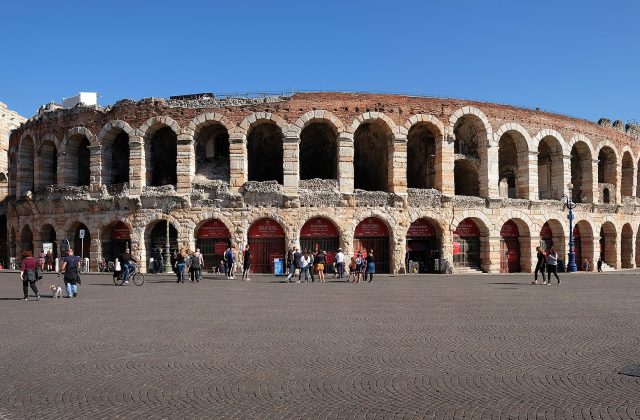
218 km away
The Verona Arena is a Roman amphitheatre of the early 1st century AD, built before the Colosseum and still used for…
21 tickets & tours
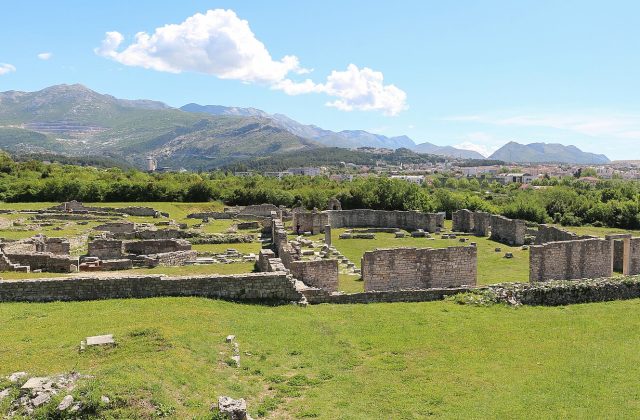
318 km away
Salona is the ruined capital of the Roman province of Dalmatia, in the town of Solin 6 km from Split, and one of the…
17 tickets & tours
| Hours | Visible from the surrounding streets at any time; the enclosure opens only for events and occasional visits |
|---|---|
| Closed | Viewable daily from outside |
| Entry fee | Free to view from the street |
| Time needed | 15 to 30 minutes |
| Best time | Morning or late afternoon on the way up to San Giusto; any season |
| Booking | No booking; tickets only for summer shows |
| Access | Level pavements around the railings; good views without steps, but the interior is not usually open |
| Getting there | A 5-minute walk from Piazza Unita d'Italia along Corso Italia to Via del Teatro Romano |
| Excavated | 1938 |
| Civilisation | Roman |
| Website | sabapfvg.cultura.gov.it |
| Checked | October 2026 |
Visible from the surrounding streets at any time; the enclosure opens only for events and occasional visits. Closed: Viewable daily from outside.
Entry fee: Free to view from the street.
Allow 15 to 30 minutes for Roman Theatre of Trieste.
No booking; tickets only for summer shows.
Yes. GetYourGuide sells tickets and guided tours whose route includes Roman Theatre of Trieste; live prices are shown on this page.
Morning or late afternoon on the way up to San Giusto; any season.
A 5-minute walk from Piazza Unita d'Italia along Corso Italia to Via del Teatro Romano.
Level pavements around the railings; good views without steps, but the interior is not usually open.
Worth it for a free ten-minute look at a Roman theatre on the way between the seafront and San Giusto hill. Skip a special trip if you expect to walk inside: the enclosure usually stays closed and you see it through railings.