
Porta Nigra
1 km away
The Porta Nigra in Trier is the best-preserved Roman city gate north of the Alps, a four-storey sandstone gateway built…
1 ticket or tour
Palace, Villa & Baths · Roman · Germany
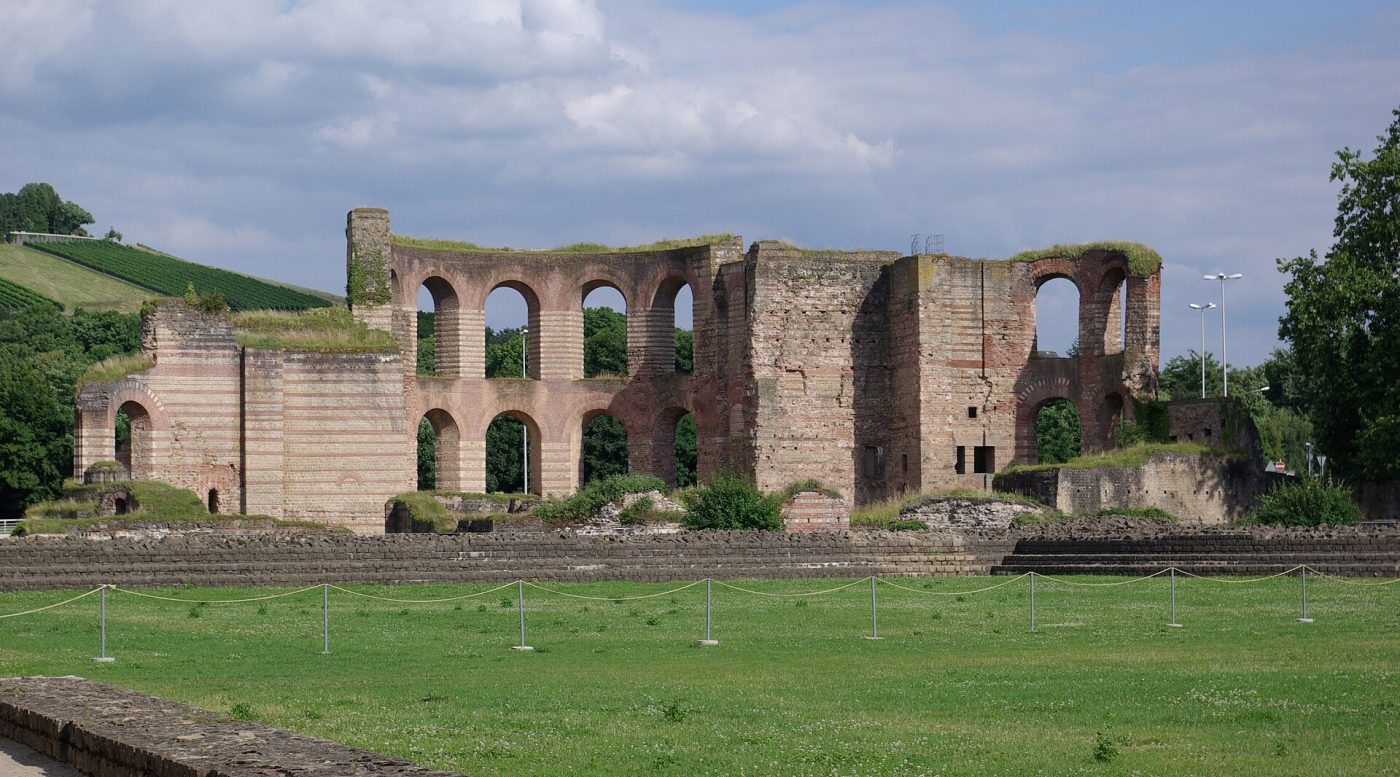
The Imperial Baths of Trier, the Kaiserthermen, are the ruins of a huge Roman bath complex begun shortly before AD 300, when Trier was an imperial residence. They were never finished as baths. Today high brick walls of the hot room survive above ground, and below them a network of service tunnels can be explored on foot.
Nothing for the Imperial Baths alone is sold online, and there is no need to book. The baths are run with the other Roman sites of Trier by the state heritage authority, and tickets are sold at the visitor centre by the entrance. The Antiken-Card is the sensible choice for most people: it combines several Roman sites, such as the baths, the amphitheatre and the Porta Nigra, with the Rheinisches Landesmuseum next door, at a lower price than separate tickets. Different versions of the card cover two or four sites, so choose the one that fits your plans.
The visitor centre has models and panels explaining how the baths were planned and why they were never finished. The Trier tourist office runs city walks that include the baths, and in season there are themed and costumed tours, which are good for families; they run on set dates and should be booked through the tourist office.
Day trips from Luxembourg usually focus on the Porta Nigra and the centre, so the baths are rarely crowded. For most visitors, the best plan is the Antiken-Card, the baths and the museum in the morning, then the amphitheatre or the Porta Nigra in the afternoon.
From the visitor centre, walk to the great brick walls of the caldarium, the hot room, which still stand to a height of around 19 metres. Large window openings in two rows face the city. Look at the bands of brick and stone in the masonry, typical of late Roman building, and at the curved apses on the eastern side.
Go down the stairs into the network of service tunnels beneath the bath, where staff once moved fuel and kept the furnaces going. Corridors run for hundreds of metres, with sewer channels and furnace chambers. They are dim and cool, and the scale shows how much work was needed to run an imperial bath.
Live prices from GetYourGuide for tickets and tours that include this site. Free cancellation on most of them.
Above ground, follow the line of the cold room and the warm room, the frigidarium and tepidarium, marked by low walls and foundations. Panels show where the pools and halls were planned. The layout follows the great baths of Rome, such as those of Caracalla, but on a smaller scale.
East of the bath building lies the large open area of the palaestra, the exercise ground, which measured about 160 by 130 metres. It was later turned into a large courtyard when the baths were rebuilt for another purpose. Today it is a grassy space, good for seeing the whole complex at once.
Look for the remains of medieval buildings and walls added to the Roman structure, when the baths were made into a castle and part of the city's defences. The contrast between Roman brickwork and medieval stone is clear in places. Some of the later walls were removed during excavations to reveal the Roman plan.
Constantius Chlorus began the baths shortly before AD 300, when Trier was a capital of the western empire. Work continued under Constantine but stopped around 316, with the baths still incomplete. They were meant to follow the plan of the great baths of Rome, with a main bath building and a palaestra, and hot pools heated by furnaces in the tunnels below. Later in the 4th century the complex was rebuilt for another use, possibly as barracks or an imperial forum. In the Middle Ages it was turned into a castle and part of the city wall. Excavations in the 19th and 20th centuries uncovered the Roman plan, and it joined the UNESCO list in 1986.
The Imperial Baths are at the south-eastern corner of Trier's old town, next to the Palastgarten. From the Hauptmarkt, walk past the cathedral and the Electoral Palace in about 10 minutes. From Trier Hauptbahnhof it is about 15 minutes on foot. Trains from Luxembourg take about 45 minutes and from Koblenz about an hour and a half. Luxembourg airport is about 50 minutes away by car or bus. City buses stop nearby, and there are car parks in the centre.
Stay on the paths and do not climb on the walls. The tunnel stairs can be slippery and the passages low in places, so wear sturdy shoes and watch your head. Dogs should be on a lead. Bring a jacket, as the tunnels are cool even in summer. There are toilets at the visitor centre, and cafes in the Palastgarten and the old town nearby.
The Imperial Baths are rarely crowded. Weekday mornings may bring school groups, while weekends and summer afternoons are busier with families and day visitors from Luxembourg. Morning light is good on the eastern walls, and late afternoon light falls on the western side.
The best months are April to October, when the Palastgarten is green and the weather is mild. Summer can be warm, but the tunnels stay cool. In season there are themed tours and events, so check the tourist office programme. Winter is quiet, with shorter hours, and the tunnels may be damp or cold. A rainy day still works, as the tunnels are covered. Allow about an hour for the baths, and longer if you visit the museum next door.
The Rheinisches Landesmuseum, with its Roman mosaics and gold hoard, is next door. The Aula Palatina, Constantine's throne hall, is a few minutes' walk through the Palastgarten. The amphitheatre is about 10 minutes east, and the Porta Nigra is about 15 minutes north.
1 km away
The Porta Nigra in Trier is the best-preserved Roman city gate north of the Alps, a four-storey sandstone gateway built…
1 ticket or tour
| Hours | About 9 am to 6 pm Apr–Sep, to 5 pm Mar and Oct, to 4 pm Nov–Feb |
|---|---|
| Closed | Open daily except a few days around Christmas and New Year |
| Entry fee | A few euros; Antiken-Card covers several Roman sites |
| Time needed | About an hour |
| Best time | Morning or late afternoon; April to October |
| Booking | Pay at the visitor centre; no need to book |
| Access | Steps and uneven ground; the underground tunnels are reached by stairs and can be damp |
| Getting there | A 10-minute walk from the Hauptmarkt, past the cathedral and the Electoral Palace |
| Founded | AD 300 (c. AD 300, begun under Constantius Chlorus) |
| Civilisation | Roman |
| UNESCO | Roman Monuments, Cathedral of St Peter and Church of Our Lady in Trier |
| Website | trier-info.de/english/imperial-baths-info |
| Checked | October 2026 |
About 9 am to 6 pm Apr–Sep, to 5 pm Mar and Oct, to 4 pm Nov–Feb. Open daily except a few days around Christmas and New Year.
Entry fee: A few euros; Antiken-Card covers several Roman sites.
Allow About an hour for Trier Imperial Baths.
Pay at the visitor centre; no need to book.
Yes. GetYourGuide sells tickets and guided tours whose route includes Trier Imperial Baths; live prices are shown on this page.
Morning or late afternoon; April to October.
A 10-minute walk from the Hauptmarkt, past the cathedral and the Electoral Palace.
Steps and uneven ground; the underground tunnels are reached by stairs and can be damp.
Worth it for walking the underground service tunnels of an imperial bath and seeing its tall brick walls up close. Skip or shorten it if you have only a few hours in Trier: the Porta Nigra and the Aula Palatina are more complete.
Trier Imperial Baths dates from AD 300 (c. AD 300, begun under Constantius Chlorus).
Yes. Trier Imperial Baths is part of the UNESCO World Heritage Site Roman Monuments, Cathedral of St Peter and Church of Our Lady in Trier.
Trier, Germany
The Porta Nigra in Trier is the best-preserved Roman city gate north of the Alps, a four-storey sandstone gateway built…
1 ticket or tour
Trier, Germany
The Roman amphitheatre of Trier is a large earth-banked arena on the eastern edge of the city, built in the 2nd century…
No online ticket
