Theatre & Amphitheatre · Greek · Greece
Theatre of Epidaurus
The Theatre of Epidaurus is the best-preserved theatre of ancient Greece, built in the late 4th century BC inside the healing sanctuary of Asklepios in the Argolid. Its stone tiers seat around 13,000 people, and the acoustics are so clear that a word spoken in the orchestra reaches the top row. One ticket also covers the sanctuary and a small museum.
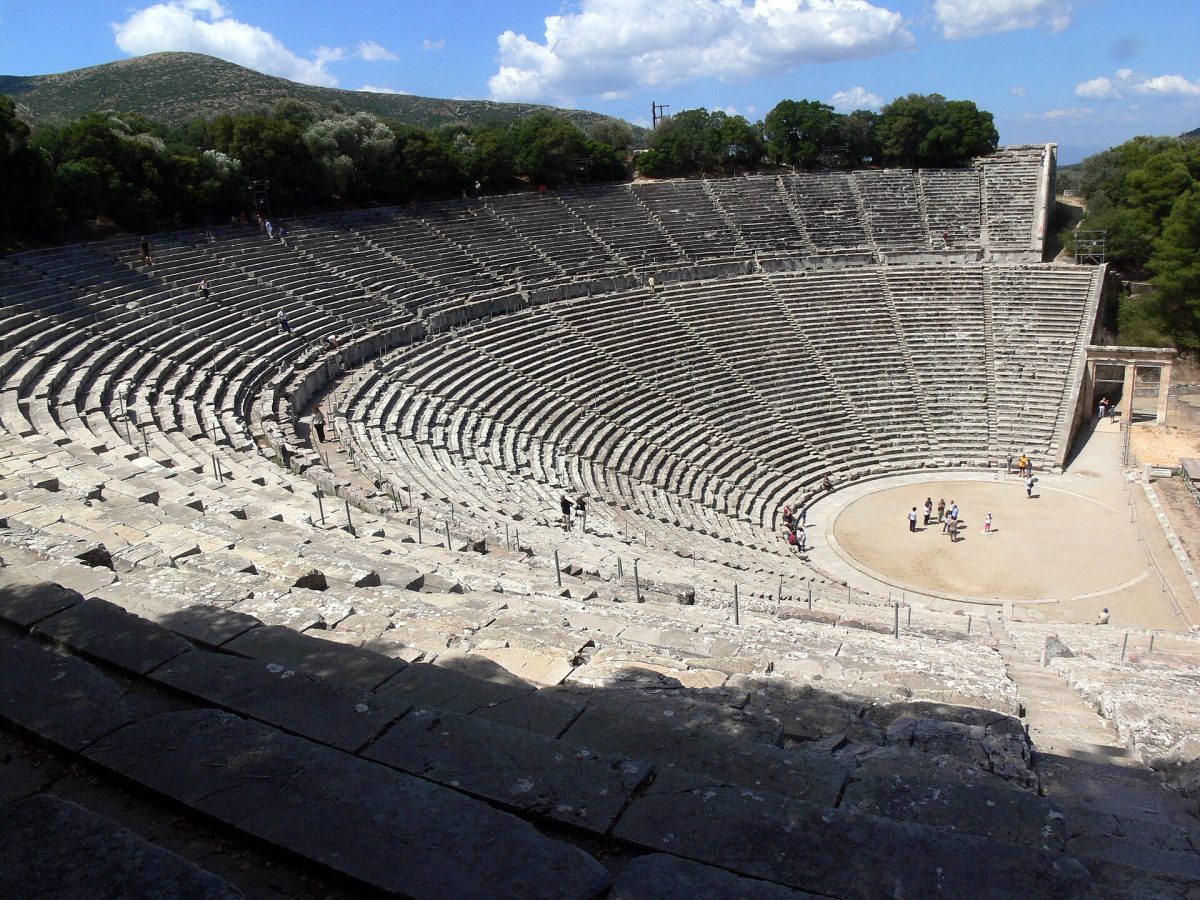
Photo: Fingalo, CC BY-SA 2.0 de
Theatre of Epidaurus tickets: which one for you
Our pick for each kind of visit, with live dates and prices from GetYourGuide. Free cancellation on most.
Best for: A day trip from Athens
Transport and a guide for Mycenae, Nafplio and Epidaurus in one long day, the usual way to see the Argolid without hiring a car.
- On your own, with a car: Epidaurus theater asklepieion sanctuary entry ticket The standard entry ticket for the theatre, the sanctuary and the museum, bought in advance so you can walk straight in at opening.
- Staying in Nafplio: From nafplio mycenae epidaurus with a certified tour guide A guided half day from Nafplio to Epidaurus and Mycenae with transport, short drives and no early start from Athens.
Tickets and tours: all the options
The entry ticket is a single combined ticket for the theatre, the Sanctuary of Asklepios and the site museum. It is sold at the gate and through the official Greek ticketing system, and the price is the same all year. Queues are rarely long except when several coaches arrive together in mid-morning, so most independent visitors simply pay on arrival. EU citizens under 25 enter free with ID, and the site is free on the first and third Sundays of each month from November to March.
Most tours sold online are day trips from Athens that combine Epidaurus with Mycenae and the old town of Nafplio, often with a stop at the Corinth Canal. They usually include transport and a guide; entry tickets and lunch are often extra, so check the description. Private tours by car follow the same route with more flexibility, and shorter half-day trips start from Nafplio. A few audio and virtual-reality guides are sold for visitors who come on their own.
For drama, the Epidaurus Festival stages ancient plays on Friday and Saturday nights in July and August; tickets are sold separately and some agencies run evening buses from Athens. With a car, a ticket at the gate and a night in Nafplio is the best plan; without one, a day trip from Athens works well.
What to see at Theatre of Epidaurus
The theatre and its acoustics
From the entrance a short wooded path leads to the theatre, set against the slope of Mount Kynortion. Stand on the round stone in the centre of the orchestra and speak normally while someone listens from the top tiers: the sound carries without effort. Climb the 55 rows to the upper section, steeper than the lower, for the view over the whole bowl.
Seats of honour and the stage
Back down, look at the front row of each section, where carved seats with backs were reserved for priests and officials. The stage building behind the orchestra survives only as low foundations, but the two side gates have been rebuilt. Notice that the Romans never altered the theatre, which is why its Greek form is so complete.
40 tickets and tours for Theatre of Epidaurus
Live dates and prices from GetYourGuide. Free cancellation on most tickets.
Museum
A few minutes' walk towards the sanctuary, the small museum displays inscriptions recording the cures of patients, medical instruments and architectural pieces from the sanctuary buildings. Look for the carved ceiling panels and the elaborate column capitals from the Tholos, which show the quality of the decoration that once covered the now bare foundations outside.
Tholos and Temple of Asklepios
At the heart of the sanctuary, the Tholos was a round building whose concentric foundations form a small maze; part of it has been reconstructed under restoration scaffolding. Beside it stand the foundations of the Temple of Asklepios and the long Abaton, the hall where pilgrims slept, hoping the god would heal them in a dream or tell them a cure.
Stadium and guest house
On the far side of the sanctuary the stadium keeps its stone starting lines and some rows of seats along a level track, used for games held in honour of Asklepios. Back towards the car park lies the Katagogion, a large guest house with rooms around four courtyards for visiting pilgrims. Both are quiet, open and exposed, so visit them early or late.
A short history
Epidaurus was the most famous healing sanctuary of the Greek world, dedicated to Asklepios from the 6th century BC. Its great building phase came in the 4th century BC, when the temple, the Tholos and the theatre were built; Pausanias names Polykleitos the Younger as the theatre's architect. Plays and music were part of the cult and were thought to help patients recover. The sanctuary declined under Roman rule and closed in late antiquity. Panagis Kavvadias of the Greek Archaeological Society began systematic excavations in 1881, and restoration has continued through the 20th century and beyond. Performances resumed in 1938 and the festival has run every summer since 1955. The sanctuary was listed by UNESCO in 1988.
Getting there
The site lies near the village of Lygourio, about 30 km east of Nafplio, which is the best base. By car the drive takes around 40 minutes and there is a large free car park at the entrance. KTEL buses run from Nafplio a few times a day, more often in summer, but check the return times. From Athens the drive is about 2 hours and 140 km on the motorway past the Corinth Canal, then local roads through the hills. Buses from Athens to Nafplio leave from the Kifissos bus station. Athens airport is the nearest major airport, about 2.5 hours away. Do not confuse the theatre with the village of Palaia Epidavros on the coast, which has its own small theatre.
Rules and what to bring
You can walk on the tiers and stand in the orchestra, but climbing on the stage foundations and the sanctuary buildings is forbidden. Drones and tripods need a permit, and professional filming is not allowed without one. The stone steps are high and smooth, so wear shoes with grip and take care going down. Bring water and a hat; the sanctuary has little shade. There is a café and toilets near the entrance.
When to go
The theatre is busiest from about 10.30 am to 2 pm, when day trips from Athens arrive after Mycenae or before it, and groups take turns testing the acoustics in the orchestra. At opening the theatre is often almost empty and the light on the tiers is soft. In the evening, after 5 pm in summer, the crowds thin again and the heat eases.
The best months are April, May, September and October, when the hills are green or golden and walking the sanctuary is comfortable. July and August are hot, often above 35 degrees, but this is also the festival season, when plays are staged on Friday and Saturday nights and the theatre closes to day visitors earlier on those days. Winter is quiet, with shorter hours, and the free first and third Sundays from November to March bring local crowds. Allow two to three hours for the theatre, museum and sanctuary.
Combine it with
Nafplio, with its old town and Palamidi fortress, is 40 minutes away and the natural place to stay. Mycenae is about an hour's drive north, and the two are usually paired in one day with the Corinth Canal on the way back to Athens. Ancient Corinth adds another hour or two.
At a glance
| Hours | 8 am to 7 pm Apr, to 8 pm May–Aug, earlier in steps to 6 pm by late Oct; 8 am to 5 pm Nov–Feb, to 6 pm Mar |
|---|---|
| Closed | Open daily except 1 Jan, 25 Mar, 1 May, Easter Sunday, 25 and 26 Dec |
| Entry fee | from EUR 20 with the sanctuary and museum; EU under-25s free |
| Time needed | 2 to 3 hours |
| Best time | At opening or after 5 pm; April, May, September and October |
| Booking | Pay at the gate or online; book festival seats months ahead |
| Access | Steep stone tiers with no handrails; level path to the orchestra; little shade in the sanctuary |
| Getting there | About 30 km from Nafplio, 40 minutes by car or a local bus; 2 hours by car from Athens |
| Founded | 340 BC (c. 340 BC) |
| Excavated | 1881 |
| Civilisation | Greek |
| UNESCO | Sanctuary of Asklepios at Epidaurus |
| Checked | October 2026 |
Frequently asked questions
When is Theatre of Epidaurus open?
8 am to 7 pm Apr, to 8 pm May–Aug, earlier in steps to 6 pm by late Oct; 8 am to 5 pm Nov–Feb, to 6 pm Mar. Open daily except 1 Jan, 25 Mar, 1 May, Easter Sunday, 25 and 26 Dec.
How much is the entry fee for Theatre of Epidaurus?
Entry fee: from EUR 20 with the sanctuary and museum; EU under-25s free.
How long do you need at Theatre of Epidaurus?
Allow 2 to 3 hours for Theatre of Epidaurus.
Do I need to book Theatre of Epidaurus in advance?
Pay at the gate or online; book festival seats months ahead.
Can I book a ticket or tour for Theatre of Epidaurus online?
Yes. GetYourGuide lists 40 tickets and tours for Theatre of Epidaurus, with live dates and prices and free cancellation on most of them.
When is the best time to visit Theatre of Epidaurus?
At opening or after 5 pm; April, May, September and October.
How do I get to Theatre of Epidaurus?
About 30 km from Nafplio, 40 minutes by car or a local bus; 2 hours by car from Athens.
Is Theatre of Epidaurus accessible, and what is the terrain like?
Steep stone tiers with no handrails; level path to the orchestra; little shade in the sanctuary.
Is Theatre of Epidaurus worth visiting?
Worth it for the most complete ancient Greek theatre anywhere, and even more so on a festival night in summer. Skip or shorten it if you only care about large ruined cities; the sanctuary beyond the theatre needs some imagination.
How old is Theatre of Epidaurus?
Theatre of Epidaurus dates from 340 BC (c. 340 BC). Excavations began in 1881.
Is Theatre of Epidaurus a UNESCO World Heritage Site?
Yes. Theatre of Epidaurus is part of the UNESCO World Heritage Site Sanctuary of Asklepios at Epidaurus.