Ancient City · Greek · Greece
Philippi
Philippi is the ancient city founded by Philip II of Macedon in 356 BC on the Via Egnatia, 15 km north-west of Kavala in northern Greece. Its theatre, Roman forum and huge early Christian basilicas recall the battle of 42 BC and the first church Paul founded in Europe, and the site has been on the UNESCO list since 2016.
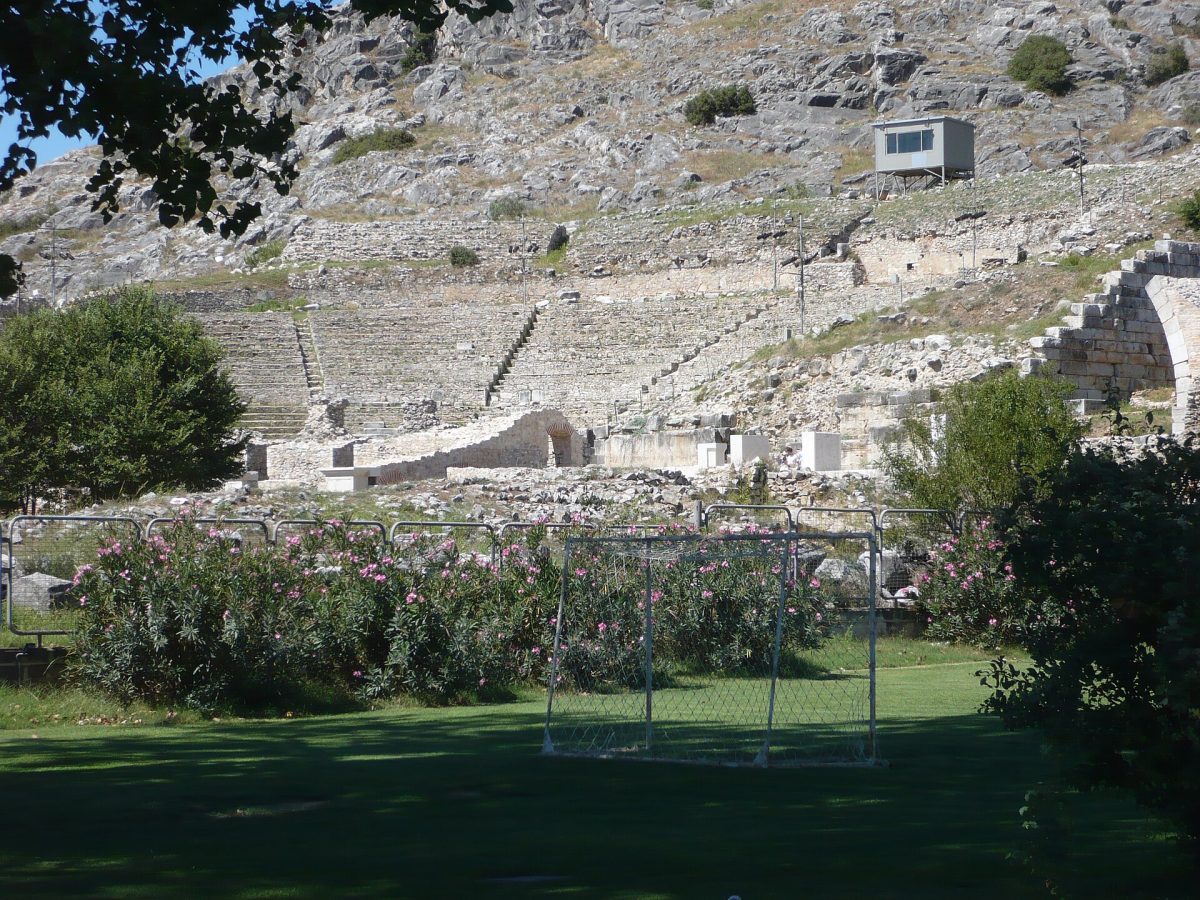
Photo: Batr41, CC BY-SA 4.0
Philippi tickets: which one for you
Our pick for each kind of visit, with live dates and prices from GetYourGuide. Free cancellation on most.
Best for: Cruise passengers at Kavala
A guided visit to the site and its museum timed for passengers landing at Kavala port, with transport there and back and no risk of missing the ship.
- A long day from Thessaloniki: From thessaloniki philippi kavala and amphipolis tour Transport and a guide for Philippi, Amphipolis and the old town of Kavala, three places that are hard to link on public buses in a single day.
- Pilgrims and wine lovers: From kavala philippi lydia s baptisma site wine tour Adds the riverside baptism site of Lydia and a tasting at a local winery to the ruins, a relaxed half day from Kavala.
Tickets and tours: all the options
Entry is a single ticket that covers both halves of the site and the small museum, sold at the gate. The price is the same all year, EU citizens under 25 enter free, and as at other Greek state sites the first and third Sundays of each month from November to March are free. In July and August the ancient theatre hosts performances of the Philippi festival, with tickets sold separately for the evening.
The tours on sale fall into a few kinds. From Kavala there are short guided visits for cruise passengers and private tours that add the baptism site of Lydia, sometimes with a winery stop. From Thessaloniki, about two hours away, day trips combine Philippi with Kavala old town and often Amphipolis, the beach or the route of Paul's journeys. Private trips with a driver-guide are popular with Christian groups following Paul's footsteps. Entry is usually extra.
For independent travellers based in Kavala, the local bus and the gate ticket are all you need, and the museum fills the gaps in the labels. A guide is most useful for understanding the layers of the city: Macedonian, Roman and Byzantine. From Thessaloniki without a car, a guided day trip is the practical choice.
What to see at Philippi
Theatre
From the upper entrance, walk to the theatre built into the slope of the acropolis in the time of Philip II. The Romans adapted it for wild beast shows, adding a protective wall around the orchestra, and parts of the seating have been restored for the summer festival. Look for the reliefs of Nemesis, Mars and Victory on the side passage.
Basilica A and Paul's prison
Below the theatre stand the walls of Basilica A, a large church of the late 5th century on a terrace above the forum. In front of it, a small Roman cistern turned into a chapel is traditionally shown as the prison where Paul and Silas were held, following the account in the Acts of the Apostles. The view takes in the forum and the plain.
8 tickets and tours for Philippi
Live dates and prices from GetYourGuide. Free cancellation on most tickets.
Roman forum
Cross the modern road with care to the lower section, which follows the line of the ancient Via Egnatia. The forum is a rectangular square paved in marble, laid out in the 2nd century AD, with temples on its short sides, porticoes and the base of the speakers' platform. Some stretches of the Via Egnatia paving with cart ruts lie just alongside.
Basilica B
South of the forum stands Basilica B, a 6th-century church whose builders tried to raise a dome over the nave. The dome collapsed before the church was finished, and the massive piers and an arch are still standing, among the most striking ruins at Philippi. Next to it, a Roman public latrine keeps a long row of marble seats.
Octagon church and museum
Further east, the Octagon was the cathedral of Philippi, built in the 4th century over an earlier prayer house dedicated to Paul, with a baptistery and mosaic floors. Finish at the museum by the upper car park, which displays sculpture, inscriptions in Greek and Latin, and finds from the prehistoric settlement nearby.
A short history
Colonists from Thasos founded a settlement called Krenides, meaning springs, in 360 BC. Philip II of Macedon took it in 356 BC, gave it his name, built walls and exploited the nearby gold mines. On the plain to the west, Mark Antony and Octavian defeated Brutus and Cassius in 42 BC, and veterans were settled here in a Roman colony. Around AD 49 Paul preached in Philippi and baptised Lydia, the first recorded Christian convert in Europe. The city prospered on the Via Egnatia and built great churches in the 5th and 6th centuries, but earthquakes and raids led to its decline, and it was abandoned after the Ottoman conquest. French and Greek teams have excavated since 1914.
Getting there
Philippi lies about 15 km north-west of Kavala, on the old road to Drama. KTEL buses from the Kavala bus station towards Drama run roughly every hour on weekdays and stop beside the site in about 25 minutes; services are fewer at weekends. A taxi from Kavala takes about 20 minutes. Kavala airport, which serves summer charter flights, is about 40 minutes away, and Thessaloniki airport is about 2 hours by car. Drivers can park free at either the upper entrance by the theatre and museum or the lower entrance by the forum. The two halves of the site are separated by the main road, which you cross on foot at a marked crossing.
Rules and what to bring
Do not climb on the walls of the basilicas or walk on the mosaic floors, which are protected only by low barriers. Drones need a permit. The site has very little shade, so bring water, a hat and sunscreen in summer, and wear shoes with grip for the polished marble. Toilets are at the upper entrance near the museum. The nearest cafés are in the village of Krinides nearby.
When to go
Philippi is rarely crowded. Most coach groups come with cruise ships calling at Kavala or with pilgrim tours, and they tend to arrive in the late morning and stay about an hour. Independent visitors who arrive at opening or in the late afternoon will often share the forum with only a handful of others. In July and August the plain is hot by 11 am, so see the open forum and Basilica B first and finish at the museum.
April, May, June, September and October are the best months for walking the site. In July and August the Philippi festival stages ancient drama and concerts in the theatre in the evenings, which is a good reason to stay late. Winter hours are short, the museum opens only from Friday to Sunday, and the site can be cold and windy, but it is very peaceful. Allow two hours for both halves and the museum, or three if you also visit the baptism site of Lydia.
Combine it with
The baptism site of Lydia, with a modern church and an open-air baptistery on the Zygaktis stream, is 2 km west by road. Kavala, 20 minutes away, has an Ottoman old town, a Byzantine castle and a 16th-century aqueduct. Amphipolis, with its Lion monument and museum, is about 45 minutes west, and the island of Thasos is a ferry ride from Kavala.
At a glance
| Hours | 8 am to 6 pm Apr–May, to 8 pm Jun–Aug, to 6 pm by late Oct; 8 am to 3.30 pm Nov–Mar, museum Fri–Sun only |
|---|---|
| Closed | 1 Jan, 25 Mar, 1 May, Orthodox Easter Sunday, 25 and 26 Dec |
| Entry fee | from EUR 10 for site and museum; EU under-25s free |
| Time needed | 2 to 3 hours |
| Best time | At opening or late afternoon; April to June and September to October |
| Booking | Pay at the gate; summer festival tickets sold separately |
| Access | Two sections split by a road; uneven stone paths, steps at the theatre, little shade |
| Getting there | KTEL bus from Kavala towards Drama, about 25 minutes, stops beside the site |
| Founded | 356 BC (Crenides 360 BC; renamed Philippi 356 BC) |
| Abandoned | 1350 |
| Excavated | 1914 |
| Civilisation | Greek |
| UNESCO | Archaeological Site of Philippi |
| Checked | October 2026 |
Frequently asked questions
When is Philippi open?
8 am to 6 pm Apr–May, to 8 pm Jun–Aug, to 6 pm by late Oct; 8 am to 3.30 pm Nov–Mar, museum Fri–Sun only. Closed: 1 Jan, 25 Mar, 1 May, Orthodox Easter Sunday, 25 and 26 Dec.
How much is the entry fee for Philippi?
Entry fee: from EUR 10 for site and museum; EU under-25s free.
How long do you need at Philippi?
Allow 2 to 3 hours for Philippi.
Do I need to book Philippi in advance?
Pay at the gate; summer festival tickets sold separately.
Can I book a ticket or tour for Philippi online?
Yes. GetYourGuide lists 8 tickets and tours for Philippi, with live dates and prices and free cancellation on most of them.
When is the best time to visit Philippi?
At opening or late afternoon; April to June and September to October.
How do I get to Philippi?
KTEL bus from Kavala towards Drama, about 25 minutes, stops beside the site.
Is Philippi accessible, and what is the terrain like?
Two sections split by a road; uneven stone paths, steps at the theatre, little shade.
Is Philippi worth visiting?
Worth it for a large, uncrowded mix of Greek theatre, Roman forum and early Christian churches in one site. Skip or shorten it if you have little interest in Christian history or ruined basilicas, which make up much of the visit.
How old is Philippi?
Philippi dates from 356 BC (Crenides 360 BC; renamed Philippi 356 BC). It was abandoned in 1350. Excavations began in 1914.
Is Philippi a UNESCO World Heritage Site?
Yes. Philippi is part of the UNESCO World Heritage Site Archaeological Site of Philippi.