
Great Dolmen of Zambujeiro
76 km away
The Great Dolmen of Zambujeiro is a Neolithic burial chamber in the cork-oak country south-west of Evora, built between…
1 ticket or tour
Ancient City · Roman · Portugal
The Roman ruins of Troia are the remains of one of the largest fish-salting centres of the Roman world, on the Troia peninsula opposite Setubal in Portugal. Some 25 workshops with 182 salting tanks survive, along with baths, cemeteries and an early Christian basilica, in use from the 1st to the 6th century AD. They lie on the edge of the Sado estuary.
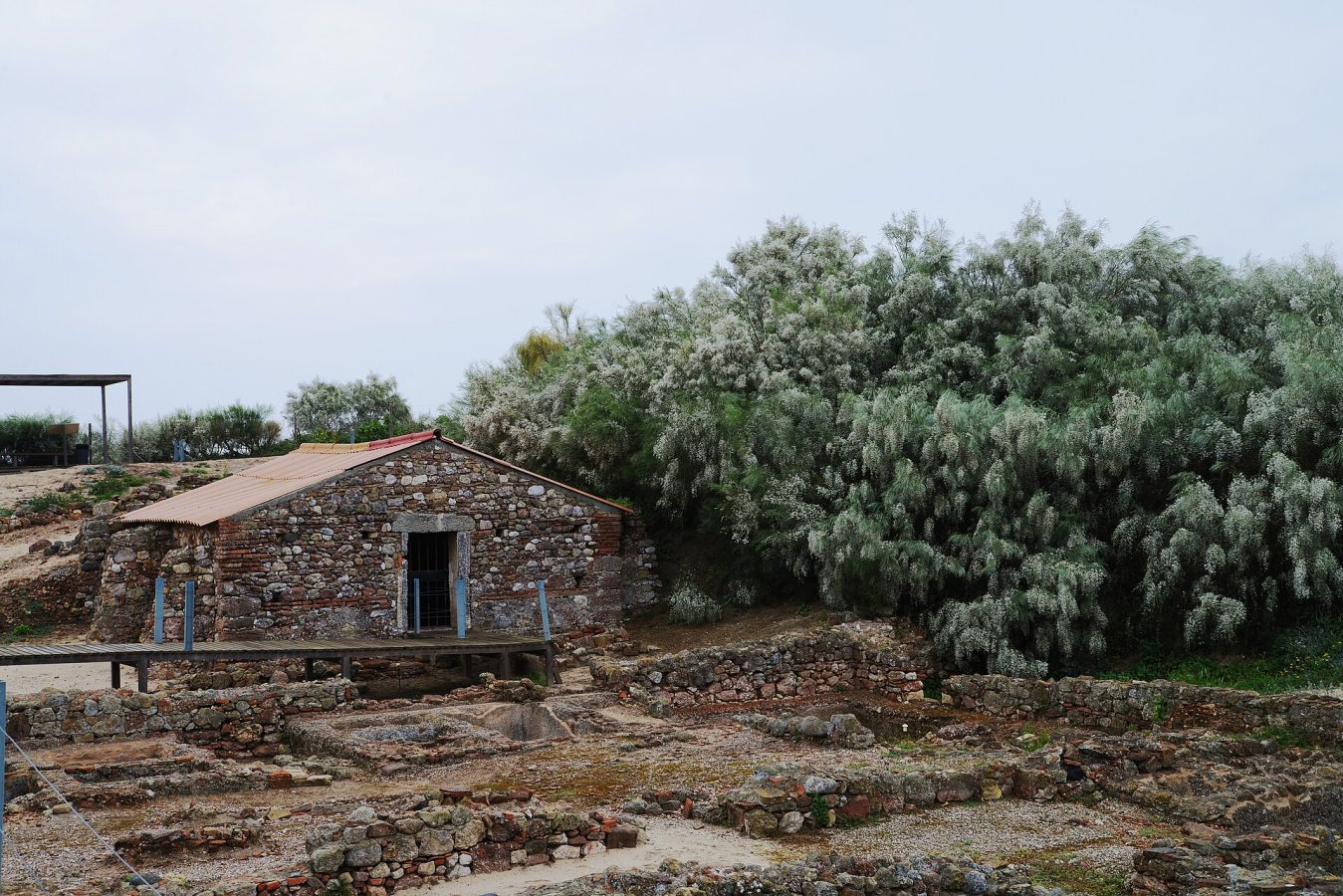
Photo: Alvesgaspar, CC BY-SA 4.0
Nothing for the Troia ruins is sold on GetYourGuide. The site is managed in partnership with the Troia resort company, which funds excavation and runs visits. Entry is by a modest ticket on arrival, and there is no quota, but the site is only open during part of the year and on set days, so check the timetable before you cross the estuary.
Guided visits, and in summer occasional boat trips from the Troia marina along the estuary to the ruins, are offered by the site operators and are worth booking if you want the full story of the fish-salting works. On your own, follow the marked route with its panels, which explain the tanks, the baths and the burial areas.
Most visitors come from Lisbon or Setubal for a day on the peninsula, combining the ruins with the beaches and a dolphin-watching boat trip on the Sado, which is the main product sold in Setubal. Dolphin trips do not stop at the ruins, but some pass close enough to see them from the water. Day tours from Lisbon to the Arrabida coast and Setubal rarely include Troia. The sensible plan is the morning ferry from Setubal, a self-guided or guided hour at the ruins, then the afternoon on the beach.
Start with the workshops by the estuary, the reason the site existed. Rows of square tanks, many lined with waterproof mortar, are grouped in buildings of different sizes; the largest workshop covered over 1,000 square metres and had 19 tanks. Fish from the estuary were salted here or turned into sauces and sent across the empire in amphorae.
A short walk inland lies the bath complex, about 450 square metres in area. You can follow the sequence of changing room, cold room, warm room and hot room, with the remains of the underfloor heating, as well as pools and an exercise area. The baths served the workers and owners who lived in this industrial settlement.
Live prices from GetYourGuide for tickets and tours that include this site. Free cancellation on most of them.
Continue to one of the four burial areas, where a mausoleum holds a columbarium: rows of niches in the walls that once held urns of ashes. Elsewhere are graves of different periods, including some thought to be Christian burials from the late 5th century, which show how burial customs changed over the long life of the site.
Nearby are the remains of a basilica of the late 4th or early 5th century, built over an abandoned workshop. Its outline of nave and walls is easy to follow. A marble relief of the god Mithras was discovered in the building, which suggests an earlier pagan use and shows the mix of beliefs in late Roman times.
Finish in the residential area, where the houses of workers and factory owners stood, and walk to the shoreline. The view across the Sado to Setubal and the Arrabida hills explains why the industry grew here: rich fishing grounds, salt pans along the estuary and a sheltered harbour. Part of the site has been lost to erosion from the water.
The Romans set up fish-processing works on the Troia peninsula in the 1st century AD, exploiting the fish and salt of the Sado estuary, which made this one of the main fish-salting centres of the empire. The settlement grew to include 25 workshops, houses, baths, four cemeteries and, around AD 400, an early Christian basilica built over a disused workshop. It remained in use until the 6th century. The ruins were known in the 16th century and dug by the future Queen Maria I in the 18th century. The Lusitanian Archaeological Society excavated here from 1850, and major campaigns ran from 1948 to 1967. The site has been a National Monument since 1910 and is on Portugal's tentative UNESCO list.
From Setubal, ferries cross the Sado estuary to the Troia peninsula throughout the day. Passenger catamarans reach the Troia marina in about 15 minutes, and car ferries land at the southern terminal in about 25 minutes. The ruins lie on the estuary shore south of the marina; by car or taxi the trip takes about ten minutes, and cyclists can follow the peninsula road. In summer, check whether a boat service from the marina to the ruins is running. Setubal is about 45 minutes from Lisbon by car or by train, and Lisbon airport is about 50 minutes away. Troia can also be reached by road from the south via Comporta, avoiding the ferry.
Keep to the marked paths and boardwalks, and do not climb on the walls or step into the tanks, whose edges are fragile. Drones need permission. The site is flat but completely exposed, with sand and strong sun, so bring water, a hat, sunscreen and closed shoes. Mosquitoes can be a nuisance near the estuary in the evening. Facilities on site are limited, so plan meals and toilets around the Troia marina or Setubal.
The ruins open only part of the year, mainly from spring to autumn, and not every day, so check the current season and hours before you take the ferry. Within that season, come in the morning or late afternoon: the site has no shade, and in July and August the sun and the glare off the sand are strong by midday.
May, June and September are the best months, warm enough for the beach afterwards but quieter than high summer. July and August bring Lisbon families to the Troia beaches and long queues for the car ferry at weekends, so take the passenger catamaran or cross early. The ruins themselves rarely feel crowded, as most beach visitors never reach them. Allow one to two hours on site, and a full day if you add the ferry, a beach and a dolphin trip.
The beaches of the Troia peninsula are minutes away by car. Dolphin-watching boats leave from Setubal and Troia to see the resident bottlenose dolphins of the Sado. In Setubal, the archaeology museum holds finds from the region. The Arrabida coast and its natural park lie just west of Setubal, and the stilt-pier fishing harbour of Carrasqueira is about 30 minutes south.
76 km away
The Great Dolmen of Zambujeiro is a Neolithic burial chamber in the cork-oak country south-west of Evora, built between…
1 ticket or tour
163 km away
Ammaia is a Roman town of the province of Lusitania in the valley of the Sever river, below the hilltop village of…
2 tickets & tours
182 km away
Conimbriga is one of the largest excavated Roman towns in Portugal, 16 km south of Coimbra, with a forum, baths, an…
6 tickets & tours
| Hours | Seasonal opening, mainly spring to autumn; check current hours before crossing |
|---|---|
| Closed | Closed in winter and on some weekdays; check before you go |
| Entry fee | Small entry fee; reductions for children and seniors |
| Time needed | 1 to 2 hours |
| Best time | Morning or late afternoon; May, June and September |
| Booking | Pay on arrival; book guided and boat visits ahead in summer |
| Access | Sandy and gravel paths with some boardwalks; flat but exposed; hard going for wheelchairs |
| Getting there | Ferry from Setubal to Troia, then about 10 minutes by car or taxi south along the peninsula |
| Founded | AD 50 (1st century AD (midpoint)) |
| Abandoned | AD 550 |
| Civilisation | Roman |
| Checked | October 2026 |
Seasonal opening, mainly spring to autumn; check current hours before crossing. Closed: Closed in winter and on some weekdays; check before you go.
Entry fee: Small entry fee; reductions for children and seniors.
Allow 1 to 2 hours for Troia Roman Ruins.
Pay on arrival; book guided and boat visits ahead in summer.
Yes. GetYourGuide sells tickets and guided tours whose route includes Troia Roman Ruins; live prices are shown on this page.
Morning or late afternoon; May, June and September.
Ferry from Setubal to Troia, then about 10 minutes by car or taxi south along the peninsula.
Sandy and gravel paths with some boardwalks; flat but exposed; hard going for wheelchairs.
Worth it for the scale of a Roman fish-sauce industry by the Sado estuary, easily joined with the ferry and beaches. Skip or shorten it if you want monuments rather than tanks and foundations, or if your visit falls outside the open season.
Troia Roman Ruins dates from AD 50 (1st century AD (midpoint)). It was abandoned in AD 550.

