Ancient City · Near Eastern · Iraq
Aqar Quf Ziggurat (Dur-Kurigalzu)
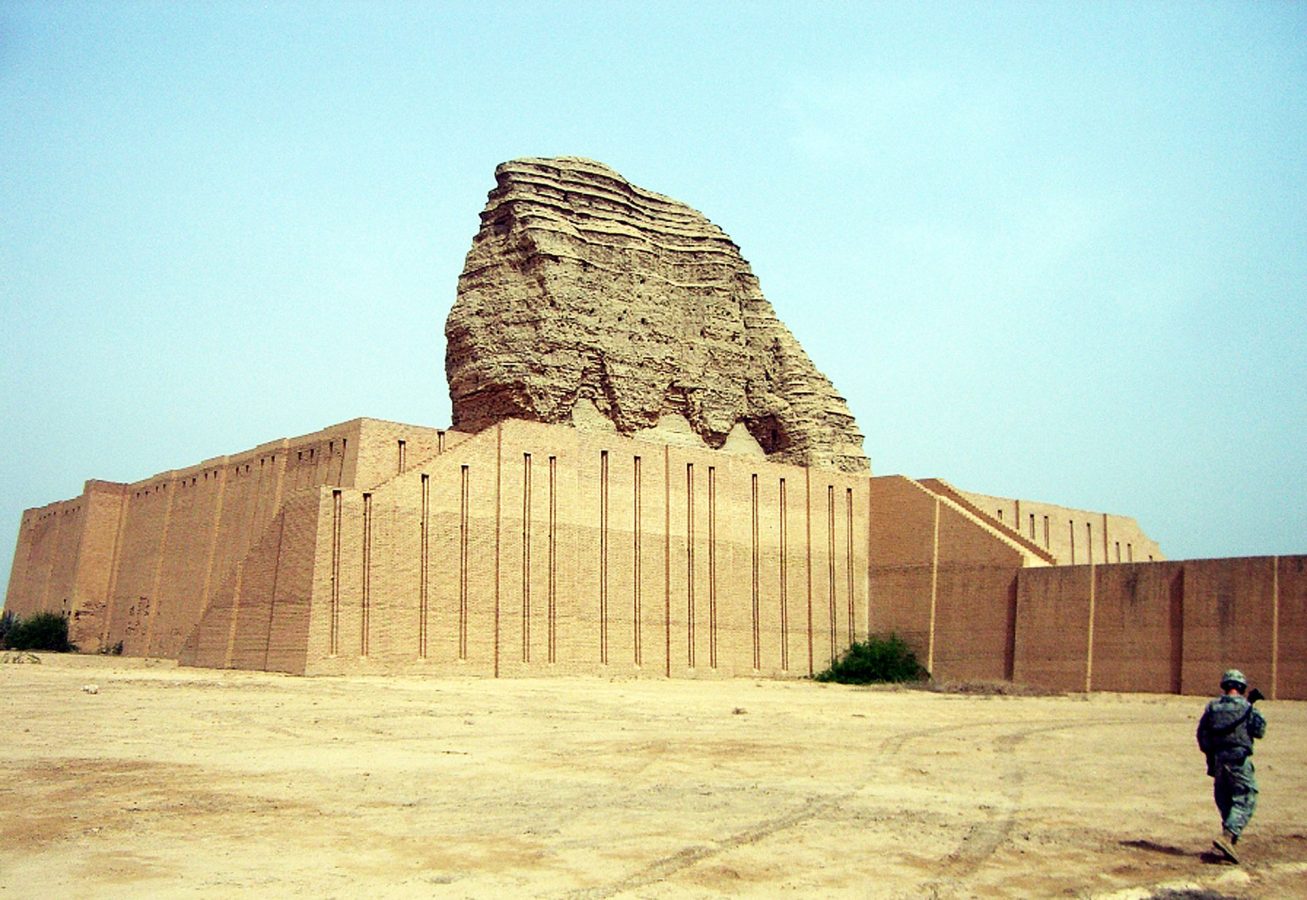
Aqar Quf is the ziggurat of Dur-Kurigalzu, a Kassite royal city founded in the early 14th century BC about 30 km west of central Baghdad. Its mudbrick core still rises about 52 metres, the tallest standing ziggurat in Iraq. Layers of reed matting set between the bricks are clearly visible, and the base has been rebuilt in modern brick.
Tickets and tours: which to book
There is no online ticketing for Aqar Quf. A small entry charge is normally collected at the gate, where the site is fenced and watched by guards. Independent travel in Iraq usually means hiring a driver, and many visitors use a local agency that handles transport, checkpoints and a guide.
One product appears online: a half-day visit from Baghdad with transport, a talk by a guide on the Kassite city and the ziggurat, and lunch at a local restaurant. It suits first-time visitors to Iraq who want the logistics handled and the history explained, since the site has very little signage and the scattered mounds make little sense without context. Check whether the entry fee and the pick-up from your hotel are included.
Travellers on multi-day tours of Iraq often visit Aqar Quf on the first or last day, combined with the Iraq Museum in Baghdad, or on the way to or from the west. A day trip that also covers the Arch of Ctesiphon to the south-east is possible with an early start. For most visitors the sensible option is a half-day with a driver and guide, either through the online tour or a local agency, rather than trying to arrange a taxi on the spot.
What to see at Aqar Quf Ziggurat (Dur-Kurigalzu)
Ziggurat core
The main sight is the eroded core of the ziggurat, a tower of sun-dried bricks standing about 52 metres high. Walk close to see the layers of reed matting placed between every few courses of brick to bind the mass together, still visible after more than three thousand years. The ragged upper part is the original; do not attempt to climb it.
Restored base and stairways
Around the bottom, the lower stages were rebuilt in modern baked brick during restoration work in the 1960s and 1970s. They show the original footprint, about 69 by 67 metres, and the three staircases that once led up to the first terrace. Stamped bricks found here carried the name of King Kurigalzu and his dedication to the god Enlil.
Tickets and tours for Aqar Quf Ziggurat (Dur-Kurigalzu)
Live dates and prices from GetYourGuide. Free cancellation on most tickets.
Temple of Enlil
At the foot of the ziggurat lie the excavated remains of the temple complex dedicated to Enlil, chief god of the Babylonian pantheon. Low walls of courtyards and shrines survive. From here you can see the axial stair of baked brick set in bitumen that ran from the temple towards the tower.
Palace mound
Some distance from the ziggurat, within the old city wall, rises the mound of Tell al-Abyadh, where excavators uncovered a royal palace with courtyards, painted walls and storerooms. Little stands above ground today, but walking the low mounds gives a sense of how large the Kassite capital was. Ask your guide to point out the line of the city wall.
View over the plain
Finish on the slope of the restored base, which gives a wide view over the flat land between the Tigris and the Euphrates. The ziggurat has long been a landmark for travellers approaching Baghdad, and from here the spread of farmland, villages and the depression that once flooded each year are easy to make out. Late light warms the brick.
A short history
The Kassite king Kurigalzu I founded Dur-Kurigalzu, meaning fortress of Kurigalzu, in the early 14th century BC on a limestone ridge between the Tigris and Euphrates. It served as a capital of Babylonia, and its wall enclosed about 425 hectares with temples and palaces. The ziggurat was dedicated to Enlil. The city was largely abandoned after the fall of the Kassite dynasty in the 12th century BC, although parts were used later. European travellers from the 17th century often took it for the Tower of Babel. Taha Baqir and Seton Lloyd excavated it from 1942 to 1945, finding over 100 tablets now in the Iraq Museum. The site is on Iraq's UNESCO tentative list.
Getting there
Baghdad International Airport lies west of the city, and Aqar Quf is about 30 km west of the centre, beyond the airport and close to the Abu Ghraib district. There is no public transport to the site. The usual way is a car with a driver or a taxi booked through your hotel, taking about 45 minutes from central Baghdad depending on traffic and checkpoints. Keep your passport and visa with you, as police and army checkpoints are common on the roads out of the city. Drivers park beside the site entrance. Before travelling, read your government's current advice on Iraq and on travel outside Baghdad.
Rules and what to bring
Climbing the ziggurat is not allowed: the original mudbrick is fragile and dangerous. Do not take bricks or pottery from the surface. Ask before photographing guards, checkpoints or local people, and avoid flying drones, which need official permission in Iraq. Bring water, sun protection and a scarf against dust, and dress modestly. Facilities are minimal, so plan toilets and food in Baghdad or at a roadside restaurant.
When to go
Central Iraq has one of the hottest summers in the world. From June to September daytime temperatures in the Baghdad area often pass 45 degrees, and the open site has no shade at all. The best months are November to March, when days are mild and clear, although winter mornings can be chilly and occasional rain turns the ground to mud. October and April are warm but manageable if you go early.
The site is quiet on weekdays, with only a few foreign groups. Fridays and public holidays bring families from Baghdad for picnics in the cooler months. Come early in the morning for soft light and calm conditions, or in the last two hours before sunset, when the brick turns golden. Dust storms can roll in without much warning in spring. Allow an hour or two on site, plus travel time and possible delays at checkpoints.
Combine it with
The Iraq Museum in Baghdad, which holds tablets and finds from the excavations, is the obvious pair, about an hour away. The Arch of Ctesiphon, the great Sasanian vault, lies about 35 km south-east of the city. Babylon is roughly two hours south by road and needs a separate day.
At a glance
| Hours | Daylight hours, roughly 8 am to sunset; check locally before you go |
|---|---|
| Closed | Usually open daily; can close at short notice for security reasons |
| Entry fee | A small fee at the gate in IQD |
| Time needed | 1 to 2 hours |
| Best time | Early morning or late afternoon; November to March |
| Booking | Go with a local guide or driver; arrange in advance |
| Access | Open dusty ground and a rebuilt brick base; no shade, steep slopes; not suited to wheelchairs |
| Getting there | Taxi or car with driver from central Baghdad, about 45 minutes west |
| Founded | 1350 BC (14th century BC (midpoint); built by Kurigalzu I) |
| Abandoned | 1155 BC |
| Excavated | 1942 |
| Civilisation | Near Eastern |
| Area | 4.3 km² |
| Height | 52 m (Ziggurat of Aqar Quf, present height) |
| Checked | October 2026 |
Frequently asked questions
When is Aqar Quf Ziggurat (Dur-Kurigalzu) open?
Daylight hours, roughly 8 am to sunset; check locally before you go. Closed: Usually open daily; can close at short notice for security reasons.
How much is the entry fee for Aqar Quf Ziggurat (Dur-Kurigalzu)?
Entry fee: A small fee at the gate in IQD.
How long do you need at Aqar Quf Ziggurat (Dur-Kurigalzu)?
Allow 1 to 2 hours for Aqar Quf Ziggurat (Dur-Kurigalzu).
Do I need to book Aqar Quf Ziggurat (Dur-Kurigalzu) in advance?
Go with a local guide or driver; arrange in advance.
Can I book a ticket or tour for Aqar Quf Ziggurat (Dur-Kurigalzu) online?
Yes. GetYourGuide lists one ticket or tour for Aqar Quf Ziggurat (Dur-Kurigalzu), with live dates and prices and free cancellation on most of them.
When is the best time to visit Aqar Quf Ziggurat (Dur-Kurigalzu)?
Early morning or late afternoon; November to March.
How do I get to Aqar Quf Ziggurat (Dur-Kurigalzu)?
Taxi or car with driver from central Baghdad, about 45 minutes west.
Is Aqar Quf Ziggurat (Dur-Kurigalzu) accessible, and what is the terrain like?
Open dusty ground and a rebuilt brick base; no shade, steep slopes; not suited to wheelchairs.
Is Aqar Quf Ziggurat (Dur-Kurigalzu) worth visiting?
Worth it for the tallest surviving ziggurat in Iraq, an easy half-day trip from Baghdad. Skip or shorten it if you cannot travel with a local guide or driver, or if security advice for the area changes before your trip.
How old is Aqar Quf Ziggurat (Dur-Kurigalzu)?
Aqar Quf Ziggurat (Dur-Kurigalzu) dates from 1350 BC (14th century BC (midpoint); built by Kurigalzu I). It was abandoned in 1155 BC. Excavations began in 1942.