Ancient City · Maya · Mexico
Dzibilchaltun
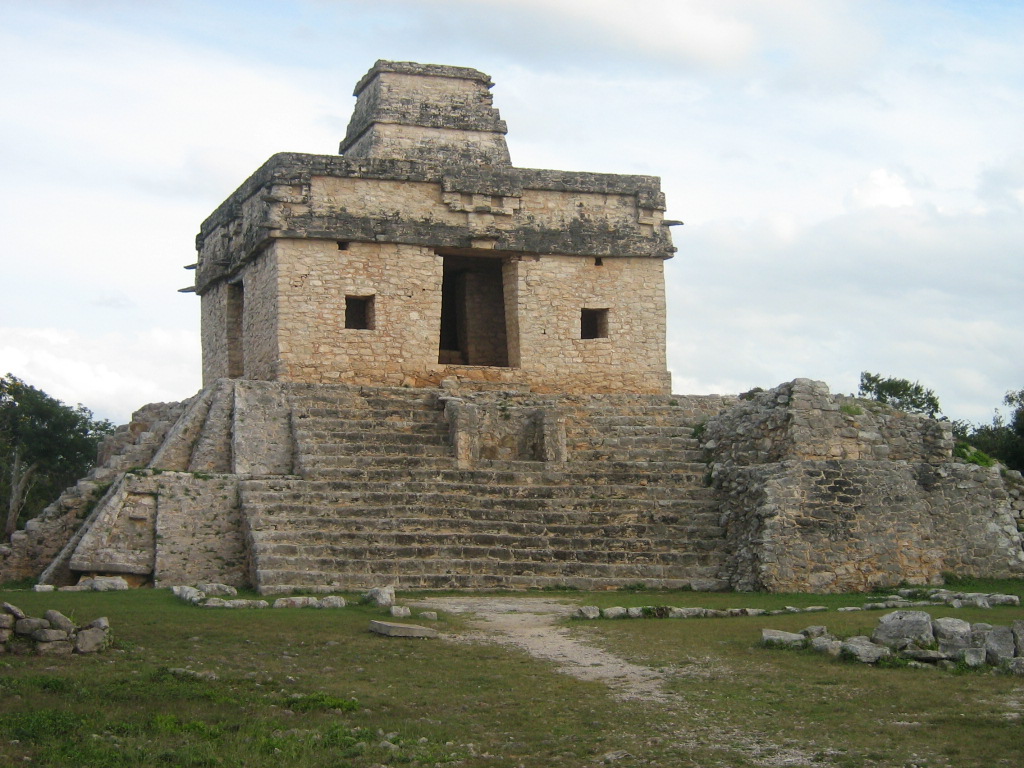
Dzibilchaltun is a Maya city 16 km north of Merida in Yucatan, Mexico, lived in for thousands of years and best known for the Temple of the Seven Dolls, through whose doors the sun rises at the equinoxes. The site also holds a large cenote, a 16th-century Spanish chapel and a museum of Maya culture, all inside a protected dry forest.
Dzibilchaltun tickets: which one for you
Our pick for each kind of visit, with live dates and prices from GetYourGuide. Free cancellation on most.
Best for: A ruins-and-beach day from Merida
Transport and a guide for the temple, cenote and museum in the morning, then free time on the beach at Progreso, without having to arrange taxis between them.
- Cruise passengers at Progreso: For cruise ships adventure in the maya ruins of dzibilchaltun the meteorite museum Picks up from the cruise port, which is close to the site, and adds a museum on the meteorite crater, with timing set around the ship's schedule.
Tickets and tours: all the options
Entry is paid at the visitor centre by the car park, where the fee is made up of a federal archaeology part and a state part. It covers the ruins, the cenote area and the Museum of the Maya People, which is closed on Mondays. Backpacks and large bags must be left in lockers. Guides can be hired at the entrance for a walk of about an hour.
Not much is sold online for Dzibilchaltun on its own. The usual product is a half or full day from Merida that combines the ruins with the beach and seafront at Progreso, 20 km further north, with transport and a guide included and lunch often extra. Tours for cruise passengers start at the long pier in Progreso and pair the site with a museum about the meteorite crater at nearby Chicxulub. Entry fees may or may not be included.
The simplest way is to go on your own from Merida by taxi, ride-hailing car or rented car, arrive at opening and spend two hours here, then continue to Progreso for lunch by the sea. A tour makes sense if you do not drive and want both places in one day.
What to see at Dzibilchaltun
Temple of the Seven Dolls
Walk east along the white causeway from the main plaza to the small Temple of the Seven Dolls, named after seven clay figurines found buried inside. It is unusual for a Maya temple, with windows and a central tower. At the equinoxes the rising sun shines straight through its doorway, a sight that draws large crowds.
Cenote Xlakah
Near the centre of the ruins lies Cenote Xlakah, a large open pool fringed with water lilies. Its clean water probably decided where the city was built, and divers have recovered thousands of objects from it. It was long used for swimming, but bathing has been suspended in recent years; check at the gate before bringing swimwear.
4 tickets and tours for Dzibilchaltun
Live dates and prices from GetYourGuide. Free cancellation on most tickets.
Open chapel
In the middle of the main plaza stands a small vaulted chapel built by the Spanish in the 16th century, partly from stones of the Maya buildings around it. It is an early example of the open chapels used to preach to large crowds outdoors. Its simple arch makes a striking frame for the Maya ruins beyond.
Main plaza and stelae
Around the plaza lie long platforms and temple bases, including a very long range building on its southern side. Look out for the carved stelae, many badly worn. One names a king, K'alo'mte' Uk'uuw Chan Chaahk, among the few rulers of the site known by name. Iguanas sun themselves on the warm stones.
Museum of the Maya People
Back near the entrance, the museum covers the Maya of Yucatan from early times to today, with stelae, pottery, objects recovered from the cenote, colonial pieces and modern dress. A garden outside has more sculpture and a reconstructed traditional Maya house with its thatched roof. Remember that it is closed on Mondays.
A short history
Dzibilchaltun was lived in for thousands of years, growing into a mid-sized city and shrinking back to a small town more than once. Its builders probably chose the spot for the fresh water of the cenote and for its closeness to the salt flats on the coast, about 22 km away. The surviving buildings span the Classic period, when kings such as the one named on Stela 10 ruled. After the Spanish conquest a chapel was raised in the plaza. Archaeologists working in the 1950s found the Temple of the Seven Dolls buried inside a later pyramid. The surrounding forest became a national park in 1987, covering 539 hectares.
Getting there
The site is about 16 km north of central Merida. By car, take the highway towards Progreso and turn east at the signed junction for Dzibilchaltun; from there a short road leads past the village to the car park, about 25 minutes in all. Taxis and ride-hailing cars from Merida are easy to find; ask the driver to wait or arrange a return. Some shared vans run from central Merida to the area, but services are irregular. Merida airport, with flights from Mexico City, Cancun and the United States, is south of the city. Cruise ships dock at Progreso, about 20 minutes north.
Rules and what to bring
Climbing on the Temple of the Seven Dolls and other fragile buildings is restricted; follow the signs. Drones need an INAH permit. Large bags go into lockers at the entrance. Bring water, a hat and sunscreen for the walk along the causeway, which has little shade, and insect repellent in the rainy months. There are toilets, a shop and a snack stand at the visitor centre, and restaurants in Merida and Progreso.
When to go
Dzibilchaltun is quiet on most days, with small groups arriving from Merida and Progreso in the late morning. Arriving at the 8 am opening gives cooler air and good light on the temple. By midday the causeway is hot and exposed. On days when cruise ships are at Progreso, tours come in larger numbers.
November to February is the most comfortable season. March to May is very hot, and the rains of June to October bring humid afternoons and more mosquitoes. The great exception is the spring and autumn equinox, around 21 March and 22 September, when hundreds of people gather before dawn to watch the sun rise through the temple doorway; the site may open early for the event, so check, and arrive well ahead. Allow about two hours for the ruins, cenote and museum.
Combine it with
Progreso, 20 minutes north, has a long beach, a seafront promenade and seafood restaurants. Near Progreso a museum and park explain the Chicxulub meteorite crater. Merida's colonial centre and the excellent Gran Museo del Mundo Maya are 25 minutes south, and Uxmal is about an hour and a quarter beyond the city.
At a glance
| Hours | 8 am to 5 pm; the site museum is shut on Mondays |
|---|---|
| Closed | Site open daily; museum closed Mondays |
| Entry fee | Fee in MXN; free on Sundays for Mexican residents |
| Time needed | 1.5 to 2 hours with the museum |
| Best time | At 8 am; November to February for cooler days |
| Booking | Pay at the gate; equinox sunrise visits draw large crowds |
| Access | Flat paths and a long straight causeway; little shade by the temple; museum step-free |
| Getting there | Taxi or car from Merida, 16 km and about 25 minutes, off the road to Progreso |
| Excavated | 1956 |
| Civilisation | Maya |
| Website | inah.gob.mx/zonas/zona-arqueologica-de-dzibilchaltun |
| Checked | October 2026 |
Frequently asked questions
When is Dzibilchaltun open?
8 am to 5 pm; the site museum is shut on Mondays. Closed: Site open daily; museum closed Mondays.
How much is the entry fee for Dzibilchaltun?
Entry fee: Fee in MXN; free on Sundays for Mexican residents.
How long do you need at Dzibilchaltun?
Allow 1.5 to 2 hours with the museum for Dzibilchaltun.
Do I need to book Dzibilchaltun in advance?
Pay at the gate; equinox sunrise visits draw large crowds.
Can I book a ticket or tour for Dzibilchaltun online?
Yes. GetYourGuide lists 4 tickets and tours for Dzibilchaltun, with live dates and prices and free cancellation on most of them.
When is the best time to visit Dzibilchaltun?
At 8 am; November to February for cooler days.
How do I get to Dzibilchaltun?
Taxi or car from Merida, 16 km and about 25 minutes, off the road to Progreso.
Is Dzibilchaltun accessible, and what is the terrain like?
Flat paths and a long straight causeway; little shade by the temple; museum step-free.
Is Dzibilchaltun worth visiting?
Worth it for an easy half-day from Merida combining a Maya temple, a cenote and a good museum, before a beach afternoon at Progreso. Skip or shorten it if you have only one day in Yucatan, when Uxmal or Chichen Itza offer far more.