Ancient City · Greek · Greece
Ancient Eleusis
Ancient Eleusis is the sanctuary of Demeter and Persephone in the town of Elefsina, about 20 km west of Athens, where the Eleusinian Mysteries were held for close to two thousand years. Its ruins include the great hall of initiation, two monumental gateways and the cave believed to lead to the underworld.
Ancient Eleusis tickets: which one for you
Our pick for each kind of visit, with live dates and prices from GetYourGuide. Free cancellation on most.
Best for: First visit, with the myth explained
A private guide follows the ancient procession route from Athens to the sanctuary, explaining the Mysteries on the way and at the ruins, with door-to-door transport.
- Several sites in one day: Athens eleusis marathon and cape sounion day tour Adds the battlefield of Marathon and the Temple of Poseidon at Cape Sounion to Eleusis, a long day that covers three different sides of Attica.
- On the way to the Peloponnese: Athens mystical eleusis legendary corinth private tour A private day pairing Eleusis with Ancient Corinth and the canal, for visitors who want both sites without driving the motorway themselves.
Tickets and tours: all the options
Eleusis is a state archaeological site, and a single modest ticket bought at the gate covers the sanctuary and, when open, the museum on the hill. There is no online timed ticket and no need to book; on most days the site is very quiet. As at other Greek state sites, EU citizens under 25 enter free.
Few tours are built around Eleusis. The most rewarding is a private tour from Athens that follows the route of the ancient Sacred Way, the road the initiates walked from the city, with a guide who explains the rites and their meaning; transport is included and entry is usually extra. Other private tours combine Eleusis with Ancient Corinth on the road west, and a longer day trip links it with Marathon and Cape Sounion.
The site is easy to reach by city bus and needs no guide to navigate, but the remains are hard to read without background, and the signs are brief. For a first visit, go on your own by bus with some reading in advance, or book the private Sacred Way tour if you want the story told properly.
What to see at Ancient Eleusis
Greater Propylaia
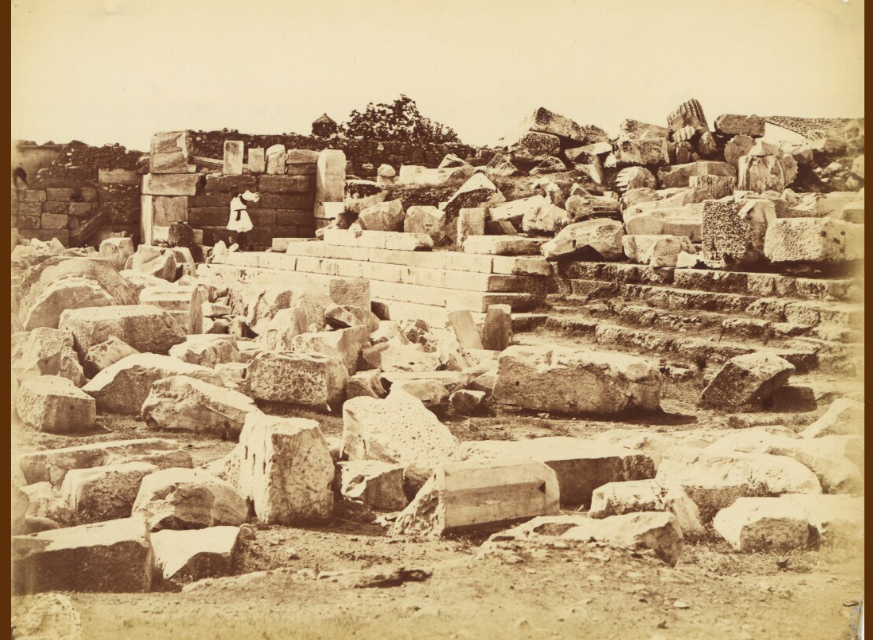
Enter through the paved Roman forecourt to the Greater Propylaia, the marble gateway built in the 2nd century AD as a copy of the Propylaia on the Athenian Acropolis. Look for the large carved bust of a Roman emperor on the fallen pediment and, beside the steps, the Kallichoron well where Demeter is said to have rested.
Telesterion
Climb a little further to the heart of the sanctuary, the Telesterion, a vast square hall cut partly into the rock where the initiation took place at night. Rows of rock-cut steps on its sides seated several thousand initiates, and the bases of the forest of columns that held the roof are still visible. The inner shrine stood at the centre.
3 tickets and tours for Ancient Eleusis
Live dates and prices from GetYourGuide. Free cancellation on most tickets.
Lesser Propylaia
Between the outer gate and the Telesterion lies the Lesser Propylaia, the inner gateway built by the Roman consul Appius Claudius Pulcher in the 1st century BC. Its fallen blocks include a Latin inscription and fragments of carved ritual objects. One of its two caryatids is in the site museum and the other in Cambridge.
Plutonion cave
Just inside the Lesser Propylaia, on the right, a cave in the rock face was sacred to Pluto, god of the underworld. In the myth this was where Persephone returned to the world each spring, and a small temple stood in front of it. It is a quiet spot and one of the easiest places to imagine the ancient rites.
Hilltop and museum
Follow the path up the hill above the sanctuary for views over the bay of Elefsina and the island of Salamis. The museum at the top displays a caryatid, Roman statues, votive reliefs and pottery from the sanctuary, including finds linked to the cult of Demeter. Check at the ticket desk whether it is open on the day.
A short history
Eleusis was settled in the Bronze Age, and a cult of Demeter grew here by Mycenaean times. After the town came under Athens in the 7th century BC, the Mysteries became a festival of the whole Greek world, open to men and women, slave or free, who swore never to reveal what they had seen. Each autumn a great procession walked the Sacred Way from Athens. Pericles commissioned a larger Telesterion in the 5th century BC, and initiated Roman emperors added the gateways. The cult ended after the edicts of Theodosius against pagan worship and the Gothic raid of AD 395. Greek archaeologists have dug here since 1882, and Elefsina was a European Capital of Culture in 2023.
Getting there
Eleusis lies in the centre of Elefsina, about 20 km west of Athens on the bay of the same name. City buses A16 and B16 run from Plateia Eleftherias, also called Koumoundourou Square, near the Kerameikos, and take about 45 minutes depending on traffic; get off in the town centre, a few minutes' walk from the entrance. By car, take the Athens to Corinth motorway, leave at the Elefsina exit and park in nearby streets. A taxi from central Athens takes about 30 minutes outside rush hour. Athens airport is about 50 minutes away by car.
Rules and what to bring
Do not climb on walls, column bases or the rock-cut steps of the Telesterion, and stay out of fenced areas. Drones need a permit. The site has little shade, so bring water, a hat and sunscreen in summer, and wear shoes with good grip for the polished rock and uneven paving. Toilets are near the entrance. There is no cafe on site, but the town around has plenty of cafes and tavernas.
When to go
Eleusis is rarely busy. Most days see a few independent travellers and small groups, and even in high season you are unlikely to queue. Morning visits are best, both for the cooler air and because winter hours end in mid-afternoon.
Spring, from March to June, and autumn, from September to November, are the most pleasant seasons; summer heat on the open rock can be fierce from late morning. Winter is mild and often clear, a good time to combine Eleusis with sightseeing in Athens. The ancient Mysteries were celebrated in late September, the season when the procession once filled the road from Athens. In summer the town also hosts the Aeschylia festival, named after the playwright born here, with performances in an old factory by the shore. Allow an hour for the sanctuary and another half hour for the museum and the hilltop.
Combine it with
Daphni Monastery, with its Byzantine mosaics, stands beside the old Sacred Way about 20 minutes back towards Athens. The Kerameikos cemetery in Athens, where the procession began, completes the story. Ancient Corinth is about an hour further west on the motorway.
At a glance
| Hours | Daytime, longer in summer and usually to mid-afternoon in winter; check before visiting |
|---|---|
| Closed | Main Greek holidays such as 1 Jan, Easter Sunday and 25 Dec; check locally |
| Entry fee | Modest fee; EU under-25s free |
| Time needed | 1.5 to 2 hours with the museum |
| Best time | Morning; March to June and September to November |
| Booking | Pay at the gate; no need to book |
| Access | Uneven paving, steps and slopes up to the hilltop museum; little shade |
| Getting there | Bus A16 or B16 from Plateia Eleftherias in central Athens, about 45 minutes |
| Abandoned | AD 396 |
| Excavated | 1882 |
| Civilisation | Greek |
| Checked | October 2026 |
Frequently asked questions
When is Ancient Eleusis open?
Daytime, longer in summer and usually to mid-afternoon in winter; check before visiting. Closed: Main Greek holidays such as 1 Jan, Easter Sunday and 25 Dec; check locally.
How much is the entry fee for Ancient Eleusis?
Entry fee: Modest fee; EU under-25s free.
How long do you need at Ancient Eleusis?
Allow 1.5 to 2 hours with the museum for Ancient Eleusis.
Do I need to book Ancient Eleusis in advance?
Pay at the gate; no need to book.
Can I book a ticket or tour for Ancient Eleusis online?
Yes. GetYourGuide lists 3 tickets and tours for Ancient Eleusis, with live dates and prices and free cancellation on most of them.
When is the best time to visit Ancient Eleusis?
Morning; March to June and September to November.
How do I get to Ancient Eleusis?
Bus A16 or B16 from Plateia Eleftherias in central Athens, about 45 minutes.
Is Ancient Eleusis accessible, and what is the terrain like?
Uneven paving, steps and slopes up to the hilltop museum; little shade.
Is Ancient Eleusis worth visiting?
Worth it for anyone drawn to Greek religion and myth, at a quiet site within an hour of central Athens. Skip or shorten it if you want picturesque ruins: the remains are low, the setting is industrial, and the Acropolis or Delphi will impress more.