Ancient City · Mesoamerican · Mexico
Guachimontones
Guachimontones is the largest site of the Teuchitlan culture, on a hillside above Teuchitlan about an hour west of Guadalajara. Its round stepped pyramids, each ringed by a circular patio and platforms, are unlike anything else in Mesoamerica, and the site is part of the UNESCO-listed agave landscape of Tequila.
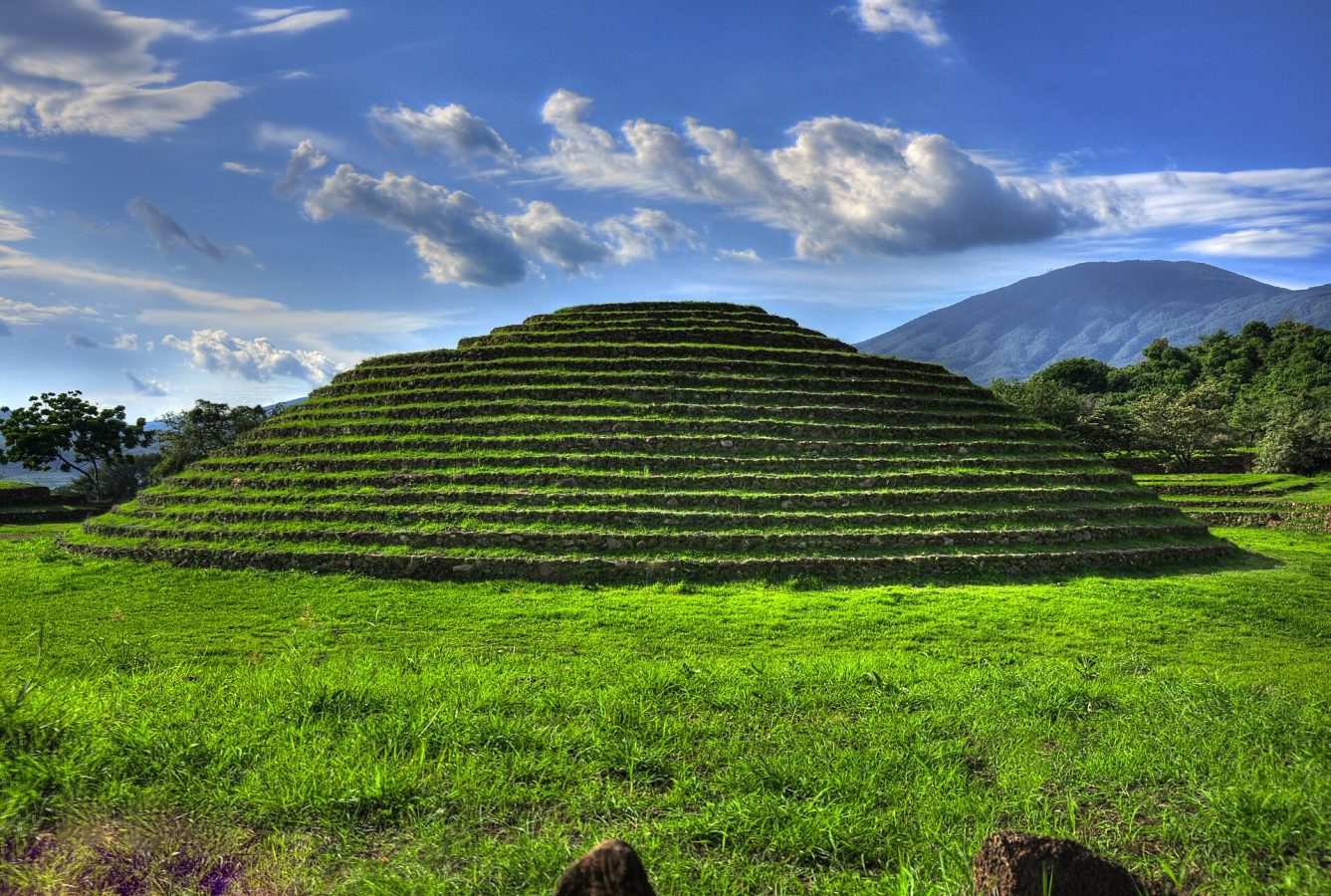
Photo: Esteban Tucci, CC BY-SA 3.0
Guachimontones tickets: which one for you
Our pick for each kind of visit, with live dates and prices from GetYourGuide. Free cancellation on most.
Best for: First visit, from Guadalajara
Return transport by van and a guide who explains the circles, which look like plain grassy mounds without someone to read them; back in the city by late afternoon.
- Ruins and tequila in one day: Tequila and guachimontones private full day tour A private driver links the site with a distillery in the agave fields around Tequila, so you see both halves of the same UNESCO landscape without a coach timetable.
- Archaeology enthusiasts: Guachimontones and teuchitlan archaeological route Spends longer in the Teuchitlan area itself, with the local story of the shaft tombs and the lake basin rather than a quick stop on the way to a tasting.
Tickets and tours: all the options
Entry is paid at the gate in cash, and there is nothing to book for the site itself. What you have to solve is transport, because Guachimontones lies on a hill above a small town without a direct, frequent bus from Guadalajara.
GetYourGuide sells several kinds of trip, all based on Guadalajara or Teuchitlan. The simplest is a guided day trip by van from Guadalajara, with hotel pick-up, a walk around the circles and the interpretation centre, and return in the afternoon. Several tours combine the site with tequila: a visit to a distillery and agave fields, a tasting, sometimes lunch in Teuchitlan or Tequila town. Private full-day tours do the same with your own driver and guide. One local tour focuses on the wider archaeology of the Teuchitlan area, and another links the site with the history of Jalisco. Entry fees and lunch are not always included, so check before booking.
Signs on site are limited and the shapes of the buildings are hard to make sense of alone, so a guide adds a great deal here. If you have a car, drive out early, pay at the gate and use the interpretation centre. Without a car, a guided van tour from Guadalajara is the sensible option, and the tequila combination makes good use of the drive.
What to see at Guachimontones
Interpretation centre
Start at the visitor building by the entrance, named after the archaeologist Phil Weigand, who led the modern excavations. Models and plans show how each circle worked, with a central stepped pyramid, a round patio and a ring of platforms where temples stood. A few minutes here make the low mounds on the hill much easier to understand.
The great circle
Walk uphill to the largest guachimonton, the centrepiece of the site. A stepped cone of earth and stone rises in the middle of a circular patio, surrounded by a raised ring and rectangular platforms. Researchers think a pole stood on top for a flying ritual, as in later Mesoamerican ceremonies. Walk the ring to see the proportions.
6 tickets and tours for Guachimontones
Live dates and prices from GetYourGuide. Free cancellation on most tickets.
Neighbouring circles
Next to the great circle, several smaller circles overlap and share platforms, showing how the ceremonial area grew over centuries. Some have been restored with stone facing, others left as grassy mounds. Look for the stairs on the central pyramids and the way the platforms are spaced evenly around each ring, a pattern repeated across dozens of sites in the region.
Ball court
Between the circles lies a long ball court, a playing alley flanked by parallel mounds where a team game with a rubber ball was played. Its position next to the main ceremonial buildings suggests the game was part of ritual life. From its far end the view takes in the whole group of circles on the slope above.
Viewpoint over the valley
Higher up, the paths reach points with wide views over Teuchitlan, the La Vega reservoir and the valley floor, once the shore of a lake that supplied fish, reeds and birds. Fields of blue agave spread across the plain towards Tequila. It is a good place to see why the hill was chosen, overlooking water, farmland and obsidian sources.
A short history
The Teuchitlan culture built the site between about 300 BC and AD 450 to 500, with traces of earlier occupation. Its people buried some of their dead in deep shaft tombs with pottery figures, shell ornaments and conch trumpets, a tradition shared across West Mexico. Monumental building stopped in the Late Classic as the population fell. The English artist Adela Breton photographed and sketched the site in the 1890s, but the round buildings were only recognised in 1974 through the work of Phil Weigand, who led excavations and restoration from the late 1990s. Looting put it on a watch list of endangered sites in 2008, and it is part of the Tequila UNESCO site listed in 2006.
Getting there
Guadalajara is the base, with its international airport about 20 km south of the centre. By car, take the highway west towards Tala and Ameca and follow signs to Teuchitlan; the drive of about 60 km takes roughly an hour outside rush hour. In Teuchitlan, signs lead up a road to the car park and entrance above the town.
Regional buses run from Guadalajara to Teuchitlan, but they are slow and the timetable changes; from the town square it is an uphill walk of about 2 km, or a short taxi ride. Taxis and ride-hailing cars from Guadalajara can be hired for the round trip with waiting time. From the car park, the path to the circles climbs for a few hundred metres.
Rules and what to bring
Climbing the pyramids and walking on the restored platforms are not allowed; stay on the marked paths. Drones need a permit. Shade is limited, so bring water, a hat and sunscreen, and wear shoes with grip, as the paths are loose and slippery after rain. Snacks and toilets are at the entrance area; restaurants are in Teuchitlan, known for lakeside fish dishes.
When to go
Go in the morning. The site sits on an open hillside, and by midday the sun on the stones is strong for much of the year. Tours from Guadalajara tend to arrive from late morning, so if you drive yourself, arriving soon after opening gives you the circles almost to yourself. Weekends bring more local visitors and families than weekdays.
The dry season from November to May is the most reliable time, with clear skies, although April and May are hot. From June to October afternoon storms are common, the hills turn green and the paths can become muddy, so plan to finish by early afternoon. Allow about two hours for the interpretation centre and a walk around the main circles, and three if you want the upper viewpoints. A tequila distillery or lunch in Teuchitlan fills the rest of a day trip.
Combine it with
Tequila town, with its distilleries and agave fields, is about 40 minutes north by road and makes the natural pairing. In Teuchitlan, restaurants by the La Vega reservoir serve lunch. Back in Guadalajara, the Regional Museum of Guadalajara displays pottery figures from West Mexican shaft tombs that put the site in context.
At a glance
| Hours | Daytime, roughly 9 am to 5 pm; check locally before travelling |
|---|---|
| Closed | Check before travelling, especially on Mondays and public holidays |
| Entry fee | Small fee at the gate, paid in pesos |
| Time needed | 2 to 3 hours |
| Best time | Morning; November to May, the dry season |
| Booking | Pay at the gate; book ahead only for a tour from Guadalajara |
| Access | Uphill dirt and stone path with some shade; hot at midday; not suitable for wheelchairs |
| Getting there | About 60 km west of Guadalajara, roughly an hour by car; then a short uphill walk |
| Founded | 300 BC (c. 300 BC) |
| Excavated | 1999 |
| Civilisation | Mesoamerican |
| Area | 19 ha |
| UNESCO | Agave Landscape and Ancient Industrial Facilities of Tequila |
| Checked | October 2026 |
Frequently asked questions
When is Guachimontones open?
Daytime, roughly 9 am to 5 pm; check locally before travelling. Closed: Check before travelling, especially on Mondays and public holidays.
How much is the entry fee for Guachimontones?
Entry fee: Small fee at the gate, paid in pesos.
How long do you need at Guachimontones?
Allow 2 to 3 hours for Guachimontones.
Do I need to book Guachimontones in advance?
Pay at the gate; book ahead only for a tour from Guadalajara.
Can I book a ticket or tour for Guachimontones online?
Yes. GetYourGuide lists 6 tickets and tours for Guachimontones, with live dates and prices and free cancellation on most of them.
When is the best time to visit Guachimontones?
Morning; November to May, the dry season.
How do I get to Guachimontones?
About 60 km west of Guadalajara, roughly an hour by car; then a short uphill walk.
Is Guachimontones accessible, and what is the terrain like?
Uphill dirt and stone path with some shade; hot at midday; not suitable for wheelchairs.
Is Guachimontones worth visiting?
Worth it for round pyramids found nowhere else in Mexico and an easy day trip from Guadalajara. Skip or shorten it if you expect the scale of Teotihuacan or carved temples, as the circles are low grassy mounds best read with a guide.
How old is Guachimontones?
Guachimontones dates from 300 BC (c. 300 BC). Excavations began in 1999.
Is Guachimontones a UNESCO World Heritage Site?
Yes. Guachimontones is part of the UNESCO World Heritage Site Agave Landscape and Ancient Industrial Facilities of Tequila.