Ancient City · Greek · Italy
Neapolis Archaeological Park, Syracuse
The Neapolis Archaeological Park in Syracuse, Sicily, holds the great Greek theatre of the 5th century BC, the stone quarries with the cave called the Ear of Dionysius, a vast altar and a Roman amphitheatre. It drew over half a million visitors in 2022. Classical dramas are still staged in the theatre every early summer.
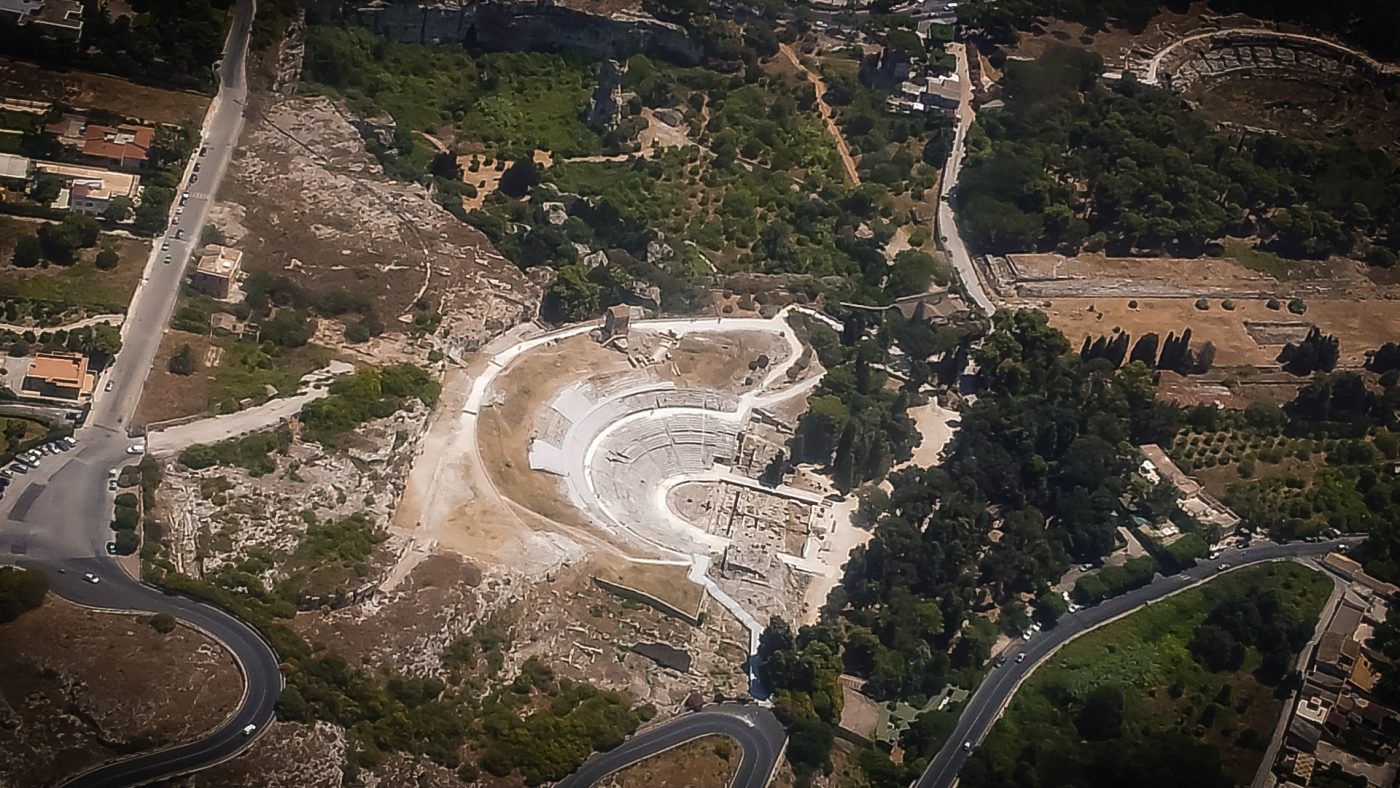
Photo: Agostino Sella, CC BY-SA 2.0
Neapolis Archaeological Park, Syracuse tickets: which one for you
Our pick for each kind of visit, with live dates and prices from GetYourGuide. Free cancellation on most.
Best for: First visit, about two hours
A guide walks you through the theatre, the quarries and the altar, explaining what is otherwise a set of stone shapes with few signs, and handles the entry tickets.
- Late in the day, in cooler light: Syracuse greek theater and neapolis sunset tour A guided visit timed for the end of the afternoon, when the heat eases, the coach groups have gone and the low sun lights the theatre seats.
- Ancient Syracuse in one outing: Syracuse ortygia neapolis archaeological park guided tour Combines the park with a guided walk through Ortygia, the island old town, so you see both halves of the Greek city in one morning or afternoon.
Tickets and tours: all the options
The standard ticket covers the whole park: the Greek theatre, the quarries with the Ear of Dionysius, the Altar of Hieron and the Roman amphitheatre. It is sold at the ticket office at the end of Viale Augusto and online through the regional booking service. Combined tickets with the Paolo Orsi archaeological museum are often available and worth taking, since the museum holds the finds from the city. In summer the theatre hosts the classical drama festival, which needs a separate show ticket and changes the daytime opening on performance days.
The tours sold online are almost all guided walks within Syracuse. The usual format is a guided visit of the park of about two hours, in a small group or private; some private guides add Ortygia for a half-day covering the whole ancient city, and there are golden hour and sunset versions late in the afternoon. Most quote the guide only, so check whether entry is included. Day trips from Catania or Taormina also reach the park, usually with Ortygia and sometimes Noto.
On your own, a standard ticket and the route below work well, since the park is compact. A guide adds most at the theatre, where the different building phases are hard to read. The sensible plan is an early or late visit with a guide, then the museum.
What to see at Neapolis Archaeological Park, Syracuse
Greek Theatre
From the entrance follow the path to the theatre, cut directly into the limestone hill and among the largest the Greeks built. Its curved rows of seats look over the stage towards the sea. Look for the carved inscriptions naming royal family members on the upper seat bands, and the grotto of the Nymphaeum fed by an old aqueduct at the top.
Street of Tombs
Climb above the theatre to the rock-cut road that runs along the top, lined with niches and chambers dug into the cliff. These were later burial places and small shrines, and the wheel ruts of carts can still be seen in the stone. From here the whole theatre opens beneath you, the best view of its size.
7 tickets and tours for Neapolis Archaeological Park, Syracuse
Live dates and prices from GetYourGuide. Free cancellation on most tickets.
Ear of Dionysius
Walk down into the Latomia del Paradiso, a deep quarry now planted with lemon and olive trees. At its far side an S-shaped cave rises over 20 metres high and runs deep into the rock. Caravaggio is said to have named it after the tyrant Dionysius. Stand inside and speak quietly to hear the remarkable echo.
Altar of Hieron II
Across the path, a long stepped platform cut from the rock is all that remains of the altar built by King Hieron II in the 3rd century BC. At nearly 200 metres long it was the largest altar of the Greek world, where hundreds of bulls were sacrificed at festivals. Only the base survives, but its length is striking.
Roman Amphitheatre
The final stop, a short walk east, is the Roman amphitheatre, partly carved from the rock and partly built. Its oval arena still shows the pit in the centre and the passages used by gladiators and animals. It is usually seen from a viewing path along the rim, with the remains of the outer arcades below.
A short history
Syracuse was founded by settlers from Corinth in 734 BC and became the leading Greek city of the West. Neapolis, the new city, grew on the slopes north of Ortygia, and the theatre was laid out in the 5th century BC; Aeschylus is said to have staged plays here. Hieron II enlarged the theatre and built his great altar in the 3rd century BC. The quarries supplied stone and, after the failed Athenian siege of 413 BC, held thousands of prisoners. Under Rome the theatre was adapted and the amphitheatre added. Digging from the 19th century cleared the monuments; since 2005 the park has formed part of the UNESCO site of Syracuse and the Rocky Necropolis of Pantalica.
Getting there
The park lies in the north of modern Syracuse, about 2.5 km from Ortygia. The walk from the old town takes 30 minutes along Corso Gelone; city buses and taxis also run. From Syracuse railway station it is about 15 minutes on foot. Catania airport is about 60 km north, an hour by the Interbus coach to the Syracuse bus station or by car on the motorway, and trains from Catania take about an hour and a half. Drivers should use the paid car park near Viale Augusto, where the ticket office and entrance are. From there the theatre is a few minutes' walk.
Rules and what to bring
Do not climb on the theatre seats beyond the marked areas, touch the rock-cut inscriptions or enter the closed caves. Drones need permission. During the drama season parts of the theatre are covered by modern seating and may be off limits. Bring water, a hat and sunscreen, as much of the park is open; the quarry garden gives the only real shade. Toilets are at the entrance, and cafes line the road outside.
When to go
The park is busiest from about 10 am to 1 pm, when cruise passengers and coach groups from Catania and Taormina arrive. Come at 8.30 am, when the theatre is quiet and the stone still cool, or in the last two hours before closing, when the light warms the seats and the groups have left.
April, May, late September and October are the best months. July and August are very hot, with little shade outside the quarry, so avoid midday. From May to early July the classical drama festival fills the theatre in the evenings; seeing a play in the place it was written for is a highlight, but daytime visits may be restricted on show days and accommodation books up. Winter is mild and quiet, with shorter hours. Allow about two hours, plus another hour for the Paolo Orsi museum nearby.
Combine it with
The Paolo Orsi Regional Archaeological Museum, one of the richest in Sicily, is a 10-minute walk east. Ortygia, with the Temple of Apollo, the cathedral built into a Doric temple and the Fountain of Arethusa, is 30 minutes on foot. The Catacombs of San Giovanni lie between the two. Noto is 40 minutes south by car.
At a glance
| Hours | From 8.30 am to about an hour before sunset; hours change with the season and on show nights |
|---|---|
| Closed | Usually open daily; check for changes during the drama season |
| Entry fee | Paid ticket; reduced for EU 18–25s, under-18s free |
| Time needed | About 2 hours |
| Best time | At opening or late afternoon; April, May, September and October |
| Booking | Online tickets help in summer; book theatre shows weeks ahead |
| Access | Gravel paths and gentle slopes; the theatre steps and quarry floor are uneven; some shade in the quarry |
| Getting there | Walk or bus from Ortygia, about 30 minutes on foot; 15 minutes from the train station |
| Founded | 450 BC (5th century BC (midpoint), Greek Theatre) |
| Civilisation | Greek |
| Visitors | 560 318 a year (2022) |
| UNESCO | Syracuse and the Rocky Necropolis of Pantalica |
| Checked | October 2026 |
Frequently asked questions
When is Neapolis Archaeological Park, Syracuse open?
From 8.30 am to about an hour before sunset; hours change with the season and on show nights. Closed: Usually open daily; check for changes during the drama season.
How much is the entry fee for Neapolis Archaeological Park, Syracuse?
Entry fee: Paid ticket; reduced for EU 18–25s, under-18s free.
How long do you need at Neapolis Archaeological Park, Syracuse?
Allow About 2 hours for Neapolis Archaeological Park, Syracuse.
Do I need to book Neapolis Archaeological Park, Syracuse in advance?
Online tickets help in summer; book theatre shows weeks ahead.
Can I book a ticket or tour for Neapolis Archaeological Park, Syracuse online?
Yes. GetYourGuide lists 7 tickets and tours for Neapolis Archaeological Park, Syracuse, with live dates and prices and free cancellation on most of them.
When is the best time to visit Neapolis Archaeological Park, Syracuse?
At opening or late afternoon; April, May, September and October.
How do I get to Neapolis Archaeological Park, Syracuse?
Walk or bus from Ortygia, about 30 minutes on foot; 15 minutes from the train station.
Is Neapolis Archaeological Park, Syracuse accessible, and what is the terrain like?
Gravel paths and gentle slopes; the theatre steps and quarry floor are uneven; some shade in the quarry.
Is Neapolis Archaeological Park, Syracuse worth visiting?
Worth it for the Greek theatre carved from the hillside and the echoing Ear of Dionysius, a compact two-hour visit. Skip or shorten it on a hot midday in July, or if you prefer the streets of Ortygia to ruins.
How old is Neapolis Archaeological Park, Syracuse?
Neapolis Archaeological Park, Syracuse dates from 450 BC (5th century BC (midpoint), Greek Theatre).
Is Neapolis Archaeological Park, Syracuse a UNESCO World Heritage Site?
Yes. Neapolis Archaeological Park, Syracuse is part of the UNESCO World Heritage Site Syracuse and the Rocky Necropolis of Pantalica.