Ancient City · Mesoamerican · Mexico
Xochicalco
Xochicalco is a hilltop city in western Morelos, 38 km south-west of Cuernavaca, that flourished between about AD 700 and 900 after the fall of Teotihuacan. Its Temple of the Feathered Serpent carries some of the finest reliefs in central Mexico, mixing Teotihuacan and Maya styles. The UNESCO-listed site also has ball courts, a solar observatory cave and a good museum.
Tickets and tours: which to book
Entry is by a standard ticket from INAH, the national heritage institute, bought at the site museum near the car park. It covers the museum, the ruins and, from noon, the observatory cave. On Sundays Mexican citizens and residents enter free, which makes the site busier with families. There is no timed entry, and local guides sometimes offer their services at the entrance; agree the price and length before setting off.
Only one product including Xochicalco appears on GetYourGuide: a day out from Cuernavaca that combines a Spanish lesson at a language school with a guided visit to the site and transport. It suits students already staying in Cuernavaca rather than ordinary sightseers. Other agencies in Cuernavaca and Mexico City run day trips that pair Xochicalco with Taxco, the silver town further south, or with the lagoon at Tequesquitengo, usually with transport and a guide but not always the entry fee.
Most independent visitors drive or take a taxi from Cuernavaca. The sensible plan is to arrive at opening, spend an hour in the museum and the lower plazas, and time the climb so that you reach the observatory soon after noon.
What to see at Xochicalco
Site museum
Start in the museum beside the car park, built in the 1990s to house finds from the INAH excavations. Its halls show stone stelae, carved heads, pottery and objects from the houses that were burnt when the city fell. From here a path climbs towards the ruins, about ten minutes on foot.
Temple of the Feathered Serpent
On the main plaza at the top of the hill stands the city's most famous building. Its sloping base is wrapped in great undulating feathered serpents, with seated figures in Maya-looking dress between their coils. The upper walls show warriors and glyphs that are read as the names of towns paying tribute to Xochicalco.
Tickets and tours for Xochicalco
Live dates and prices from GetYourGuide. Free cancellation on most tickets.
Main plaza and Acropolis
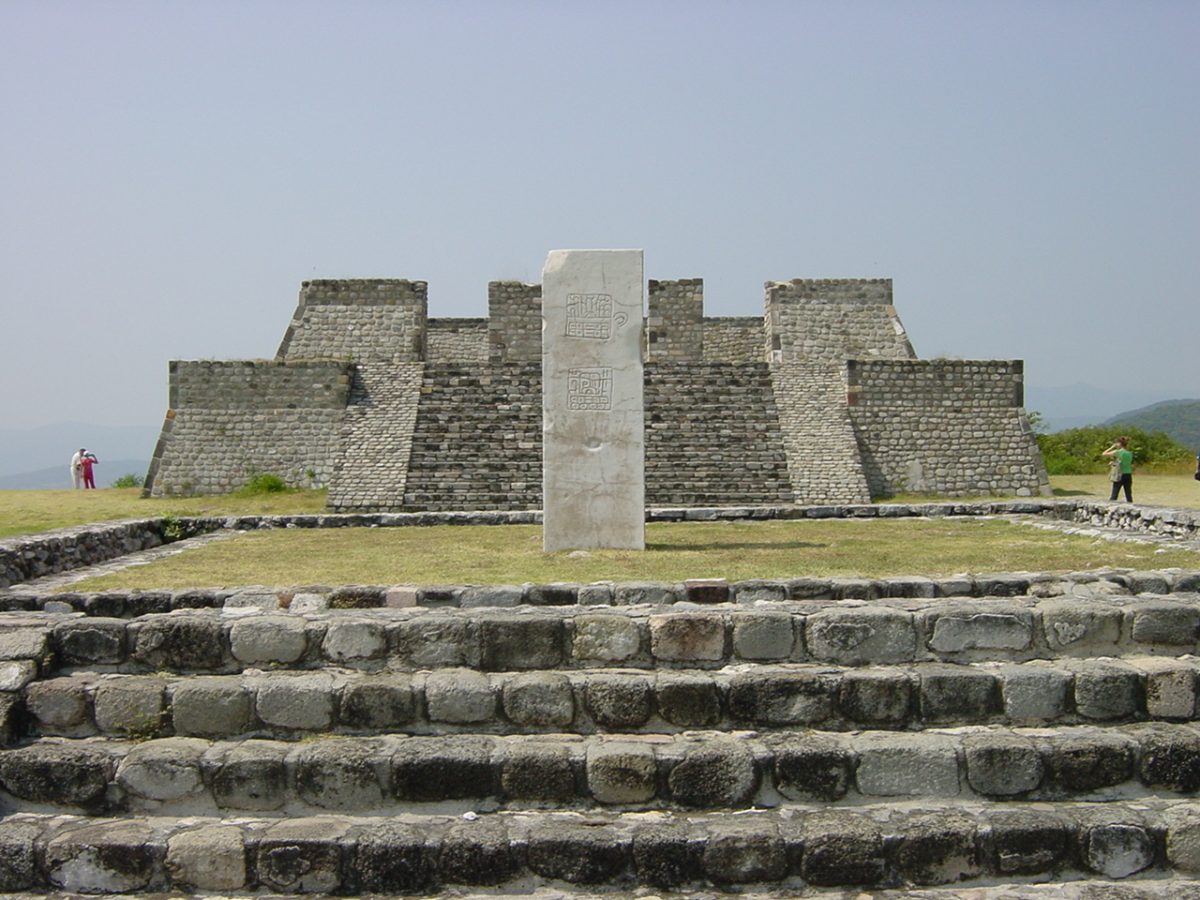
Around the temple, the main plaza is lined by pyramid platforms and the Temple of the Stelae, where three carved stelae were found in a buried offering. Behind it rises the Acropolis, the palace complex of the rulers, with rooms, courts and a sweat bath. From its edge you see the terraces that held houses and the valley below.
Ball courts and Plaza of the Altars
Walk down to the ball courts: Xochicalco has three, and the southern one, with its sloping walls and stone rings, is the best preserved. Nearby, a long causeway is lined by a row of small round altars, an unusual feature of the site. Look back up at the walls and ditches that defended the hill.
Observatory cave
On the northern side of the hill a stairway leads into a cave reworked by the builders as a solar observatory. A narrow shaft about 9 metres high lets sunlight onto the floor from late April to mid August, and at the zenith passages in mid May and late July the sun's disc falls straight down it. It opens only after noon.
A short history
The hill was first settled by about 200 BC, but the city grew only after Teotihuacan declined in the 7th century. Between about AD 700 and 900 it became a fortified centre of trade and religion with perhaps 10,000 to 20,000 people, controlling routes between the central highlands and the coasts. Around 900 the city was burnt and abandoned, and the Tlahuica later settled the area. Antonio Alzate described the ruins in 1777, and Alexander von Humboldt published them in 1810. Leopoldo Batres restored the Temple of the Feathered Serpent in 1910, and major INAH excavations followed from the 1940s and again from 1988. UNESCO listed the site in 1999.
Getting there
Xochicalco lies in the municipality of Miacatlan, 38 km south-west of Cuernavaca and about 122 km by road from Mexico City. By car from Cuernavaca, take the federal road or toll motorway south towards Acapulco, leave at Alpuyeca and follow the signs west for the last few kilometres to the car park by the museum: about 45 minutes. From Mexico City allow two hours on the toll road via Cuernavaca. Buses from Cuernavaca towards Miacatlan and Coatlan pass the junction about 4 km from the entrance; from there a taxi is the practical way up. The nearest international airport is Mexico City, with a small airport at Cuernavaca.
Rules and what to bring
Climbing is allowed only on the stairs that are open; ropes mark buildings that are closed, and the reliefs of the Feathered Serpent temple must not be touched. Drones and tripods need INAH permission. The hilltop is exposed and hot, so bring a hat, sunscreen and plenty of water, and wear shoes with good grip for the steep stone steps. There are toilets at the museum and a few drinks stalls at the car park, but no restaurant.
When to go
Morelos is warm all year, and Xochicalco is hottest in April and May, before the rains, when the bare plazas reflect the sun. From June to September afternoon storms are common, so plan the visit for the morning and finish at the observatory around noon. October to March is dry and pleasant, with clear views across the valley, and is the best season.
Sundays bring families from Cuernavaca, as entry is free for Mexican residents, and school groups visit on weekday mornings during term. The spring equinox in March draws crowds who gather to receive the sun on the hilltop. The observatory is most spectacular around the zenith days in mid May and late July. Allow two to three hours, including the museum.
Combine it with
Cuernavaca, with the Palace of Cortes and its museum, is 45 minutes away. Taxco, the silver-mining town, is about an hour south, making a long but feasible day from Cuernavaca. The Aztec temple of Tepozteco above Tepoztlan is about an hour north-east.
At a glance
| Hours | 10 am to 5 pm; the observatory cave opens only from noon |
|---|---|
| Closed | Open daily |
| Entry fee | INAH fee in pesos; free on Sundays for Mexican residents |
| Time needed | 2 to 3 hours |
| Best time | At 10 am opening, then the observatory at noon; October to March |
| Booking | No booking; pay at the museum ticket desk |
| Access | Steep stone stairs and ramps between terraces; little shade; not suitable for wheelchairs |
| Getting there | About 45 minutes by car from Cuernavaca; 2 hours from Mexico City |
| Founded | AD 650 (c. AD 650; first occupied by 200 BC) |
| Abandoned | AD 900 |
| Civilisation | Mesoamerican |
| Area | 7.1 km² |
| UNESCO | Archaeological Monuments Zone of Xochicalco |
| Checked | October 2026 |
Frequently asked questions
When is Xochicalco open?
10 am to 5 pm; the observatory cave opens only from noon. Open daily.
How much is the entry fee for Xochicalco?
Entry fee: INAH fee in pesos; free on Sundays for Mexican residents.
How long do you need at Xochicalco?
Allow 2 to 3 hours for Xochicalco.
Do I need to book Xochicalco in advance?
No booking; pay at the museum ticket desk.
Can I book a ticket or tour for Xochicalco online?
Yes. GetYourGuide lists one ticket or tour for Xochicalco, with live dates and prices and free cancellation on most of them.
When is the best time to visit Xochicalco?
At 10 am opening, then the observatory at noon; October to March.
How do I get to Xochicalco?
About 45 minutes by car from Cuernavaca; 2 hours from Mexico City.
Is Xochicalco accessible, and what is the terrain like?
Steep stone stairs and ramps between terraces; little shade; not suitable for wheelchairs.
Is Xochicalco worth visiting?
Worth it for carved temples, ball courts and a sun-lit observatory cave on a defensive hilltop with wide views. Skip or shorten it in the midday heat of April and May, or if you can only see one site near Mexico City and prefer Teotihuacan.
How old is Xochicalco?
Xochicalco dates from AD 650 (c. AD 650; first occupied by 200 BC). It was abandoned in AD 900.
Is Xochicalco a UNESCO World Heritage Site?
Yes. Xochicalco is part of the UNESCO World Heritage Site Archaeological Monuments Zone of Xochicalco.