Tomb & Necropolis · Greek · Greece
Aigai (Vergina) Royal Tombs
Aigai, at the village of Vergina in northern Greece, was the first capital of the kings of Macedon and the place where Philip II was murdered and Alexander the Great proclaimed king. Its great burial mound now shelters an underground museum around the royal tombs, including the one attributed to Philip, with its gold larnax and painted facade.
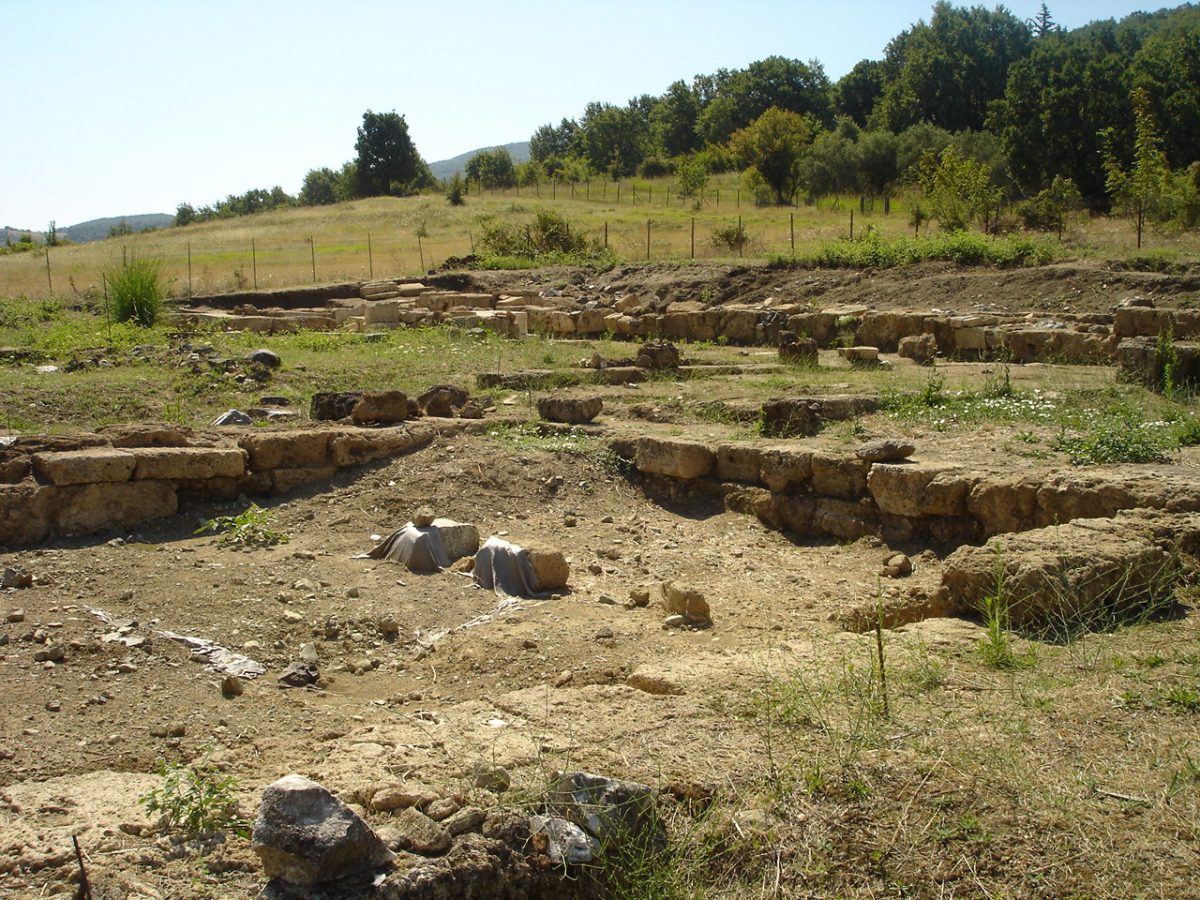
Photo: Македонец, CC BY-SA 4.0
Aigai (Vergina) Royal Tombs tickets: which one for you
Our pick for each kind of visit, with live dates and prices from GetYourGuide. Free cancellation on most.
Best for: First visit, a day from Thessaloniki
Transport and a guide for the two Macedonian capitals in one day: the tombs at Vergina and the mosaics and palace remains at Pella on the way.
- Private, at your own pace: From thessaloniki private tour to vergina royal tombs A private car and driver from Thessaloniki, so you can spend longer in the tomb museum and add the palace and theatre without a group schedule.
- Vergina with old Veria: Thessalonikijourney through ancient vergina to sacred veria Combines the tombs with the old quarter of Veria and its Byzantine churches, a good day for travellers interested in more than antiquity.
Tickets and tours: all the options
Entry is managed by the Greek Ministry of Culture. A single ticket covers the Museum of the Royal Tombs, the palace and theatre on the hill above the village and the newer Polycentric Museum near the palace; it is sold at the tomb museum and costs the same all year. EU citizens under 25 enter free, and there are reductions for older EU visitors and students. There is no need to book: queues are rare outside school-trip mornings.
What is sold online is mainly a full-day tour from Thessaloniki. The most common format pairs Vergina with Pella, Alexander's birthplace and the later capital, with a guide and air-conditioned minibus; entry tickets are usually extra. Some tours add Veria and its Byzantine churches, or Edessa and its waterfalls, and a few begin in Ohrid in North Macedonia. Private tours with a driver-guide suit families and small groups and allow more time inside.
If you have a car, Vergina is easy to visit alone, and the tomb museum has clear labels in English. Without one, a group day tour from Thessaloniki that includes Pella is the sensible option, because public transport needs a change at Veria and leaves little time for both sites.
What to see at Aigai (Vergina) Royal Tombs
Great Tumulus museum
The tombs lie under the Great Tumulus, a man-made hill about 110 metres across, which now forms a dark underground museum. The earth mound was rebuilt over the excavations, and you walk inside it along a ramp. Displays explain how the Macedonian kings were buried and show grave stelae found in the fill of the mound.
Tomb of Philip II
Tomb II, found intact by Manolis Andronikos in 1977, is the centre of the museum. Its facade carries a painted frieze of a royal hunt. In the cases nearby sit the gold larnax with the Vergina sun on its lid, a gold oak wreath, armour, ivory portraits and silver vessels, generally attributed to Philip II and his court.
10 tickets and tours for Aigai (Vergina) Royal Tombs
Live dates and prices from GetYourGuide. Free cancellation on most tickets.
Tomb of Persephone and Prince's tomb
Close by, the smaller Tomb I was robbed in antiquity but keeps a wall painting of Hades carrying off Persephone, a rare original by a Greek master. Tomb III, the so-called Prince's tomb, held the silver urn of a teenage boy, often identified as Alexander IV, son of Alexander the Great. Both are seen through glass.
Palace of Aigai
About a kilometre uphill to the south, the palace built under Philip II was one of the largest buildings of classical Greece, arranged around a huge colonnaded courtyard. After a long restoration it reopened in 2024 with partly rebuilt columns and walkways over the floor mosaics. The terrace looks over the Macedonian plain towards Thessaloniki.
Theatre and Polycentric Museum
Just below the palace lies the theatre where Philip II was stabbed in 336 BC during his daughter's wedding; only the lowest row of stone seats survives. Nearby, the Polycentric Museum displays finds from the wider city and its cemeteries, including pottery, jewellery and sculpture from the older royal burials.
A short history
Aigai was the seat of the Argead kings of Macedon from around the 7th century BC, a cluster of villages around a walled acropolis on the foothills of the Pierian mountains. King Archelaus moved the capital to Pella around 400 BC, but Aigai remained the sacred city and the royal burial ground. Philip II was assassinated in its theatre in 336 BC, and Alexander was proclaimed king there. Gallic mercenaries looted many tombs in 276 BC, and the Romans burned the city after 168 BC. Leon Heuzey dug the palace in the 1860s; Manolis Andronikos found the royal tombs in 1977. The site was added to the UNESCO list in 1996.
Getting there
Vergina lies about 75 km west of Thessaloniki and 13 km south-east of Veria. By car the drive from Thessaloniki takes about an hour and a quarter on the Egnatia motorway; there is free parking beside the tomb museum and at the palace. Thessaloniki airport is about 90 km away. By public transport, take a KTEL bus from the main Thessaloniki bus station to Veria, which runs frequently and takes about an hour and a quarter, then a local bus to Vergina, which runs only a few times a day, or a taxi for the last 13 km. Trains from Thessaloniki to Veria are slower. From the village centre the tomb museum is a short walk.
Rules and what to bring
Photography is not allowed inside the Museum of the Royal Tombs, and the guards enforce it. Large bags and food stay outside. On the palace hill keep to the walkways over the mosaics, and do not climb on the theatre seats. Bring water and a hat for the walk between the tombs and the palace, as there is little shade. Cafes and tavernas in Vergina village serve simple lunches.
When to go
The tomb museum is underground and cool, so it can be visited at any hour, but the palace and theatre are exposed and summer afternoons on the hill are hot. A good order is the palace at opening, then the theatre and Polycentric Museum, and the tombs in the heat of the day. Day tours from Thessaloniki usually arrive in late morning or after lunch at Pella, and Greek school groups come on weekday mornings in spring.
April to June and September to October are the most comfortable months, with mild temperatures and green fields around the village. July and August are hot but rarely crowded here. Winter is quiet and the museum is just as good, though everything closes at 5 pm and on Tuesdays. On the first and third Sundays from November to March entry is free. Allow about an hour and a half for the tombs and as long again for the palace, theatre and second museum.
Combine it with
Pella, the later capital and birthplace of Alexander, is about an hour north-east, with pebble mosaics in its museum and on site. Veria, 20 minutes away, has an old quarter with small Byzantine churches and a Jewish district. Dion, the sacred city of the Macedonians below Mount Olympus, is about an hour south.
At a glance
| Hours | 8 am to 8 pm Apr–Aug, Tue from noon, earlier in steps to 6 pm by late Oct; 9 am to 5 pm Nov–Mar |
|---|---|
| Closed | Tuesdays Nov–Mar; 1 Jan, 25 Mar, 1 May, Easter Sunday, 25 and 26 Dec |
| Entry fee | from EUR 20 for tombs, palace and museums; EU under-25s free |
| Time needed | 3 to 4 hours |
| Best time | At opening or late afternoon; April to June and September to October |
| Booking | Pay at the ticket office; tours only needed for transport |
| Access | The tomb museum is step-free and air-conditioned; the palace hill is a short uphill walk |
| Getting there | Bus from Thessaloniki to Veria, about 1 hour 15 minutes, then a local bus or taxi 13 km |
| Abandoned | AD 250 |
| Excavated | 1977 |
| Civilisation | Greek |
| Visitors | 222 503 a year (2018) |
| UNESCO | Archaeological Site of Aigai (modern name Vergina) |
| Website | aigai.gr |
| Checked | October 2026 |
Frequently asked questions
When is Aigai (Vergina) Royal Tombs open?
8 am to 8 pm Apr–Aug, Tue from noon, earlier in steps to 6 pm by late Oct; 9 am to 5 pm Nov–Mar. Closed: Tuesdays Nov–Mar; 1 Jan, 25 Mar, 1 May, Easter Sunday, 25 and 26 Dec.
How much is the entry fee for Aigai (Vergina) Royal Tombs?
Entry fee: from EUR 20 for tombs, palace and museums; EU under-25s free.
How long do you need at Aigai (Vergina) Royal Tombs?
Allow 3 to 4 hours for Aigai (Vergina) Royal Tombs.
Do I need to book Aigai (Vergina) Royal Tombs in advance?
Pay at the ticket office; tours only needed for transport.
Can I book a ticket or tour for Aigai (Vergina) Royal Tombs online?
Yes. GetYourGuide lists 10 tickets and tours for Aigai (Vergina) Royal Tombs, with live dates and prices and free cancellation on most of them.
When is the best time to visit Aigai (Vergina) Royal Tombs?
At opening or late afternoon; April to June and September to October.
How do I get to Aigai (Vergina) Royal Tombs?
Bus from Thessaloniki to Veria, about 1 hour 15 minutes, then a local bus or taxi 13 km.
Is Aigai (Vergina) Royal Tombs accessible, and what is the terrain like?
The tomb museum is step-free and air-conditioned; the palace hill is a short uphill walk.
Is Aigai (Vergina) Royal Tombs worth visiting?
Worth it for the royal tombs and their gold, one of the finest ancient treasures in Greece, seen in place. Skip or shorten the palace and theatre if you are short of time: the tomb museum alone justifies the trip.
Is Aigai (Vergina) Royal Tombs a UNESCO World Heritage Site?
Yes. Aigai (Vergina) Royal Tombs is part of the UNESCO World Heritage Site Archaeological Site of Aigai (modern name Vergina).