
Colosseum
Rome, Italy
The Colosseum is the largest amphitheatre the Romans ever built, an oval of travertine about 189 metres long that held…
349 tickets & tours
Palace, Villa & Baths · Roman · Italy
The Domus Aurea is the Golden House that Nero built on the Oppian Hill after the fire of AD 64, now a maze of vaulted rooms buried under a park beside the Colosseum. Small guided groups go in wearing hard hats to see faded frescoes that inspired Raphael and a domed octagonal hall lit from above.
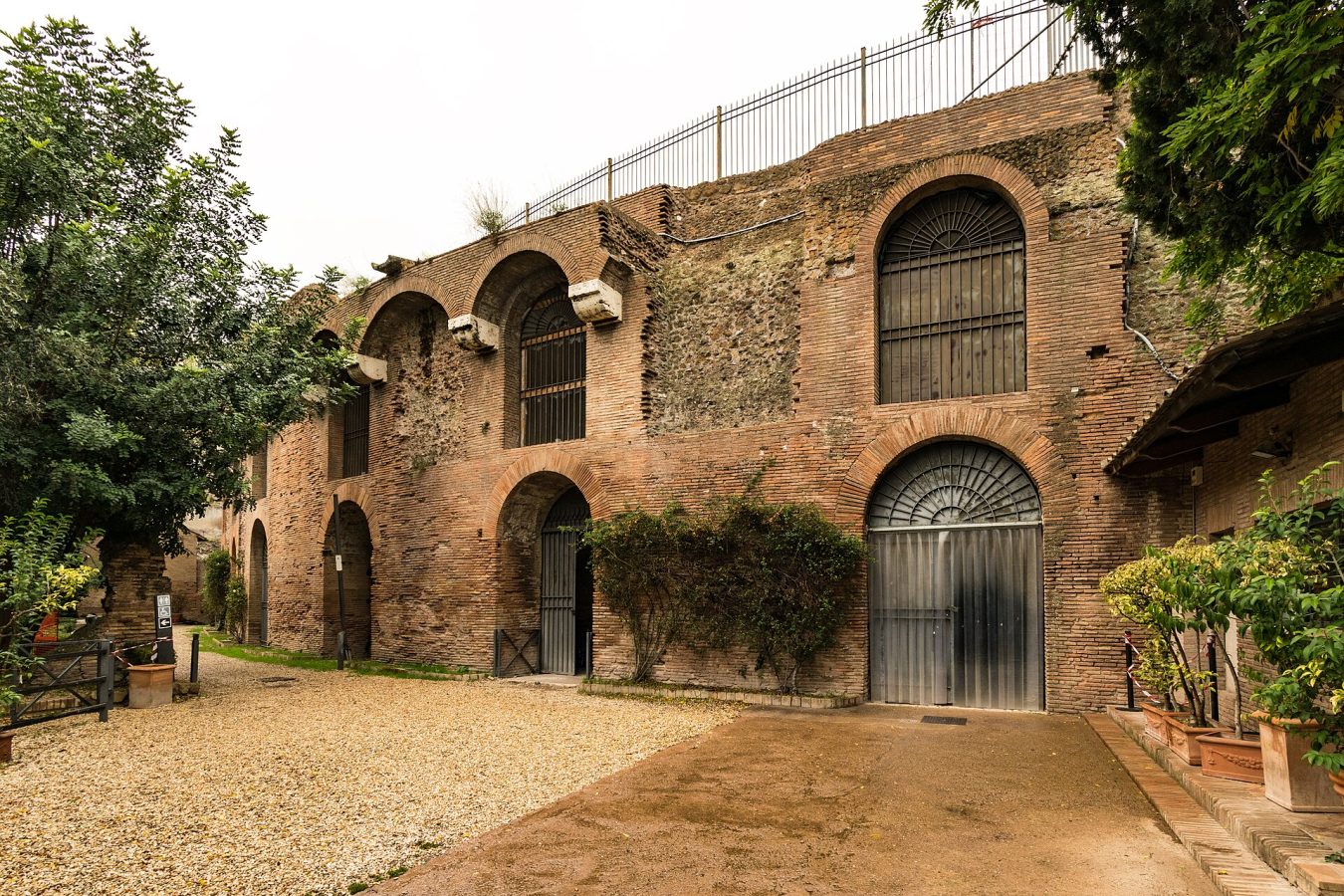
Photo: Rabax63, CC BY-SA 4.0
Our pick for each kind of visit, with live dates and prices from GetYourGuide. Free cancellation on most.
Best for: First visit, the standard tour
A guide through the open rooms and the virtual reality section, which shows the vaults with their marble and gilding; the simplest way in when official slots are scarce.
There is no free-roaming entry. The Domus Aurea can only be seen on a guided visit organised by the Colosseum archaeological park, in small groups that wear hard hats and follow a fixed route through the excavated wing on the Oppian Hill. The visit includes a virtual reality section in which headsets show the rooms with their original marble, gilding and garden views. It is not covered by the ordinary Colosseum ticket and has its own booking.
GetYourGuide sells several versions. Most are the same kind of guided visit with the virtual reality section, sometimes with a licensed guide hired by the reseller rather than the park staff, and often priced above the official ticket; they are useful when official slots for your dates have gone. One combined option adds the Colosseum on the same day with one guide, which saves arranging two bookings. Private tours exist but are rarely worth the extra cost in such small groups.
The route can change as restoration work moves from room to room, so not every painted vault is open on every visit. Check the duration, the meeting point and whether the virtual reality section is included. For most visitors the official guided visit, booked as soon as dates are released, is the sensible choice, with a resold tour as the fallback.
The high point of the visit is a domed hall with eight sides and a round opening at the top, built in concrete decades before the Pantheon. Rooms open off it like spokes, and light still falls through the oculus onto the floor. Stand in the centre to see how the architects made a buried space feel open and full of daylight.
In the rooms around the courtyards the vaults keep traces of delicate painted decoration: thin columns, garlands, small figures and fantastic creatures on pale grounds. Renaissance artists who crawled in from above copied them, and the style took its name, grotesque, from these grottoes. With a torch your guide picks out signatures scratched by later visitors.
Live dates and prices from GetYourGuide. Free cancellation on most tickets.
Near the Octagonal Room, the vault of this room shows the myth of Achilles hidden among the daughters of the king of Skyros and unmasked by Ulysses. It is one of the most complete figure scenes in the palace, though the colours have faded. It shows the quality of painting that Nero expected in the rooms where guests were received.
Long vaulted corridors once lit by windows link the rooms, and you can still see where light entered. Heavy walls cut through the rooms at odd angles: these are foundations for the Baths of Trajan, built on top after a fire in AD 104. They explain why the palace survived, packed with earth and sealed from the weather for centuries.
Towards the end you sit and put on a headset that rebuilds the rooms you have just seen, with coloured marble, painted ceilings and the view out over gardens to the lake where the Colosseum now stands. It lasts a few minutes and makes the bare brick much easier to imagine. Glasses can usually be worn under the headset.
After the great fire of AD 64, Nero began a vast estate across the Palatine, Oppian and Caelian hills, with gardens and an artificial lake, designed by the architects Severus and Celer. It was almost finished when he died in 68. His successors stripped it within a decade: Vespasian built the Colosseum on the lake, Titus added baths, and after a fire in 104 Trajan filled the Oppian wing with earth to carry his own baths. Rediscovered in the late 15th century, the painted rooms drew Raphael and other artists. Collapses closed the site from 2005, and it reopened for guided visits in 2014. It lies within the Historic Centre of Rome, on the UNESCO list since 1980.
Take metro line B to Colosseo; from Termini it is two stops. Leave the station, cross towards the Colle Oppio park on the hill above the Colosseum and walk uphill for about five minutes to the entrance on Viale della Domus Aurea. Tram 3 and several bus lines also stop around the Colosseum.
From Fiumicino airport, the Leonardo Express train reaches Termini in about half an hour; from Ciampino, airport buses run to Termini. Driving is not sensible: the centre is a restricted traffic zone and parking is scarce. Arrive at the meeting point 15 to 20 minutes before your slot, as late arrivals may not be able to join the group once it has gone underground.
Hard hats are compulsory and handed out at the entrance. The temperature inside stays at about 10 to 12 degrees all year and the air is very humid, so bring a light jacket even in August. Do not touch the walls or painted plaster, and keep bags small, as the corridors are narrow in places. Flash photography is not allowed in the painted rooms. There is no cafe at the site; bars and toilets can be found around the Colosseum.
Because visits run only on certain days, the date matters more than the hour. Slots for spring, early summer and autumn sell out first, often weeks ahead, and weekends go fastest; book as soon as you know your dates and keep a second day free in case of cancellation, which happens when restoration work or heavy rain affects the vaults.
Underground the temperature does not change with the season, so the Domus Aurea is a good choice for the hottest hours of a summer day, when the Forum and the Palatine are punishing, or for a wet day in winter. The park above is pleasant in the early evening. Allow about an hour and a quarter for the visit plus time to arrive early, and plan the Colosseum before or after it, as the two entrances are five minutes apart.
The Colosseum is five minutes downhill, and the Roman Forum and Palatine, where remains of Nero's earlier palace survive, lie just beyond it. Ruins of the Baths of Trajan stand in the Colle Oppio park above the Domus Aurea. San Pietro in Vincoli, with Michelangelo's Moses, is a ten-minute walk, and the Laocoon group found near here in 1506 is in the Vatican Museums.
| Hours | Guided visits only, on selected days each week; slot times are published on the Parco Colosseo site |
|---|---|
| Closed | Not open every day; the visit calendar is published online |
| Entry fee | Ticket includes the guided visit and VR; check current price |
| Time needed | About an hour and a quarter |
| Best time | Midday on a hot summer day; any season works underground |
| Booking | Book a named slot well ahead; groups are small and sell out |
| Access | Dim, damp rooms with uneven floors and some steps; hard hats provided; ask ahead about wheelchairs |
| Getting there | Metro line B to Colosseo, then 5 minutes uphill into the Colle Oppio park |
| Founded | AD 64 (begun after the fire of 64 AD) |
| Abandoned | AD 104 |
| Civilisation | Roman |
| Visitors | 60 943 a year (2022) |
| UNESCO | Historic Centre of Rome |
| Website | parcocolosseo.it/area/domus-aurea |
| Checked | October 2026 |
Guided visits only, on selected days each week; slot times are published on the Parco Colosseo site. Closed: Not open every day; the visit calendar is published online.
Entry fee: Ticket includes the guided visit and VR; check current price.
Allow About an hour and a quarter for Domus Aurea.
Book a named slot well ahead; groups are small and sell out.
Yes. GetYourGuide lists 6 tickets and tours for Domus Aurea, with live dates and prices and free cancellation on most of them.
Midday on a hot summer day; any season works underground.
Metro line B to Colosseo, then 5 minutes uphill into the Colle Oppio park.
Dim, damp rooms with uneven floors and some steps; hard hats provided; ask ahead about wheelchairs.
Worth it for the Octagonal Room and the painted vaults that taught Renaissance artists the grotesque style. Skip or shorten it if you want bright colours and complete rooms, or if cool, damp corridors and a fixed group pace do not suit you.
Domus Aurea dates from AD 64 (begun after the fire of 64 AD). It was abandoned in AD 104.
Yes. Domus Aurea is part of the UNESCO World Heritage Site Historic Centre of Rome.
Rome, Italy
The Colosseum is the largest amphitheatre the Romans ever built, an oval of travertine about 189 metres long that held…
349 tickets & tours
Rome, Italy
The Roman Forum is the valley between the Palatine and Capitoline hills where ancient Rome held its elections, trials,…
162 tickets & tours
Rome, Italy
The Appian Way is the Roman road begun in 312 BC from Rome towards southern Italy, and its first 16 km out of the city…
36 tickets & tours
Rome, Italy
Ostia Antica is the ancient port of Rome at the old mouth of the Tiber, 25 km from the centre of Rome, preserved by…
19 tickets & tours
Rome, Italy
The Baths of Caracalla are the ruins of the huge public baths opened in Rome in AD 216, covering about 15 hectares…
16 tickets & tours
Rome, Italy
The Circus Maximus is the valley between the Palatine and Aventine hills in Rome where chariot races were held for more…
9 tickets & tours


