Fortress & Citadel · Andean · Peru
Kuelap
Kuelap is the walled mountain-top city of the Chachapoya people, set at about 3,000 metres above the Utcubamba Valley in northern Peru. Its limestone walls, up to 20 metres high, enclose more than 400 round stone houses on a ridge some 600 metres long. A cable car now brings visitors close to the summit from the valley floor.
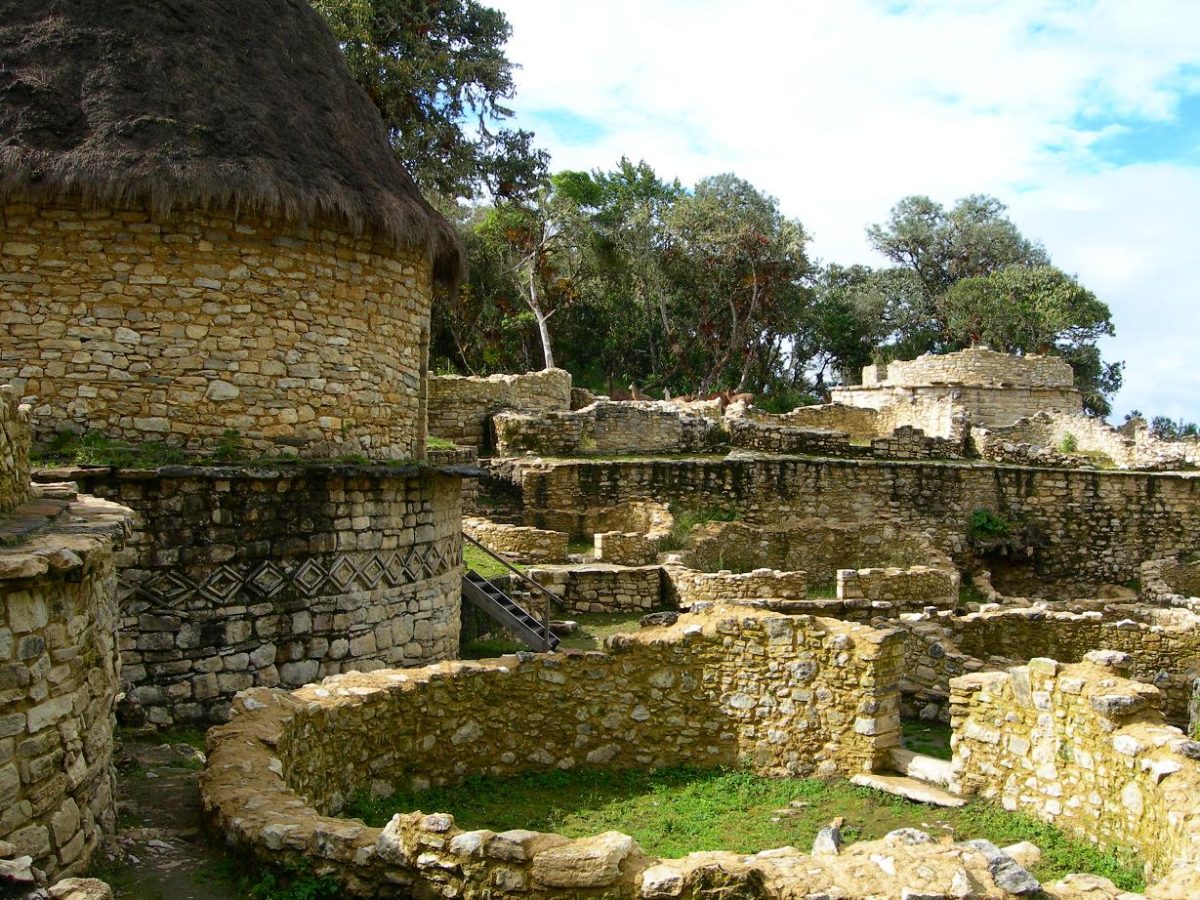
Photo: Elemaki, CC BY-SA 2.5
Kuelap tickets: which one for you
Our pick for each kind of visit, with live dates and prices from GetYourGuide. Free cancellation on most.
Best for: First visit from Chachapoyas
Transport to the cable car station, the ride up, a guide inside the walls and lunch on the way back, so you only need to be at the meeting point.
- On your own, at your own pace: Chachapoyas llaqta of kuelap cableway entrance Covers the cable car and the entrance only, for travellers who reach Nuevo Tingo by colectivo or taxi and prefer to hire a guide at the site.
- Kuelap and Gocta on one trip: Chachapoyas kuelap fortress gocta waterfall adventure Joins the fortress with the walk to the Gocta waterfall, the other big sight of the Chachapoyas area, with transport and guides arranged for both.
Tickets and tours: all the options
There are two charges: the cable car from the station at Nuevo Tingo up to the ridge, and the entry ticket to the archaeological site. Both are sold at the lower station, and the cable car ticket usually includes the shuttle bus to the boarding point. Peruvian citizens pay less than foreign visitors, and students and children receive reductions with identification. Guides offer their services at the station and at the upper area.
Most visitors come on a full-day tour from Chachapoyas, which is what most products online offer. A standard tour includes a minibus to Nuevo Tingo, the cable car, a Spanish or bilingual guide and lunch in a valley restaurant, and returns in the late afternoon. Some tickets cover only the cable car and the entrance. Other options add the Gocta waterfall, run as a two-day package, or start from Cajamarca and cross the mountains to Leimebamba and its mummy museum over two or more days. Private cars from Chachapoyas suit families and photographers who want to stay longer.
The sensible choice for a first visit is a full-day group tour from Chachapoyas with cable car and lunch included. Book the day before in the main square or online; in the July and August holidays reserve a little earlier.
What to see at Kuelap
Main entrance and outer wall
The walk from the upper cable car area ends below the eastern face of the outer wall, built of fitted limestone blocks and rising 10 to 20 metres. The main gate is a deep sloping passage that narrows until only one person can pass at a time, an obvious defensive design. Look for carved heads and animal figures set into the masonry.
Round houses and friezes
Inside, most of the 420 or so buildings are circular, with only their lower walls standing. A few have been rebuilt to show the original conical thatched roof. Many keep bands of zigzag and diamond friezes in the stonework, the trademark of Chachapoya building. The marked walkway passes several of the best preserved houses in the lower town.
11 tickets and tours for Kuelap
Live dates and prices from GetYourGuide. Free cancellation on most tickets.
El Tintero
At the south end of the ridge stands the Tintero, or inkwell, a stone structure about 5.5 metres high shaped like an inverted cone. It is usually called the main temple; animal bones and offerings found here point to ritual use, and some researchers think it also served to observe the sun. Views from this end stretch over the Utcubamba Valley.
Pueblo Alto
To the north-west a second wall about 11.5 metres high encloses the upper town, reached through two narrow entrances. This raised sector holds more round houses and is thought to have been home to the elite. Depending on conservation work since 2022, it may be seen only from the walkway, so ask your guide what is open that day.
El Torreon
At the northern tip, beyond the upper town, a tower rises to about 7 metres over the cliff. Stone weapons found inside suggest it was a lookout and defensive point. From here the view along the walls shows how the city follows the narrow crest of the limestone ridge, with cloud forest of bromeliads and orchids dropping away on both sides.
A short history
People lived on the ridge from about the 6th century AD, but most of the walls and houses were built between about 900 and 1100 by the Chachapoya, a culture of the cloud forests east of the Andes. Up to 3,000 people may have lived inside. The Inca conquered the region in the late 15th century, and the city was abandoned around 1570 after the Spanish conquest. A Chachapoyas judge, Juan Crisostomo Nieto, came across it in 1843, and Antonio Raimondi surveyed it in 1870. Excavations have continued since the 1980s. Part of the outer wall collapsed in April 2022 after years of instability, and conservation work is ongoing. Kuelap is on Peru's tentative UNESCO list.
Getting there
Chachapoyas is the base for Kuelap. It has a small airport with irregular flights, so most travellers fly to Jaen, about four hours away by road, or arrive on an overnight bus from Chiclayo or Trujillo on the coast. From Chachapoyas the road follows the Utcubamba Valley to Nuevo Tingo, about an hour by tour bus, colectivo or taxi. There a shuttle takes you to the cable car, whose 20-minute ride crosses the gorge to the upper station. From the top it is a walk of about 2 km up a stone path to the walls, which some visitors do on horseback. A dirt road also climbs to the site from Tingo for those driving.
Rules and what to bring
Stay on the marked walkways and do not climb walls or enter roped-off houses: some sectors are unstable since the 2022 collapse. Drones need a permit from the Ministry of Culture. Bring a rain jacket, sun cream and a warm layer, as sun, cloud and showers can follow each other within an hour at this height. Take water and snacks; there are toilets and simple food stalls near the cable car station but nothing inside the walls.
When to go
Mornings are usually the clearest time. Cloud often rises from the valley from late morning, and afternoon showers are common, especially in the wet season. Tours from Chachapoyas leave at about 8 am and reach the walls around 10 am, so arriving independently on an early cable car gives you the site almost to yourself.
The dry season runs from about May to September, with the best weather and firmer paths. July and August bring Peruvian holiday traffic, and queues for the cable car can then be long. From about November to April heavy rain can close the road or the cable car for hours and makes the stone slippery, though the site stays open on most days. Crowds are never as large as at Machu Picchu. Allow two to three hours at the site itself and a full day for the round trip from Chachapoyas.
Combine it with
The Gocta waterfall, one of the tallest in South America, is about an hour from Chachapoyas and needs most of a second day. The Karajia sarcophagi, standing clay figures on a cliff, make a half-day trip. Further south, Leimebamba has a museum of Chachapoya mummies found at the Laguna de los Condores. Revash, a group of painted cliff tombs, is close to the Kuelap road.
At a glance
| Hours | Roughly 8 am to 5 pm, with the cable car running a shorter day; check current times |
|---|---|
| Closed | Open daily; check for temporary closures of sectors after rain |
| Entry fee | from PEN 30 for foreign adults; cable car paid separately |
| Time needed | A full day from Chachapoyas |
| Best time | Morning, before afternoon cloud; May to September for the dry season |
| Booking | Day tours book a day ahead; the cable car ticket can sell out in July |
| Access | Altitude near 3,000 m; a walk of about 2 km uphill from the cable car; steps and uneven stone |
| Getting there | Road from Chachapoyas to Nuevo Tingo, about an hour, then the cable car to the ridge |
| Founded | AD 550 (6th century AD (midpoint)) |
| Abandoned | 1570 |
| Civilisation | Andean |
| Area | 6 ha |
| Elevation | 3 000 m above sea level |
| Website | kuelap.cultura.pe |
| Checked | October 2026 |
Frequently asked questions
When is Kuelap open?
Roughly 8 am to 5 pm, with the cable car running a shorter day; check current times. Open daily; check for temporary closures of sectors after rain.
How much is the entry fee for Kuelap?
Entry fee: from PEN 30 for foreign adults; cable car paid separately.
How long do you need at Kuelap?
Allow A full day from Chachapoyas for Kuelap.
Do I need to book Kuelap in advance?
Day tours book a day ahead; the cable car ticket can sell out in July.
Can I book a ticket or tour for Kuelap online?
Yes. GetYourGuide lists 11 tickets and tours for Kuelap, with live dates and prices and free cancellation on most of them.
When is the best time to visit Kuelap?
Morning, before afternoon cloud; May to September for the dry season.
How do I get to Kuelap?
Road from Chachapoyas to Nuevo Tingo, about an hour, then the cable car to the ridge.
Is Kuelap accessible, and what is the terrain like?
Altitude near 3,000 m; a walk of about 2 km uphill from the cable car; steps and uneven stone.
Is Kuelap worth visiting?
Worth it for a huge pre-Inca fortress in cloud forest, with almost no crowds compared with Machu Picchu. Skip or shorten it if you dislike altitude, long road journeys or a visit restricted to set walkways since the 2022 wall collapse.
How old is Kuelap?
Kuelap dates from AD 550 (6th century AD (midpoint)). It was abandoned in 1570.