Hadrian’s Wall
6 km away
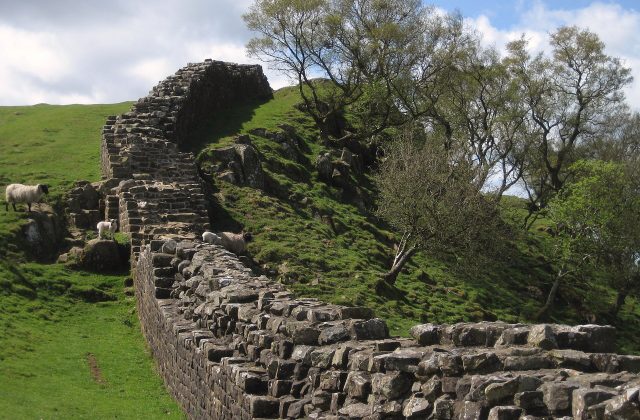
Hadrian's Wall is the Roman frontier that ran 117 km across northern England from the Tyne to the Solway Firth,…
12 tickets & tours
Fortress & Citadel · Roman · United Kingdom
Vindolanda is a Roman fort and civilian settlement on the Stanegate road, just south of Hadrian's Wall in Northumberland, occupied from about AD 85 into the late 4th century. It is famous for the Vindolanda tablets, ink letters on thin wood that were the oldest handwritten documents known in Britain when found, and it is still excavated every summer.

Nothing is sold online for Vindolanda alone through the tour platforms, and you do not need a guide. Entry is a single ticket bought at the gate or on the Vindolanda Trust website, and it covers the excavated fort, the civilian settlement, the replica walls, the gardens and the museum. A joint ticket adds the Roman Army Museum at Carvoran, about 15 minutes west by car, which the same charity runs, and costs less than two separate tickets. The site belongs to an independent trust rather than English Heritage, so English Heritage and National Trust membership does not give free entry here.
Information boards and the museum displays explain the remains well enough to go on your own, and in the digging season you can watch the archaeologists at work from the edge of the trenches. Some small-group day trips along Hadrian's Wall from Newcastle or Edinburgh stop at Vindolanda, but many go only to Housesteads, so check the itinerary before paying. Keen visitors can apply for a place on the volunteer excavation team for a week or two; places open long before the season and are usually filled quickly.
The sensible option for most people is the joint ticket, a car or the summer Hadrian's Wall bus, and a half day here followed by Housesteads or the Roman Army Museum.
From the entrance at the top of the site, the path runs first through the vicus, the village of traders, craftsmen and soldiers' families that grew up outside the fort's west gate in the 3rd century. Low walls of houses and workshops line its main street. The bathhouse is the clearest building here, with its furnace, hot rooms and the stone stacks that held up heated floors.
Continue east into the stone fort, the last of the many forts built on this hill. Its walls and gates stand to around waist height, and in the middle lie the headquarters building, where the regimental shrine and offices stood, and the commanding officer's house. Each fort was built over the levelled remains of the one before, so you are walking well above the first Roman floors.
Live prices from GetYourGuide for tickets and tours that include this site. Free cancellation on most of them.
In the digging season, roughly from spring to early autumn, open trenches around the fort show the excavation team at work, and you can watch finds being lifted and cleaned from the edges. The lowest layers are waterlogged and sealed from air, so wood, leather and textiles survive here, which is why new writing tablets and shoes still turn up most years.
Near the fort stand full-size replicas built in the 1970s: a length of turf rampart with a timber gate tower and a section of stone wall with a turret. They give a far better idea of the height and bulk of Hadrian's Wall than the low ruins along the frontier itself, and they make a useful reference before you walk on the real Wall.
A path drops steeply to the museum in the wooded valley of the Chainley Burn. Look for writing tablets, some on loan from the British Museum, including letters linked to the commander's wife Sulpicia Lepidina, hundreds of leather shoes, a pair of leather boxing gloves, combs, textiles and weapons. Outside, the gardens hold reconstructions of a Roman temple, shop and house beside the stream.
The first fort here was built of timber around AD 85, by the First Cohort of Tungrians from what is now Belgium. Batavian troops from the Rhine delta followed in the 90s, and most of the tablets come from their commander's archive, thrown on a bonfire in 104 and saved by rain. Further forts in timber and then stone followed, before and after Hadrian's Wall rose just to the north. Occupation lasted beyond Roman rule, perhaps into the 7th century. Eric Birley bought the site in 1929, his son Robin found the first tablets in 1973, and the family-led trust still excavates. It is part of the Frontiers of the Roman Empire World Heritage Site, listed in 1987.
Vindolanda lies about 2.5 km north of the village of Bardon Mill, between the A69 and the B6318 Military Road, roughly 55 km west of Newcastle. By car it takes a little over an hour from Newcastle or Carlisle; brown signs lead from both roads to the car park beside the entrance. Newcastle Airport is about an hour away.
By train, take the Tyne Valley line between Newcastle and Carlisle to Bardon Mill, then walk up a steep lane for about 40 minutes. In summer the AD122 Hadrian's Wall Country bus links Hexham and Haltwhistle stations with Vindolanda, Housesteads and the Roman Army Museum. From The Sill visitor centre at Once Brewed, a footpath reaches the site in about 30 minutes.
Stay on the paths and off the ancient walls, and do not step into the trenches unless you are part of the excavation team; anything found belongs to the trust. Drones need the trust's permission. Bring waterproofs and warm layers in any season, since the hill is exposed to wind and rain, and wear shoes with grip for wet grass and the steep path to the museum. There is a café near the museum, along with toilets and a shop.
The main reason to choose your dates carefully is the excavation, which normally runs from spring to early autumn; outside that season the trenches are covered and the site is quieter but less lively. Late spring and early summer bring long days, green hills and fewer families than the school holidays of late July and August, when the car park fills by late morning and the museum gets crowded.
Arrive at opening to have the fort almost to yourself, or come later in the afternoon, when most day trippers have moved on to Housesteads. Weather matters more than heat here: the hill is exposed, rain blows in from the west and even July days can be cool and windy, so pick a dry morning if your plans allow. Winter visits are possible on shorter hours, but in December the light fades before 4 pm. Allow two to three hours, more if you stop to watch the digging.
Housesteads Roman Fort, on Hadrian's Wall about 3 km to the north-east, is ten minutes away by car, and the walk along the Wall from there to Steel Rigg is one of the finest stretches. The Roman Army Museum at Carvoran is 15 minutes west and shares the joint ticket. Corbridge Roman Town, near Hexham, completes a Roman day, and the British Museum in London holds the best-known tablets.
6 km away
Hadrian's Wall is the Roman frontier that ran 117 km across northern England from the Tyne to the Solway Firth,…
12 tickets & tours
303 km away
Newgrange is a Neolithic passage tomb in the Boyne Valley, built around 3100 BC and so older than Stonehenge and the…
6 tickets & tours
318 km away
The Hill of Tara in County Meath is the ancient ceremonial seat of the High Kings of Ireland, a grassy ridge about 45…
3 tickets & tours
| Hours | Roughly 10 am to 5 or 6 pm in summer, shorter in winter; check the official site before travelling |
|---|---|
| Closed | Open most days; winter dates and Christmas closures vary |
| Entry fee | Paid entry; joint ticket with the Roman Army Museum |
| Time needed | 2 to 3 hours with the museum |
| Best time | Weekday mornings from April to September, while the dig is running |
| Booking | Pay on arrival or online; volunteer dig places book up months ahead |
| Access | Sloping grass and gravel paths, a steep descent to the museum; muddy and windy in bad weather |
| Getting there | Bardon Mill station on the Newcastle–Carlisle line, then a 2.5 km uphill walk |
| Founded | AD 85 (c. AD 85) |
| Civilisation | Roman |
| UNESCO | Frontiers of the Roman Empire |
| Website | vindolanda.com |
| Checked | October 2026 |
Roughly 10 am to 5 or 6 pm in summer, shorter in winter; check the official site before travelling. Open most days; winter dates and Christmas closures vary.
Entry fee: Paid entry; joint ticket with the Roman Army Museum.
Allow 2 to 3 hours with the museum for Vindolanda.
Pay on arrival or online; volunteer dig places book up months ahead.
Yes. GetYourGuide sells tickets and guided tours whose route includes Vindolanda; live prices are shown on this page.
Weekday mornings from April to September, while the dig is running.
Bardon Mill station on the Newcastle–Carlisle line, then a 2.5 km uphill walk.
Sloping grass and gravel paths, a steep descent to the museum; muddy and windy in bad weather.
Worth it for the writing tablets, Roman leather shoes and a live excavation of frontier life. Skip or shorten it if you mainly want the Wall striding over the crags, which Housesteads and Steel Rigg show far better.
Vindolanda dates from AD 85 (c. AD 85).
Yes. Vindolanda is part of the UNESCO World Heritage Site Frontiers of the Roman Empire.

