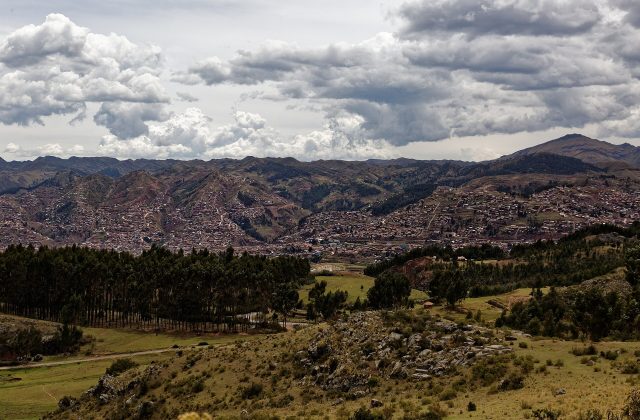
Sacsayhuaman
Cusco, Peru
Sacsayhuaman is the Inca stronghold on the hill above Cusco, famous for zigzag terrace walls of polished limestone…
41 tickets & tours
Fortress & Citadel · Andean · Peru
Waqrapukara is a remote fortress-sanctuary in Acomayo Province, south of Cusco, built around a rock outcrop with two horn-shaped peaks above the Apurimac canyon. Its name means horn fortress in Quechua, and it stands at roughly 4,100 to 4,300 metres. Few visitors make the long drive and hike, so it is still quiet compared with the sites of the Sacred Valley.

Photo: Pablo Rimachi, CC BY-SA 4.0
Our pick for each kind of visit, with live dates and prices from GetYourGuide. Free cancellation on most.
Best for: First visit, a guided day hike
Transport from Cusco, a guide on the trail and the timing worked out for you, which matters on a route with no public transport and few signs.
Waqrapukara is not on the Cusco tourist ticket. Entry is a small fee collected by the local community at a control point on the trail or at the trailhead, and in practice most tours include it. There is no public transport to the start of the walk, so nearly everyone visits on an organised day trip from Cusco.
The standard tour picks you up in Cusco around 4 am, stops for breakfast on the way, drives about three and a half hours south through Acomayo Province and then hikes to the ruins with a guide. Lunch is usually served on the way back, and you return to Cusco in the evening. Prices normally cover transport, guide, breakfast, lunch and the entry fee; walking poles and tips are extra. Some tours add the lakes of the Acomayo highlands, a bread stop in Oropesa, llamas or a craft centre. Private tours follow the same route with your own driver and guide, and two-day treks camp or stay in a village and approach on foot.
A plain transfer with a driver is also sold, but you would then walk unguided on a route with few signs. For most people the shared guided day hike is the sensible choice; go private if you walk slowly or want to stay longer at the site.
From the trailhead the path crosses high grassland and then follows the edge of the Apurimac canyon, with drops of several hundred metres and condors sometimes riding the updrafts. The walk takes one and a half to two hours with some short climbs. The twin rock horns of the site come into view well before you arrive, a good point to rest and photograph them.
The heart of the site is a ridge of rock topped by two pointed spires, the horns that give the place its name. Walls and terraces wrap round their base, and the builders fitted their masonry into the natural rock. Walk round the foot of the outcrop to see the horns from different sides, and look down to the river far below.
Live dates and prices from GetYourGuide. Free cancellation on most tickets.
Below the horns lie stone enclosures and passages built in Inca style, with trapezoid niches and doorways framed by double jambs, a feature normally kept for important buildings. These suggest the complex was a sanctuary as well as a lookout. The stonework is rougher than in Cusco but well preserved, and you can walk through the doorways and along the inner courts.
On the far side of the site, narrow terraces step down the slope towards the canyon. From the edge you look straight down into the gorge of the Apurimac and across to the mountains on the other side. Most groups eat a snack here before the walk back, which follows the same path and is a little easier on the legs.
The first buildings on the ridge are attributed to the Qanchis, a regional people of the southern highlands, who are credited with the round structures on the site. In the 15th century the area came under Inca rule, and the Inca rebuilt and extended the complex with terraces, niches and double-jamb doorways, which point to a sacred function linked to the mountains and the river below. Its remote position meant that it escaped the stone quarrying that stripped many sites near Cusco. Little systematic excavation has taken place, and much of what is known comes from surveys and from the architecture itself. Peru's Ministry of Culture declared Waqrapukara part of the national cultural heritage in July 2017.
Waqrapukara lies in the Acos district of Acomayo Province, about 120 km by road south of Cusco. There is no public transport to the start of the trail, and the last part of the road is unpaved and narrow, so most visitors use a tour or hire a driver in Cusco. The drive takes about three and a half hours via the main road south and then mountain roads through the villages of Acomayo. From the trailhead the walk is 1.5 to 2 hours each way, depending on where the vehicle can stop and on your pace. Cusco airport has flights from Lima several times an hour, and visitors should spend at least two or three days in Cusco to adjust before attempting the hike.
Do not climb the rock horns or the walls, and keep to the path near the canyon edge, where there are no railings. Drones need a permit. Carry at least two litres of water, snacks, sun cream, a hat, rain gear and warm layers, because the weather changes fast at this height. There are no toilets or shops at the site; use the facilities at the breakfast stop.
Tours leave Cusco before dawn so that groups reach the ruins around late morning and start back before the afternoon clouds build up. Arriving later means walking back in cold wind or rain, so do not expect to linger past early afternoon. Because the site is remote, crowds are rarely a problem; even in high season you may share it with only a few groups.
The dry season from May to October is the best time, with clear skies and firm paths, although nights and early mornings are close to freezing. June to August is the most popular period in Cusco, but this site stays quiet. From December to March heavy rain makes the trail muddy and the road can be blocked by landslides, and some tours stop running. Allow a full day, about 14 to 15 hours from pickup to return, and keep the next morning free to rest.
The day trip usually passes the bread ovens of Oropesa and the lakes of the Acomayo highlands, and some tours stop at both. Sacsayhuaman and the city sites of Cusco make a gentle day before the hike, which also helps with acclimatisation. Rainbow Mountain is another long highland day from Cusco.
| Hours | Daylight hours; most visitors arrive between 9 am and 1 pm |
|---|---|
| Closed | Open daily; may be cut off by landslides in the rainy season |
| Entry fee | Small fee to the local community; often in tour prices |
| Time needed | A full day from Cusco |
| Best time | Midday arrival on a day trip; dry season May to October |
| Booking | Book a tour or driver a day ahead; no ticket booking needed |
| Access | Steep mountain trail at about 4,000 m, no shade or railings; not for wheelchairs or pushchairs |
| Getting there | About 3.5 hours by road from Cusco to the trailhead, then a hike of 1.5 to 2 hours |
| Civilisation | Andean |
| Elevation | 4 300 m above sea level |
| Checked | October 2026 |
Daylight hours; most visitors arrive between 9 am and 1 pm. Open daily; may be cut off by landslides in the rainy season.
Entry fee: Small fee to the local community; often in tour prices.
Allow A full day from Cusco for Waqrapukara.
Book a tour or driver a day ahead; no ticket booking needed.
Yes. GetYourGuide lists 39 tickets and tours for Waqrapukara, with live dates and prices and free cancellation on most of them.
Midday arrival on a day trip; dry season May to October.
About 3.5 hours by road from Cusco to the trailhead, then a hike of 1.5 to 2 hours.
Steep mountain trail at about 4,000 m, no shade or railings; not for wheelchairs or pushchairs.
Worth it for a long day of Andean hiking that ends at a dramatic, little-visited Inca site above a deep canyon. Skip it if you are not yet used to the altitude, dislike long early drives or want famous stonework rather than scenery.
Cusco, Peru
Sacsayhuaman is the Inca stronghold on the hill above Cusco, famous for zigzag terrace walls of polished limestone…
41 tickets & tours
Cusco, Peru
Tipón is an Inca royal estate 22 km south-east of Cusco, laid out in the 15th century on a hillside between about 3,250…
28 tickets & tours
Cusco, Peru
Maukallaqta is an Inca stone complex in the hills of Paruro province, south of Cusco, linked by tradition to the place…
3 tickets & tours

