What makes a site work
Children respond to ruins with a story they already know, such as gladiators, the Minotaur or the pharaohs, and to places they can walk into rather than look at: streets, tunnels, tombs, fort gates and walls. They tire of large fields of foundations in full sun. Most children last about two hours on a site before attention and energy drop, so choose places that deliver their best in that time and plan a swim, a playground or an ice cream straight afterwards.
Amphitheatres and gladiators
The Colosseum is the obvious start. Family tours are built around gladiators and animals, with guides used to keeping eight-year-olds interested for two hours, and under-18s enter free; a lift reaches the second level. The Verona Arena takes about an hour, offers gladiator-themed family walks and has vaulted tunnels down to the arena floor, though the steep tiers have no handrails. In England, the Chester Roman Amphitheatre is free, flat and easy with a pushchair, and Roman-themed events sometimes run near it in summer.
Pompeii, Herculaneum and Ostia
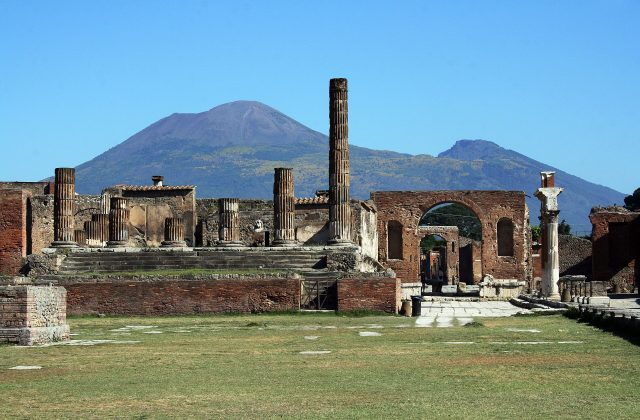
Pompeii works because it is a whole town: stepping stones across the streets, bakeries with ovens, a theatre and the plaster casts of victims, which are moving but can upset younger children. It is also huge, hot and hard on pushchairs, with rutted streets and high kerbs, so plan three hours at most and take a family tour that keeps the pace slow. Herculaneum is compact, better preserved and easier to cover in two hours.
Ostia Antica, 25 minutes from Rome on the Roma-Lido train, is the most relaxed of the three: umbrella pines for shade, a theatre to sit in, a row of Roman latrines and few crowds. Under-18s enter free at all three sites, and Ostia closes on Mondays.
Roman Britain
Hadrian's Wall turns history into a walk. The forts, run mostly by English Heritage, open from 10 am to 5 pm from late March to October, and older children can manage a stretch of the wall between them, though the paths on the crags are steep. Vindolanda is the best single stop: excavations continue in summer, and the museum shows the writing tablets and shoes found on site. The Roman Baths, Bath are indoors, with an audio guide for children, costumed characters on busy days, lifts and ramps.
Knossos and the Minotaur
Knossos is where the Minotaur, Daedalus and Icarus come alive, and family tours are built around the myth. Under-18s enter free, the bus from Heraklion takes 20 minutes and two hours is enough; go at 8 am, as there is little shade. On Santorini, Akrotiri is the most child-friendly site in Greece: roofed, level, with walkways suitable for pushchairs, and free for under-18s.
Pyramids you can enter
Going inside a pyramid is the highlight of Egypt for many children. At the Pyramids of Giza the interior of the Great Pyramid costs extra and tickets can sell out, so book it first; electric buses link the sights on the plateau. At the Dahshur Pyramids the car parks beside each one, so walking is short. The passages are steep, low and cramped, which some children love and others cannot face, and the visits are best from October to April.
What to skip, and pushchairs
Leave the pushchair behind for the Appian Way, whose ancient paving is hard going, the Acropolis of Lindos and Termessos, and use a child carrier instead. Delos has no shade and a fixed boat schedule, and Petra needs a full day of walking, so both suit older children better. Wherever you go, keep to one major site a day, start at opening, carry water and snacks, and stop while everyone is still enjoying it.
Where to book
Colosseum: book a family tour built around gladiators, or the timed ticket 30 days ahead, and go at 8.30 am; under-18s are free. Pompeii: a family tour for three hours at most, with a named ticket bought online. Ostia Antica: no booking needed; a half day by train from Rome. Knossos: a Minotaur-themed family tour at 8 am.
Vindolanda: book online in the school holidays, buy the joint ticket with the Roman Army Museum and allow three hours. Roman Baths, Bath: book a dated ticket for weekends and holidays; allow two to three hours. Pyramids of Giza: book the Great Pyramid interior at opening and add the Grand Egyptian Museum.