Hegra (Mada’in Salih)
AlUla, Saudi Arabia
Hegra, 20 km north of AlUla, was the second city of the Nabataean kingdom after Petra and is now Saudi Arabia's…
21 tickets & tours
Ancient City · Near Eastern · Saudi Arabia
Dadan, in the oasis of AlUla in north-west Saudi Arabia, was the capital of the ancient kingdoms of Dadan and Lihyan, which controlled the incense road through Arabia in the 1st millennium BC. Its best-known sight is a red sandstone cliff carved with tombs, some guarded by reliefs of lions, above the excavated remains of a temple.

Photo: Prof. Mortel, CC BY 2.0
Our pick for each kind of visit, with live dates and prices from GetYourGuide. Free cancellation on most.
Best for: First visit, the two key sites
A guide for Dadan and the inscriptions of Jabal Ikmah together, which explains the lion tombs and the scripts carved by the same kingdom.
Like the other heritage sites of AlUla, Dadan is managed by the Royal Commission for AlUla, and visits are booked in advance with a time slot. The standard ticket includes a guided walk from the visitor centre with a local guide, known here as a rawi, or storyteller. Tickets are sold as a pair with Jabal Ikmah, the canyon of inscriptions a short drive away, on a single tour from the Winter Park bus stop. Check the current arrangements when you book, as timings and combinations change from season to season.
Online, most products are guided tours of Dadan and Jabal Ikmah lasting a few hours, with or without pick-up from hotels in AlUla. Longer days add Hegra, Elephant Rock and the old town, usually with transport and sometimes lunch. Private tours in four-wheel-drive vehicles suit small groups who want more flexibility. Make sure that the site tickets are included, as some prices cover only the vehicle and driver.
For most visitors the sensible choice is the combined Dadan and Jabal Ikmah tour, ideally on a different day from Hegra so that each site gets proper attention. If you have only one day, a full-day tour with Hegra is the practical option.
The highlight is the cliff face above the site, where rectangular tombs are cut into the sandstone. A few are flanked by carved lions, a sign that the dead held high rank in the kingdom. They are seen from a viewing platform below, and binoculars or a zoom lens help with the details of the reliefs.
At the foot of the cliff lie the excavated foundations of the main temple of the city, dedicated to the god Dhu Ghabat. Guides point out the base of the sanctuary and the place where large sandstone statues of Lihyanite kings were found; the statues themselves are now in museums. The walls are low, so the explanation of the guide matters here.
Live dates and prices from GetYourGuide. Free cancellation on most tickets.
Within the temple precinct stands a huge round basin carved from a single block of sandstone, known locally as the she-camel's basin. It was probably used for ritual water or offerings. Its size and careful finish give a clear sense of the wealth that passed through the oasis on the incense road.
Around the temple, open trenches show the walls of houses and buildings uncovered by Saudi and international teams in recent years. Panels explain the layers of occupation, from the kingdom of Dadan to the Lihyanite period. Work is still under way, and guides can often tell you what has been found most recently.
Before you leave, look across the valley floor towards the palm groves and farms of the AlUla oasis, which supported the city with water and food for centuries. The contrast between the green oasis and the red cliffs explains why a kingdom grew up here, on the caravan route between southern Arabia and the Mediterranean.
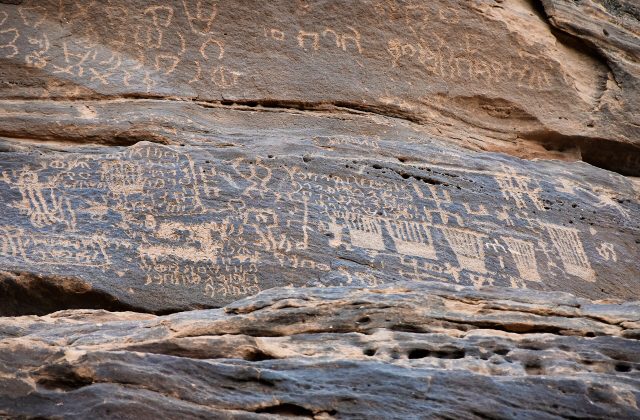
Dadan was the centre of an Arabian kingdom in the oasis of AlUla during the 1st millennium BC, and later of the kingdom of Lihyan, which took over the same capital. Both grew wealthy from the caravan trade in incense and spices that passed north from southern Arabia towards Egypt and the Mediterranean. Their people wrote in their own alphabet, known from many inscriptions on the cliffs of Jabal Ikmah nearby. The Lihyanite kingdom declined as the Nabataeans rose and made Hegra their main city in the region. Since the early 2000s Saudi archaeologists, and more recently Saudi and French teams working with the Royal Commission for AlUla, have excavated the temple and settlement.
Dadan lies a short drive north-east of AlUla old town, on the eastern side of the valley. AlUla has its own airport with flights from Riyadh, Jeddah and some international cities, about 30 to 40 minutes by road from the town. There is no regular public bus to the site, so most visitors use a hire car, a taxi, a hotel transfer or the shuttle service run by the tourism authority in the main season. From AlUla old town the drive takes about 10 to 15 minutes. Parking is at the visitor centre, from which the guided walk starts. Hegra lies about 25 km to the north.
Visits are only on guided tours booked in advance, and you must stay with your guide. Climbing the cliffs, touching inscriptions and entering tombs are forbidden. Drones are not allowed without permission. Dress modestly, with shoulders and knees covered, out of respect for local custom. Bring water, a hat, sunglasses and sun cream; the visitor centre has toilets and sells drinks and snacks.
AlUla has a desert climate, and the main visitor season runs from about October to March, when days are warm and nights can be cold. December and January are the coolest months and the busiest, with festivals and events in the valley and hotels often full, so book well ahead. From May to September temperatures regularly pass 40 degrees, tour times are moved to early morning and late afternoon, and some services are reduced.
At any time of year the best hours are the morning, when the cliff is in soft light and the air is cooler, or the late afternoon, when the sandstone turns deep red. Midday is hot even in winter, and shade is limited. Groups are small because entry is by time slot. Allow two to three hours for the combined tour with Jabal Ikmah, including transfers.
Jabal Ikmah, a narrow canyon with hundreds of ancient inscriptions, is a short drive away and usually sold together with Dadan. AlUla old town, a mudbrick village with a restored market street, is 10 to 15 minutes south. Hegra, with its carved Nabataean tombs, is about half an hour north, and Elephant Rock lies close to it.
| Hours | Morning and afternoon guided tours daily; times vary by season |
|---|---|
| Closed | Tours run daily; access may close at short notice for works or weather |
| Entry fee | from SAR 60 with Jabal Ikmah on one guided tour |
| Time needed | 1 to 2 hours |
| Best time | Morning or late afternoon; October to March |
| Booking | Book online in advance; entry is by timed guided tour |
| Access | Sandy paths and some steps; strong sun and heat; partly accessible with help |
| Getting there | Car or taxi from AlUla old town, about 10 to 15 minutes |
| Civilisation | Near Eastern |
| Checked | October 2026 |
Morning and afternoon guided tours daily; times vary by season. Closed: Tours run daily; access may close at short notice for works or weather.
Entry fee: from SAR 60 with Jabal Ikmah on one guided tour.
Allow 1 to 2 hours for Dadan.
Book online in advance; entry is by timed guided tour.
Yes. GetYourGuide lists 9 tickets and tours for Dadan, with live dates and prices and free cancellation on most of them.
Morning or late afternoon; October to March.
Car or taxi from AlUla old town, about 10 to 15 minutes.
Sandy paths and some steps; strong sun and heat; partly accessible with help.
Worth it for the lion tombs and for seeing the kingdom that ruled AlUla before the Nabataeans built Hegra. Skip or shorten it if your time in AlUla is short: Hegra is the more spectacular site, and Dadan needs a guide to make sense.
AlUla, Saudi Arabia
Hegra, 20 km north of AlUla, was the second city of the Nabataean kingdom after Petra and is now Saudi Arabia's…
21 tickets & tours
AlUla, Saudi Arabia
Jabal Ikmah is a sandstone canyon in the AlUla oasis of north-western Saudi Arabia whose walls carry hundreds of…
8 tickets & tours