Tlos
34 km away
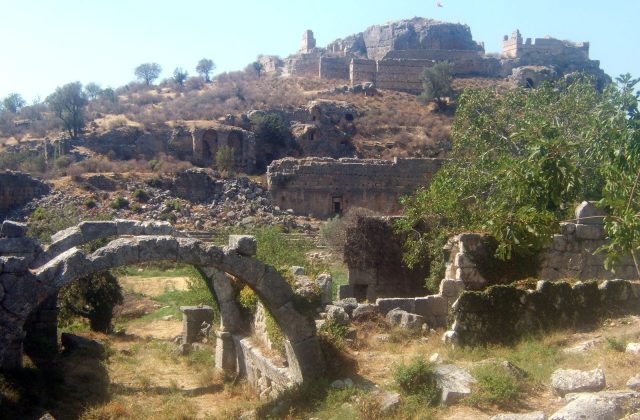
Tlos is one of the oldest cities of ancient Lycia, set on a rocky spur above the Xanthos valley about 40 km east of…
12 tickets & tours
Ancient City · Greek · Turkey
Patara was the main seaport of ancient Lycia and the meeting place of the Lycian League, on the Turkish coast near the village of Gelemis. Its restored assembly hall, a theatre for about 6,000 people, a colonnaded street and one of the oldest lighthouses in the world stand at the edge of an 18 km sandy beach.

Photo: Bjørn Christian Tørrissen, CC BY-SA 4.0
No ticket or tour for Patara alone is sold online. Entry works at a gate on the road from Gelemis to the beach, where a single ticket covers both the ancient city and the long beach beyond it. The Turkish Museum Pass, which covers state-run sites across the country, is accepted and pays off if you also plan to see Xanthos, the Letoon, Myra and other sites on the Lycian coast. The ticket is usually valid for the day, so you can leave the ruins, swim and come back.
There are good information panels at the main monuments, and the site is easy to explore alone, on foot or by driving between the main groups of ruins. Local guides can be found in Kalkan and Kas, and some operators offer private tours that bundle Patara with Xanthos and the Letoon, or with the gorge at Saklikent, including transport and lunch.
Many visitors come on boat or jeep excursions from Kalkan, Kas or Fethiye that stop at Patara beach and give an hour or so for the ruins. That is enough for the main street and the assembly hall, but not much more. For most people the sensible plan is to come independently, buy the ticket at the gate, see the ruins in the cool of the morning and spend the afternoon on the beach.
The road from Gelemis enters the site at this triple-arched gate, built by the citizens around AD 100 in honour of the governor of Lycia. It stood at the northern entrance to the city and is almost complete. Around it lie Lycian rock tombs and sarcophagi of the necropolis, and a short walk south brings you to the remains of a bath building.
Further south, the assembly hall of the Lycian League has been rebuilt with its semicircle of seats for about 1,400 delegates. Built in the 1st century BC, it was where the cities of Lycia voted, Patara holding the maximum of three votes. Beside it the theatre, rebuilt in AD 147 after an earthquake, held some 6,000 people; climb to the top for the view over the dunes.
Live prices from GetYourGuide for tickets and tours that include this site. Free cancellation on most of them.
Running north from the theatre towards the old harbour, the main street is one of the widest and best preserved in Lycia. Excavators have re-erected many of its Ionic columns, granite on one side and marble on the other, with replica capitals. Walk its length to see shop fronts, inscriptions and the paving, cleared of the sand that covered it until recent decades.
Near the beach on the western side of the harbour stands the lighthouse built in AD 60 under Nero, according to its inscription, one of the oldest surviving anywhere. It rises on a three-stepped square base and was about 26 metres high. Archaeologists have partly reassembled it from its fallen blocks. Reaching it means a walk across sand from the beach car park.
On the far side of the old harbour, now a reedy marsh filled with sand, stands the great granary built during the visit of Hadrian in AD 131. It measures 75 by 25 metres and was divided into eight rooms for grain shipped to Rome. The walls stand almost to full height. It is a longer walk along the marsh, best kept for the cool of the late afternoon.
Patara appears in Hittite texts of the 13th century BC, and the city grew from a hilltop settlement on Tepecik into the chief port of Lycia. It was famous for an oracle of Apollo, ranked by ancient writers just below Delphi. Patara surrendered to Alexander in 333 BC, passed to the Ptolemies and later led the Lycian League. Rome annexed Lycia in AD 43, and Paul changed ships here. Saint Nicholas was born in the city around AD 270. In the 5th century a new wall shrank the city, and after the Seljuk conquest of 1211 it declined, deserted by about 1340. Charles Texier and Charles Fellows explored it in the 1830s, and Turkish teams have excavated since 1988.
The nearest airport is Dalaman, about two hours away by car, and Antalya is about three and a half. The coastal D400 road between Fethiye and Kas passes the turn-off for Patara; Gelemis village lies a few kilometres down that road. Dolmus minibuses on the Fethiye to Kas route stop at the junction, and some run into Gelemis itself, especially in summer, with shuttles to the beach. Kalkan is about 20 minutes away by car, Kas about 45. The ticket gate is just south of the village, and the road then runs through the ruins for a couple of kilometres to the beach car park, so a car or bicycle is useful in the heat.
Patara beach is a protected nesting ground for loggerhead turtles, so in the nesting season it is closed at night; do not dig near marked nests. Do not climb on the walls or columns, or disturb the sarcophagi. Bring plenty of water, a hat and sunscreen: there is almost no shade among the ruins. Toilets and a cafe are at the beach, and restaurants are in Gelemis.
Patara is a site for the early morning or the late afternoon. From late morning until about 4 pm in summer the open plain is very hot, and the sand reflects the glare. Most visitors arrive on boat and jeep excursions around midday and head straight to the beach, so the ruins are often almost empty even in August. Sunset from the theatre or the dunes is the best moment of the day.
April to June and September to October are the best months: warm sea, softer heat and green fields around the harbour marsh in spring. July and August are hot, often above 35 degrees, so see the ruins first and swim in the afternoon. The turtle nesting season runs through the summer, which limits evening access to the beach. Winter is quiet and mild, though some cafes close. Allow two to three hours for the ruins and a full day with the beach.
Xanthos and the Letoon, both on the UNESCO list, lie 20 to 30 minutes north by car and fit easily on the same day. Kalkan is the nearest harbour town for dinner. The gorge at Saklikent is about an hour away, and the Roman pillar listing the roads of Lycia, found at Patara, is in the Antalya Museum.
34 km away
Tlos is one of the oldest cities of ancient Lycia, set on a rocky spur above the Xanthos valley about 40 km east of…
12 tickets & tours
52 km away
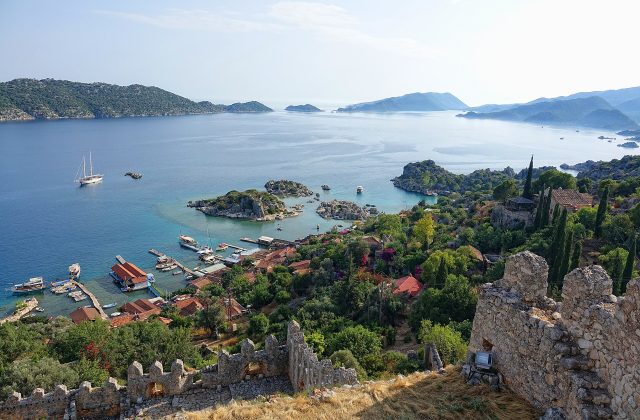
Kekova is an uninhabited island off the Lycian coast of southern Turkey whose northern shore holds the half-submerged…
5 tickets & tours
60 km away
Myra is the ancient Lycian city on the edge of modern Demre, where a cliff face is carved with dozens of rock-cut tombs…
23 tickets & tours
| Hours | Daytime hours, longer in summer; beach closed at night in the turtle nesting season |
|---|---|
| Closed | Open daily |
| Entry fee | One ticket covers ruins and beach; Museum Pass accepted |
| Time needed | 2 to 3 hours, a full day with the beach |
| Best time | Early morning or late afternoon; April to June and September to October |
| Booking | Pay at the gate; no need to book ahead |
| Access | Flat, sandy and exposed with almost no shade; paths are uneven and the theatre has steep steps |
| Getting there | Dolmus from Kalkan or Kas to Gelemis village; the ticket gate is just south of the village |
| Abandoned | 1340 |
| Excavated | 1988 |
| Civilisation | Greek |
| Website | pataraexcavations.org |
| Checked | October 2026 |
Daytime hours, longer in summer; beach closed at night in the turtle nesting season. Open daily.
Entry fee: One ticket covers ruins and beach; Museum Pass accepted.
Allow 2 to 3 hours, a full day with the beach for Patara.
Pay at the gate; no need to book ahead.
Yes. GetYourGuide sells tickets and guided tours whose route includes Patara; live prices are shown on this page.
Early morning or late afternoon; April to June and September to October.
Dolmus from Kalkan or Kas to Gelemis village; the ticket gate is just south of the village.
Flat, sandy and exposed with almost no shade; paths are uneven and the theatre has steep steps.
Worth it for combining a large, uncrowded Lycian city with one of the longest and emptiest beaches in Turkey. Skip or shorten it if you want shade and compact ruins: the monuments are spread over a hot, open plain.
Kaş, Turkey
Aperlae is a ruined Lycian harbour town on the coast of Antalya province, west of Kekova, whose lower quarter has…
No online ticket